The UK’s Transport Research Laboratory (TRL) has received its eighth Prince Michael International Road Safety Award for its work in improving road worker safety.
The Prince Michael International Road Safety Awards recognise achievements in road safety and are presented to the most outstanding road safety initiatives across the world. TRL won the prestigious award for its research underpinning off side signs removal (OSSR), a signing technique for road works which has enabled elimination of live carriage

The UK’s Transport Research Laboratory (491 TRL) has received its eighth Prince Michael International Road Safety Award for its work in improving road worker safety.
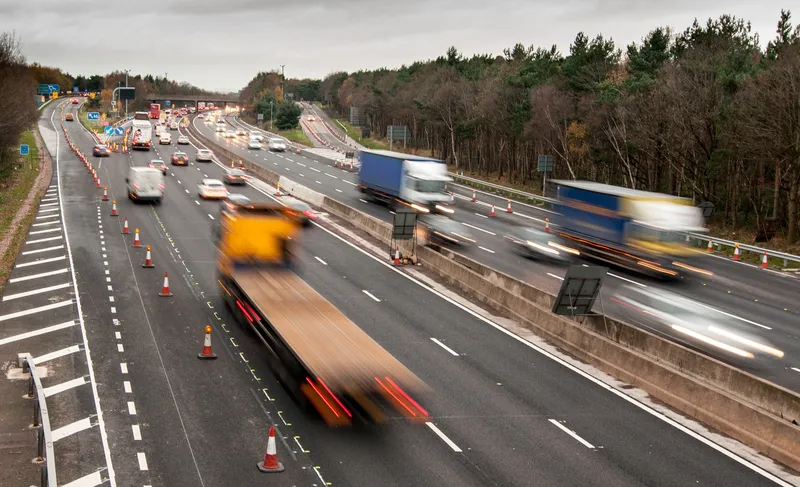
The Prince Michael International Road Safety Awards recognise achievements in road safety and are presented to the most outstanding road safety initiatives across the world. TRL won the prestigious award for its research underpinning off side signs removal (OSSR), a signing technique for road works which has enabled elimination of live carriageway crossings by road workers.
The project, delivered in close collaboration with8101 Highways England and the Road Workers’ Safety Forum (RoWSaF), sought to understand the implications of removing central reservation traffic management signs on road user safety. The research programme, technically led by TRL, consisted of a series of simulator and on-road trials which proved that road user safety was unaffected when signs were only installed on the nearside verge.
The research culminated in the release of Interim Advice Note 150/15 in September 2015 by Highways England, allowing omission of all central reservation signing at short-term road works on two, three or four lane dual carriageway roads. As a result, Highways England has been able to reduce the number of carriageway crossings undertaken each year from 3.7 million to effectively zero.
The award was presented to TRL, Highways England and RoWSaF by His Royal Highness Prince Michael of Kent at an award ceremony at The Savoy in London on the 8th December. Presenting the award, Prince Michael said: “Your commitment and ingenuity deserve the highest praise.”
Rob Wallis, chief executive at TRL, added: “We’re truly honoured to have received such a prestigious award. The OSSR project has helped to deliver what is recognised as one of the biggest single improvements in road worker safety in the last decade – zero carriageway crossings. This shows the determination and drive we continue to put into saving lives and improving road safety for all.”
The top accolade, the Premier Award, was presented to1466 Transport for London (TfL) for its CLOCS (Construction Logistics and Cyclist Safety) programme, which aims to revolutionise the management of work-related road risk and ensure a road safety culture is embedded across the construction industry. The programme was developed following publication of TRL’s independent report of the construction sector’s transport activities in relation to cyclist fatalities, which was published in 2013.
The Prince Michael International Road Safety Awards recognise achievements in road safety and are presented to the most outstanding road safety initiatives across the world. TRL won the prestigious award for its research underpinning off side signs removal (OSSR), a signing technique for road works which has enabled elimination of live carriageway crossings by road workers.
The project, delivered in close collaboration with
The research culminated in the release of Interim Advice Note 150/15 in September 2015 by Highways England, allowing omission of all central reservation signing at short-term road works on two, three or four lane dual carriageway roads. As a result, Highways England has been able to reduce the number of carriageway crossings undertaken each year from 3.7 million to effectively zero.
The award was presented to TRL, Highways England and RoWSaF by His Royal Highness Prince Michael of Kent at an award ceremony at The Savoy in London on the 8th December. Presenting the award, Prince Michael said: “Your commitment and ingenuity deserve the highest praise.”
Rob Wallis, chief executive at TRL, added: “We’re truly honoured to have received such a prestigious award. The OSSR project has helped to deliver what is recognised as one of the biggest single improvements in road worker safety in the last decade – zero carriageway crossings. This shows the determination and drive we continue to put into saving lives and improving road safety for all.”
The top accolade, the Premier Award, was presented to