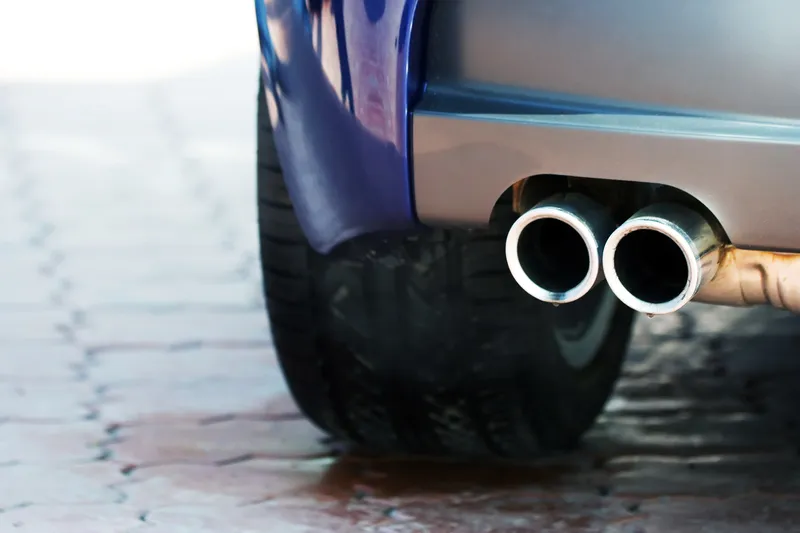
An advanced FTIR analyser installed at Intertek’s engine test facility in Milton Keynes is enabling engineers to improve the quality of their tests on the gaseous components of engine exhaust emissions.
The gas analyser manufactured by Gasmet Technologies and installed by their UK subsidiary, Quantitech, measures multiple organic and inorganic components simultaneously from a large library of compounds, enabling Intertek’s engineers to quickly and easily change the measured compounds; to change the fuel

An advanced FTIR analyser installed at Intertek’s engine test facility in Milton Keynes is enabling engineers to improve the quality of their tests on the gaseous components of engine exhaust emissions.
The gas analyser manufactured by Gasmet Technologies and installed by their UK subsidiary, Quantitech, measures multiple organic and inorganic components simultaneously from a large library of compounds, enabling Intertek’s engineers to quickly and easily change the measured compounds; to change the fuel type or cycle conditions, and to see the impact on the emitted gases. The FTIR gas analyser is also highly portable so that it can be employed in any of the test cells at Intertek.
Intertek’s engine test facility, which accommodates every type of motor vehicle engine covering all fuel types and including both hybrid and battery powered vehicles, provides its customers with the ability to conduct research on prototype engines and evaluate developments in engine technology. Intertek works with vehicle manufacturers, tier suppliers and high performance driveline development businesses.
The work in the test cells is complemented by Intertek’s ability to conduct on-road emissions testing using its state of the art Portable Emissions Measurement System (PEMS) to measure Real World Driving Emissions (RDE).
Intertek test engineer Cory Graham said: “Vehicle manufacturers are focused on improving both the performance and the emissions of their vehicles. FTIR provides a greater insight into exhaust emissions so that Intertek can assist manufacturers with their goals of improving air quality and lowering greenhouse gas emissions.”
Most recently the FTIR has been deployed in one of Intertek’s most sophisticated cells, which hosts a complete drive line including an engine, a gearbox and also a rig, which creates a complete ‘virtual’ car.
The regulatory tests that are undertaken on vehicles to check their emissions against international standards, have recently been under the spotlight, and the latest developments in the European Union will result in a move to vehicle emissions testing while the car is being driven (RDE) and this is now provided by Intertek.
The gas analyser manufactured by Gasmet Technologies and installed by their UK subsidiary, Quantitech, measures multiple organic and inorganic components simultaneously from a large library of compounds, enabling Intertek’s engineers to quickly and easily change the measured compounds; to change the fuel type or cycle conditions, and to see the impact on the emitted gases. The FTIR gas analyser is also highly portable so that it can be employed in any of the test cells at Intertek.
Intertek’s engine test facility, which accommodates every type of motor vehicle engine covering all fuel types and including both hybrid and battery powered vehicles, provides its customers with the ability to conduct research on prototype engines and evaluate developments in engine technology. Intertek works with vehicle manufacturers, tier suppliers and high performance driveline development businesses.
The work in the test cells is complemented by Intertek’s ability to conduct on-road emissions testing using its state of the art Portable Emissions Measurement System (PEMS) to measure Real World Driving Emissions (RDE).
Intertek test engineer Cory Graham said: “Vehicle manufacturers are focused on improving both the performance and the emissions of their vehicles. FTIR provides a greater insight into exhaust emissions so that Intertek can assist manufacturers with their goals of improving air quality and lowering greenhouse gas emissions.”
Most recently the FTIR has been deployed in one of Intertek’s most sophisticated cells, which hosts a complete drive line including an engine, a gearbox and also a rig, which creates a complete ‘virtual’ car.
The regulatory tests that are undertaken on vehicles to check their emissions against international standards, have recently been under the spotlight, and the latest developments in the European Union will result in a move to vehicle emissions testing while the car is being driven (RDE) and this is now provided by Intertek.