
Commsignia expands V2X messaging 

Information aggregated from multiple sources with the use of 4G and 5G connections
By Ben Spencer March 29, 2021 Read time: 2 mins
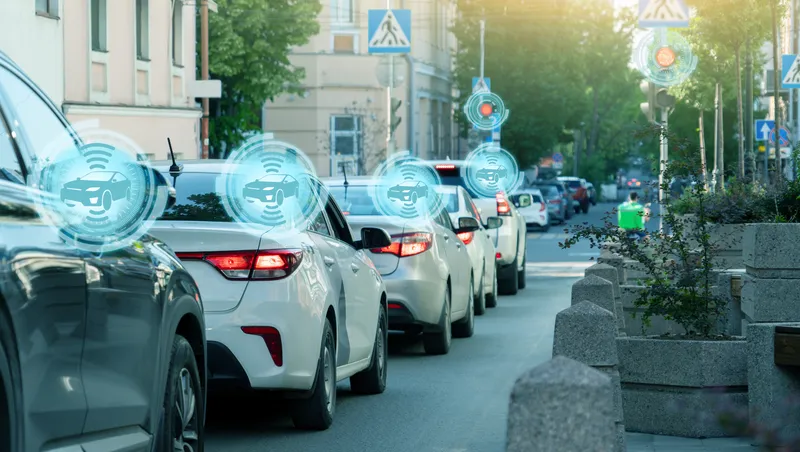
Commsignia’s hybrid fusion layer verifies alerts from different sources and provides the driver with aggregated data (© Scharfsinn86 | Dreamstime.com)

Commsignia has developed a method of transmitting automotive-grade Vehicle to Everything (V2X) messages, including information aggregated from multiple sources with the use of 4G and 5G connections.

The company says its Vehicle to Network (V2N) solution can be applied to avoid traffic jams and prevent accidents in semi-static situations, such as when cars congest highway exits and obstruct the outer lane, creating a dangerous situation. 

One known solution is when the on-board navigation system of stalled vehicles sends status information to the cloud via a 4G or 5G cellular connection.

The navigation supplier’s cloud-based traffic information service then informs other vehicles of a possible traffic jam in the area, but Commsignia insists such solutions usually only work within the specific supplier’s ecosystem.

Commsignia's system is expected to aggregate information from different data sources, including various suppliers’ cloud databases, infrastructure data from roadside sensors and cameras, and sensor data from V2X enabled vehicles.

The company points out that while cloud-based solutions trigger an early warning about a possible event, a vehicle’s V2X on-board unit sends more precise information in low-latency direct messages to other V2X-enabled vehicles in the area.

According to Commsignia, these Vehicle to Vehicle (V2V) messages contain the exact location of the recognised event. 

Commsignia’s hybrid fusion layer verifies alerts from different sources and provides the driver with aggregated data.

The company claims its solution offers more precise warnings and opens up the possibility of notifications reaching more drivers by combining network-based V2N, infrastructure-based Vehicle to Infrastructure and vehicle-based V2V data. 

András Váradi, research director at Commsignia, says: “One of the big challenges in digital traffic safety is reaching most drivers, and it makes sense to combine multiple channels such as direct V2X communications and the 4G or 5G cellular networks. The aggregation and verification of different information sources offer a robust and reliable messaging solution, all based on automotive grade V2X standards.”


For more information on companies in this article

Related Content

  • SafeRide: it’s time to act on cyberattacks
    May 10, 2019
    Cyber threats are increasing rapidly and conventional security measures are unable to keep up. Ben Spencer talks to SafeRide’s Gil Reiter about what OEMs can do now As more vehicles become connected, so the potential threats to their security increase. Gil Reiter, vice president of product management for security firm SafeRide, says the biggest ‘attack surface’ for connected cars is their internet connectivity - and the in-vehicle applications that use the internet connection. “The most vulnerable co
  • Integrated corridor management aids multi-modal transport planning
    January 24, 2012
    Telvent’s Jorgen Pedersen and Tip Franklin discuss how integrated corridor management can create synergies within a multimodal transportation infrastructure, while promoting modal shift. The mantra ‘We cannot build ourselves out of congestion’ has long been stated and too often ignored. But with the economy in dire straits, funding deficits and pressure to reduce governmental spending, this is now being taken seriously by almost everyone who has an interest in the flow of traffic. By ‘everyone’ we include
  • Development of cooperative driving applications for work zones
    July 17, 2012
    The German AKTIV project is researching several cooperative driving applications for use in work zones. PTV's Michael Ortgiese details progress. The steep increases in traffic volumes predicted back in the early 1990s have unfortunately been proven to be more than accurate. In Germany, the AKTIV project continues to look into cooperative technologies' potential to reduce the impact of those increased traffic volumes and keep traffic moving despite limitations in infrastructure capacity.
  • ITS America publishes connected vehicle guidance
    April 22, 2015
    Guidance on the likely impact of multipath communications on connected vehicle development has been published by ITS America. ITS America’s Connected Vehicle Technical Insight looks at the challenges and opportunities wireless interoperability could provide in vehicle applications. In particular the 22-page document examines the processes by which data can be transferred from one vehicle to another (V2V), or between a vehicle and the infrastructure (V2I).




