
Unmanned AV set to run on Korean roads

Ministry of Land, Infrastructure and Transport has permitted 'temporary operation'
By Adam Hill June 25, 2024 Read time: 2 mins
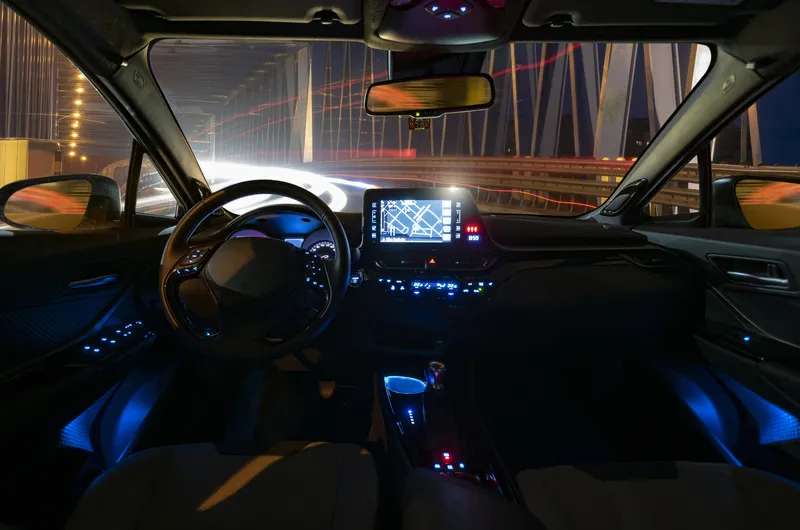
No hands (© Mariusz Burcz | Dreamstime.com)

The way is clear for the first unmanned driverless vehicle carrying passengers to run on public roads in Korea.

The country's Ministry of Land, Infrastructure and Transport (Molit) has given permission for temporary operation of "an unmanned automated driving vehicle developed by a domestic start-up company on the designated road in order to promote the advancement of self-driving technology".

A self-driving system and Lidar sensor has been attached to a "domestically-produced SUV" which will have a top speed of 50km/h.

Molit says this is a step towards developing fully-fledged autonomous driving by demonstrating that it can work: the vehicle has been tested at K-City, the 5G-based autonomous vehicle testing centre in Hwaseong, Gyeonggi Province.

AVs in Korea have previously been permitted with a safety driver or at very low speeds (e.g. below 10km/h). The new vehicle is "equipped with safety functions including automatic emergency braking and maximum speed limit, as well as emergency stop buttons inside and outside the vehicle".

There will be what Molit calls a "step-by-step verification procedure" for the AV, with a view to it being on the road "as early as the fourth quarter of this year".

While countries such as China and the US have allowed AVs on their roads, Korea has taken time to assess performance.

Park Jin-ho, director of Molit's automated driving policy division, explains: “Since the year of 2016, a total of 437 automated driving vehicles have been obtaining the temporary operation permissions to demonstrate their technologies and services, and we hope that the demonstration of unmanned automated driving this time could be another inflection point.”

"The government will continue to actively strive to harmoniously achieve the dual tasks in creating a freer demonstration environment for unmanned autonomous driving and ensuring public safety."

Initially there will be a test driver, but a second stage involves remote monitoring.

Molit plans to upgrade standards for the temporary operation permission for unmanned automated driving vehicles in anticipation of more companies wanting similar verification following this case.


For more information on companies in this article

Related Content

  • Waymo gets California green light for public driverless tests
    November 2, 2018
    Waymo has been granted a licence to test fully-driverless cars on public roads in California. It is the first company to be given the green light for such trials in the state – and it means there will be no test driver sitting in the driver’s seat. The permit includes day and night testing on city streets, rural roads and highways with speed limits of up to 65mph. Waymo insists: “Our vehicles can safely handle fog and light rain, and testing in those conditions is included in our permit. We will gradual
  • Regulating rural road use
    June 20, 2016
    David Crawford looks at problems facing indigenous communities and those unfamiliar with driving in rural areas. While it is well known that the fatality rate for road crashes in rural areas is higher than in towns and cities, some groups suffer far more than others. For instance, the rates of death and serious injury from vehicle accidents is much higher for American Indian and Alaska Native (AI and AN) populations living in rural tribal lands than for any of the country’s other ethnic populations. Crashes
  • Driven demos AVs operating ‘safely’ in London
    October 7, 2019
    The Driven Consortium has completed a week-long demonstration which it says shows that autonomous vehicles (AVs) can operate safely in London - with a safety driver. Driven - a £13.6 million initiative supported by the UK government - carried out the demo around Queen Elizabeth Olympic Park in Stratford in the east of the city. Driven has focused on completing fully-autonomous routes within the UK capital and the city of Oxford using Oxbotica’s autonomous software. Consortium members Moninet and Axa XL p
  • Driven demos AVs operating ‘safely’ in London
    October 7, 2019
    The Driven Consortium has completed a week-long demonstration which it says shows that autonomous vehicles (AVs) can operate safely in London - with a safety driver. Driven - a £13.6 million initiative supported by the UK government - carried out the demo around Queen Elizabeth Olympic Park in Stratford in the east of the city. Driven has focused on completing fully-autonomous routes within the UK capital and the city of Oxford using Oxbotica’s autonomous software. Consortium members Moninet and Axa XL p



