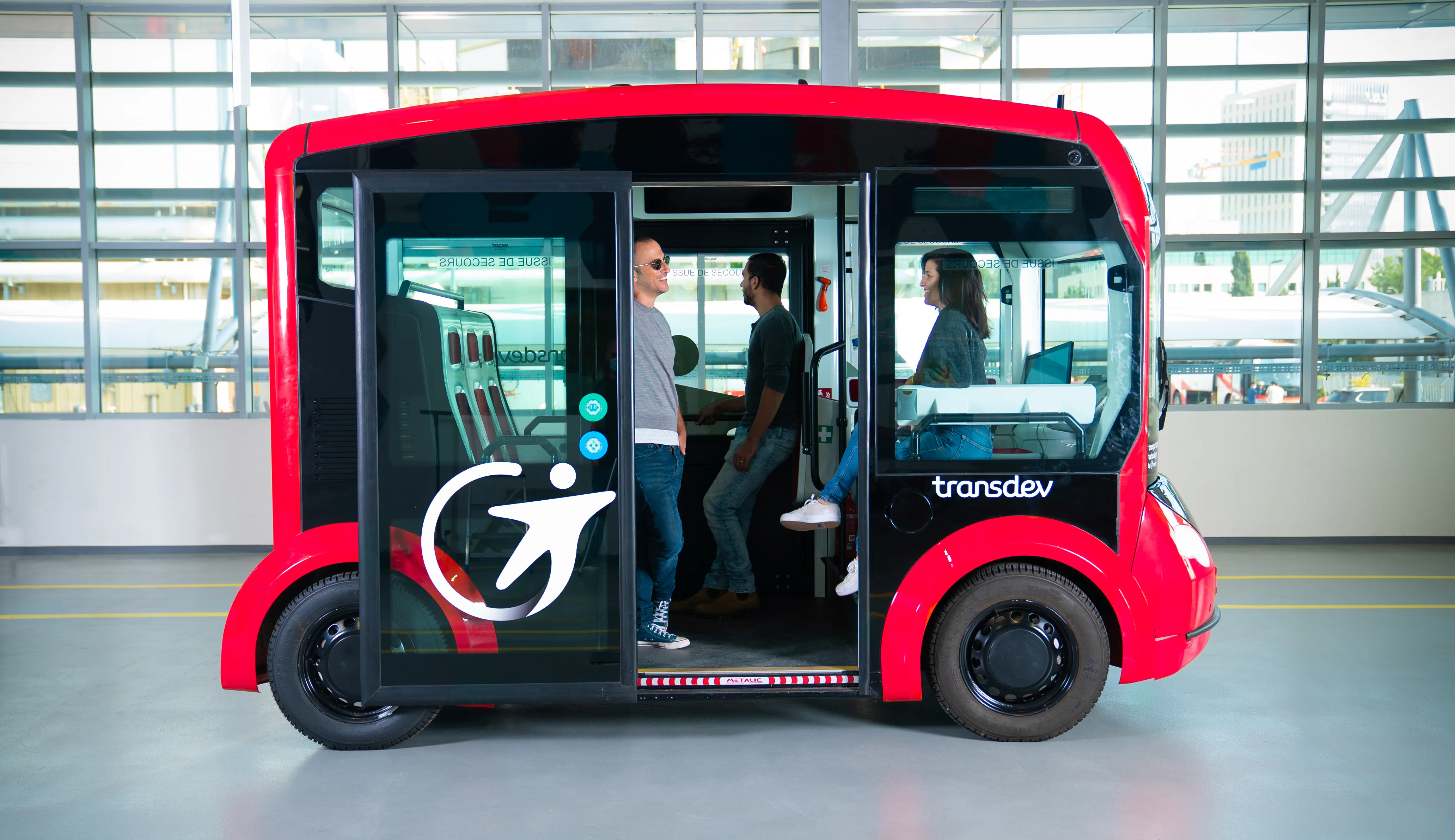
An autonomous shuttle is to take to the road as part of the UK GATEway Project (Greenwich Automated Transport Environment) research into public acceptance of, and attitudes towards, driverless vehicles.
In the latest phase of the GATEway Project a prototype shuttle will begin driverless navigation of a 2km route around the Greenwich Peninsula, using advanced sensors and state-of-the-art autonomy software to detect and avoid obstacles whilst carrying members of the public participating in the research stu

An autonomous shuttle is to take to the road as part of the UK GATEway Project (Greenwich Automated Transport Environment) research into public acceptance of, and attitudes towards, driverless vehicles.
In the latest phase of the GATEway Project a prototype shuttle will begin driverless navigation of a 2km route around the Greenwich Peninsula, using advanced sensors and state-of-the-art autonomy software to detect and avoid obstacles whilst carrying members of the public participating in the research study.
Developed by British companies8309 Westfield Sportscars, 8308 Heathrow Enterprises and 8307 Oxbotica, the shuttle has no steering wheel or typical driver controls and is the UK’s first fully automated shuttle vehicle. Over an eight-hour period of operation, a single shuttle will collect a massive four terabytes of data, equivalent to 2,000 hours of film or 1.2 million photographs.
To navigate this complex real-world environment, the shuttle will use Oxbotica’s Selenium autonomy software, along with onboard sensors, such as cameras and lasers, to locate itself in its map, perceive and track dynamic obstacles around it and plan a safe obstacle-free trajectory to the goal. High data-rate 3D laser range finders are used for obstacle detection and tracking, and an additional safety curtain is used for redundancy in order to maximise safety.
Whilst the GATEway vehicle is designed to operate without a human driver, a safety steward will remain on-board at all times, complying with the UK’s code of practice on automated vehicle testing.
The GATEway Project is led by TRL and funded by government and industry. It aims to demonstrate the use of automated vehicles for ‘last mile’ mobility, seamlessly connecting existing transport hubs with residential and commercial areas using a zero emission, low noise transport system. Research findings from the project will guide the wider roll out of automated vehicle technology in all forms of surface transport, including cars, lorries and buses.
In the latest phase of the GATEway Project a prototype shuttle will begin driverless navigation of a 2km route around the Greenwich Peninsula, using advanced sensors and state-of-the-art autonomy software to detect and avoid obstacles whilst carrying members of the public participating in the research study.
Developed by British companies
To navigate this complex real-world environment, the shuttle will use Oxbotica’s Selenium autonomy software, along with onboard sensors, such as cameras and lasers, to locate itself in its map, perceive and track dynamic obstacles around it and plan a safe obstacle-free trajectory to the goal. High data-rate 3D laser range finders are used for obstacle detection and tracking, and an additional safety curtain is used for redundancy in order to maximise safety.
Whilst the GATEway vehicle is designed to operate without a human driver, a safety steward will remain on-board at all times, complying with the UK’s code of practice on automated vehicle testing.
The GATEway Project is led by TRL and funded by government and industry. It aims to demonstrate the use of automated vehicles for ‘last mile’ mobility, seamlessly connecting existing transport hubs with residential and commercial areas using a zero emission, low noise transport system. Research findings from the project will guide the wider roll out of automated vehicle technology in all forms of surface transport, including cars, lorries and buses.