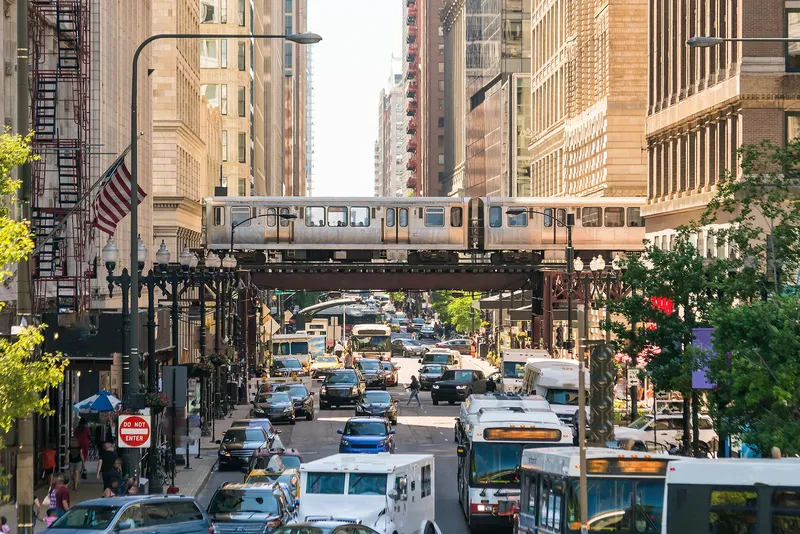
Animation: how much space do cars take up in our cities?

October 1, 2021

Covid has spurred discussion about how we want to live in the future and the reallocation of street space is a major subject for debate.

Today, most of our cities still have a car-centric focus - but this animation by PTV Group shows how long it takes to shift 200 people past a traffic light, using various modes of transportation.

Spoiler alert: cars don't come out of it very well...
For more information on companies in this article

Related Content

  • Chicago pop-up lanes keep buses moving 
    September 29, 2020
    Two 24-hour dedicated routes support essential workers, says CDoT
  • Bright shiny green future: Asecap Sustainability Forum
    August 30, 2023
    Knowing your company’s carbon footprint is one thing, but the real issue is understanding and reporting to investors Scope 3 emissions. David Arminas reports from the 2nd Asecap Sustainability Forum in Vienna, Austria
  • ITS benefits need to be better explained to the public
    May 1, 2018
    Nine out of ten of ITS (UK) members believe that more needs to be done to explain the benefits of ITS to the public. Respondents to a survey said that raising awareness would help sell the case to decision makers to fund technology rather than infrastructure solutions. However, participants were divided in their views on the understanding of, and support for, ITS from national and local government: 56% agreed or strongly agreed that government is supporting transport technology transport technology, while
  • Will standardisation increase ITS interoperability?
    February 1, 2012
    Theoretical balance Kallistratos Dionelis, secretary general of ASECAP, comments on the European Commission's new ICT Standardisation Work Programme. I've just read a proposal from the European Commission on the 2010-2013 ICT Standardisation Work Programme. As ASECAP Secretary General this is one of my responsibilities. I work to receive information, to disseminate information and to build bridges and mutual understanding between policy-makers and the industrial world, between ASECAP and others.