Sunrin showcases low-level streetlights for visual guidance

Sunrin is using Intertraffic to promote its Aton and Luna low-level mounting streetlights which are installed one meter above ground and are said to have generated energy savings of up to 50%. These devices are designed with the intention of reducing glare from wet road surface as well as minimising eye fatigue among drivers. Additionally, the restricted light on the surface of the road aims to reduce light pollution created by artificial lights while providing visual guidance of the road contour.
March 21, 2018 Read time: 1 min
Making light work: Soongyu Kim, left and Byeong Yeol Park
Sunrin is using Intertraffic to promote its Aton and Luna low-level mounting streetlights which are installed one meter above ground and are said to have generated energy savings of up to 50%.


These devices are designed with the intention of reducing glare from wet road surface as well as minimising eye fatigue among drivers.

Additionally, the restricted light on the surface of the road aims to reduce light pollution created by artificial lights while providing visual guidance of the road contour.

The flat and square bar type optical system aims to delivers controlled light distribution without a huge recessed reflector. It can be used in foggy and accident-prone areas as well as bridge areas, intersections and ramp sections.

Traffic flow does not need to be restricted during the installation of the system, according to Sunrin.  

Stand 7.118

Related Content

  • Using electricity to power road freight
    October 22, 2014
    Next year sees the start of the first real-life electrified road system for transporting freight. Worldwide freight transportation is predicted to double by 2050 but despite expansion of global rail infrastructure only one third of this additional freight transport can be handled by trains. This means that the largest proportion of freight transport will continue to be by road and as a result, experts expect global CO2 emissions from road freight traffic to more than double by 2050.
  • Monitoring, detection and control systems inside tunnels can do much to improve traveller safety
    August 6, 2013
    ITS technology can do a great deal to improve tunnel safety, as Colin Sowman discovers. It was back in April 2004 that the European Parliament adopted the EU Directive which lays down the Minimum Safety Requirements for Tunnels in the Trans-European Road Network (2004/54/EC). This was the first unitary legislation setting minimum safety standards for European road tunnels and was designed to harmonise the management of tunnel safety at a national level. Operators of existing tunnels have until 30 April 201
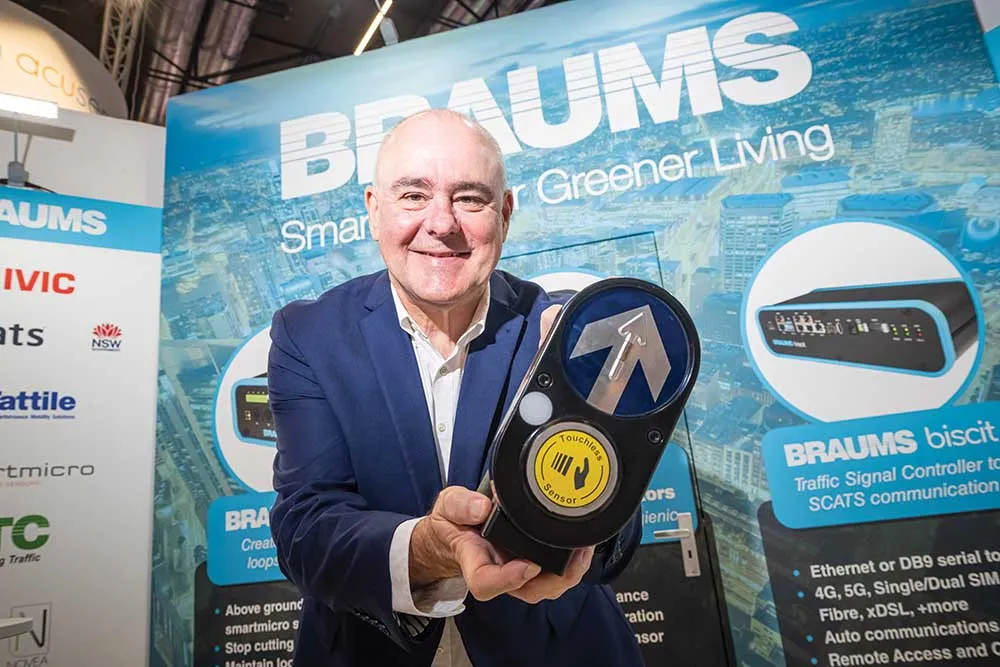
  • Braums displays Touch-Less Pedestrian Call System
    April 17, 2024
    The Braums Touch-Less Pedestrian Call System allows pedestrians to activate a pedestrian crossing phase at a signalised intersection without having to physically touch the button.
  • ITS ‘could save Australia US$500 million a year’
    February 22, 2013
    According to Australia’s federal infrastructure and transport minister, Anthony Albanese, an Australia-wide electronic freeway management system has the potential to greatly reduce congestion and save Australian families and businesses more than US$500 million a year. Albanese said as much as he announced the US$21 million contract to deliver an Intelligent Transport System (ITS) and communications infrastructure to the Westgate freeway managed motorway project in Victoria under the national smart managed m