Rise (Research Institutes of Sweden) has unveiled a 6G edge-computing facility with end-to-end vehicle and infrastructure testing facilities.
Telecom providers, AI engineers and vehicle manufacturers around the world can work together at AstaZero, the world’s first full-scale independent test environment for automated transport system and mobility connectivity.
This includes component reliability tests in electromagnetic chambers to repeatable functionality tests at the AstaZero proving ground, where systems can be tested in a safe, realistic environment.
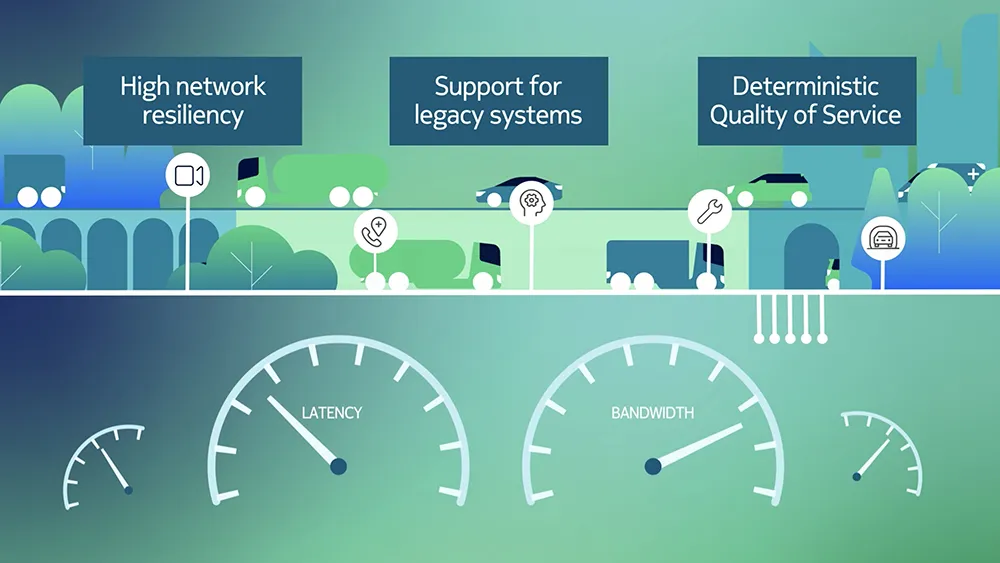
Rise says that, as international 3G networks are decommissioned, traffic, business and mission-critical systems, such as police, ambulances and fire brigades, face the challenge of upgrading and adapting their systems to ensure seamless integration with 6G infrastructure and technologies.
AstaZero is now launching a system that enables communication reliability between vehicles to reach 99.999%, marking the biggest breakthrough in vehicle testing for a generation, according to the Swedish researchers.
The next generation of critical communication (V2X) scenarios will unlock the full potential of this ecosystem and allow vehicles – both AI-enabled and non-AI-enabled – to interact within edge networks.
To reach the required level of reliability will require tests at the individual sensor level - but also on integrated and collaborative systems, a task which has been impossible until now.
This is a critical step forward in the journey for autonomous vehicles, industrial automation and connected societies, as it allows virtual objects and situations to be tested in scenarios limited solely by the engineer’s imagination and vehicle technology.
“In the future, communication might not always originate from the sensors on the vehicle itself, but instead from sensors mounted on connected infrastructure or from the sensors of another vehicle,” said Peter Janevik, CEO, Rise AstaZero.
“In these types of systems, three key factors are crucial: reliability, ultra-fast communication and intelligent decision-making. However, the bitter truth is that without a global, harmonious and integrated testing approach, there is no guarantee that vehicles and infrastructure will have the capabilities to enable the highest level of safety with complete confidence within this connected ecosystem.”