TransCore partnership with NYC for Transit Signal Priority pilot program

TransCore partnered with New York City to complete a Transit Signal Priority (TSP) pilot program – a cost-effective citywide deployment to provide priority treatment for city buses and emergency responders. NYC saves millions by leveraging in-vehicle technology and its advanced traffic control system that manages over 12,800 intersections. In addition, TSP has reduced NYC Select Bus Service travel times from Staten Island to the Bronx up to 18.4%; average speeds improved up to 22.6%; and bus ridership incre
June 2, 2015 Read time: 2 mins

139 TransCore partnered with New York City to complete a Transit Signal Priority (TSP) pilot program – a cost-effective citywide deployment to provide priority treatment for city buses and emergency responders. NYC saves millions by leveraging in-vehicle technology and its advanced traffic control system that manages over 12,800 intersections. In addition, TSP has reduced NYC Select Bus Service travel times from Staten Island to the Bronx up to 18.4%; average speeds improved up to 22.6%; and bus ridership increased by almost 10%. To learn more, attend ITSA’s Technical Session on The Intersection of Transit and Data. TransCore’s Emily Zhang will present her paper: “Evolution of New York City’s Central Transit Signal Priority: Architecture, Deployment and Operations.”
Tuesday, June 2, 9:30 a.m. Room 326.

To address congestion in Arcadia, California, the City started a project to implement adaptive signal operations. KLD’s adaptive control system, ACDSS, was integrated with the TransSuite software and new 772 McCain controllers and firmware deployed at 33 intersections.

The adaptive system went live in February in multiple locations and is addressing traffic pattern variations and minimizing delays. To learn more, attend ITSA’s Technical Session on Signal System Operations and Control Technologies. TransCore’s Chuck Dankocsik will present his paper: “Signal Operational Strategies Address the City of Arcadia’s Transportation Challenges.”

Tuesday, June 2, 9:30 a.m. Room 328

For more information on companies in this article

Related Content

  • Adaptive Signal Control – More Than Meets the Eye
    March 9, 2016
    Planned roadway improvements prompted the use of Adaptive Signal Control around Madison – a move that has proved successful as Scott Langer explains. Madison, Wisconsin’s state capital and second largest city (after Milwaukee), is the county seat of Dane County and home of the University of Wisconsin. With affordable housing, nationally ranked schools, one of the best healthcare systems, low unemployment and thriving cultural and community events, last year Madison topped Money magazine’s ‘Best Places to Li
  • B&C Transit modernises Miami-Dade Metrorail’s control systems
    June 1, 2016
    Jason Gomez and Daniel Mondesir describe how passenger disruption was minimised during a major upgrading of the control room of Miami-Dade’s Metrorail. In 1984 when the Miami-Dade Department of Transportation and Public Works’ (DTPW) Metrorail system was launched in southern Florida, trains ran 18km along a single line and stopped at 10 stations.
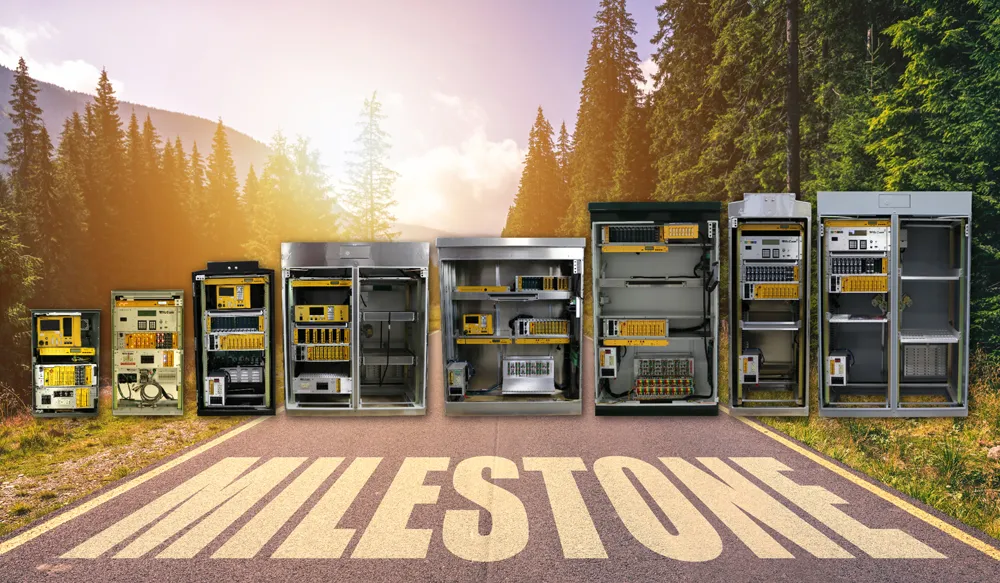
  • McCain milestone: 2,000+ ATC cabinet deployments
    November 17, 2020
    Deployments in the progressive city of Austin, Texas will mark this significant milestone of more than 2,000 McCain ATC Cabinet installations in North America. Austin recently awarded McCain a five-year, $2.6 million city-wide ATC Cabinet contract as Austin is prepared for a future with smart city and CAV capabilities.
  • Siqura partners with Transcore on Riyadh mobility project
    November 13, 2015
    Dutch company Siqura recently partnered with US-based Transcore to supply the government of Saudi Arabia with an IP video surveillance system for the capital, Riyadh. Siqura will install digital speed-dome cameras at 350 intersections to monitor traffic, all linked to each other via an IP fibre optic network and monitored from a central control room, allowing operators to regulate traffic remotely. The project is due to be completed in the fourth quarter of 2016.