
Test 7th January 2016 News 1

Lorem ipsum dolor sit amet, consectetur adipiscing elit, sed do eiusmod tempor incididunt ut labore et dolore magna aliqua. Ut enim ad minim veniam Lorem ipsum dolor sit amet, consectetur adipiscing elit, sed do eiusmod tempor incididunt ut labore et dolore magna aliqua. Ut enim ad minim veniamLorem ipsum dolor sit amet, consectetur adipiscing elit, sed do eiusmod tempor incididunt ut labore et dolore magna aliqua. Ut enim ad minim veniam
January 6, 2016 Read time: 2 mins
Sanral has become the subject of much political debate and protests on the streets of South Africa

593 Teledyne Dalsa Tolling technology is now at an advances state but governments have a key role in ensuring the success of schemes as is evident in Africa. Shem Oirere reports.
Intro ends

Some African countries grappling with infrastructure financing are fine-tuning their public private partnership policies to allow innovations such as road tolling in mobilising funds for modernisation and maintenance of their highways.

According to the African Development Bank, the continent has an estimated $46Bn of infrastructure financing deficit. The bank says sub-Saharan Africa requires $93Bn annually to meet its infrastructure development needs - but only half of the financing is available.

A few countries have introduced intelligent transport systems on improved road sections and concessioning of selected stretches. This is being combined with better road maintenance and expenditure management, project pricing reforms, better and regulatory change to finance much needed rehabilitation and maintenance of roads as well as the construction and upgrading of roads and highways.

Tolling of roads is gaining traction (albeit slowly and with opposition from some road users) as national road agencies begin to address the need to increase road capacity and reduce chronic congestion in Africa’s cities.
South Africa lead the road tolls strategy with the launch of the Gauteng Freeway Improvement Project (GFIP) by the South African National Roads Agency (Sanral), a state-run firm mandated to manage, maintain and develop the country’s national road network.

GFIP entailed the upgrading of 200km (125 miles) of highway (later extended to 560km/350 miles) by widening existing freeways to four lanes and building new freeways and bridges as well as the rehabilitation of existing ones. Following the upgrading, free-flow electronic tolling was introduced in late 2013.

Two years before the e-tolls went live, Sanral awarded the contract for the multilane free flow tolling system to Electronic Toll Collection, a subsidiary of Kapsch TrafficCom.

Kapsch told ITS International the contract covered the design and implementation of an open road tolling system for the Gauteng Province, a national transaction clearing house and violations processing centre.
For more information on companies in this article

Related Content

  • Maine toll road evaluates AET
    December 19, 2013
    A new ten year plan released by the Maine Turnpike Authority defers decisions on work to upgrade its three largest toll plazas pending completion of a next generation toll collection study that will consider the costs and benefits of going all-electronic, versus open road electronic tolling (ORT) and cash and a timetable. Objections from local residents and the failure of the Turnpike to consider the alternative of all-electronic tolling (AET) led to the delay of a previous ten year plan in 2009 that set
  • Visionstream secures Australian motorways project
    February 11, 2013
    Visionstream Australia (Visionstream) is to deliver the Intelligent Transport System (ITS) and communications infrastructure for the Westgate Freeway Managed Motorway Project under the National Smart Managed Motorways Program. The US$21.5 million contract includes design and construction of the ITS system and an operations and maintenance component for two years. Under the contract, Visionstream will be undertaking the design, supply, installation and integration of ITS devices including lane use signs, va
  • Camera lowering tech from MG Squared
    December 7, 2021
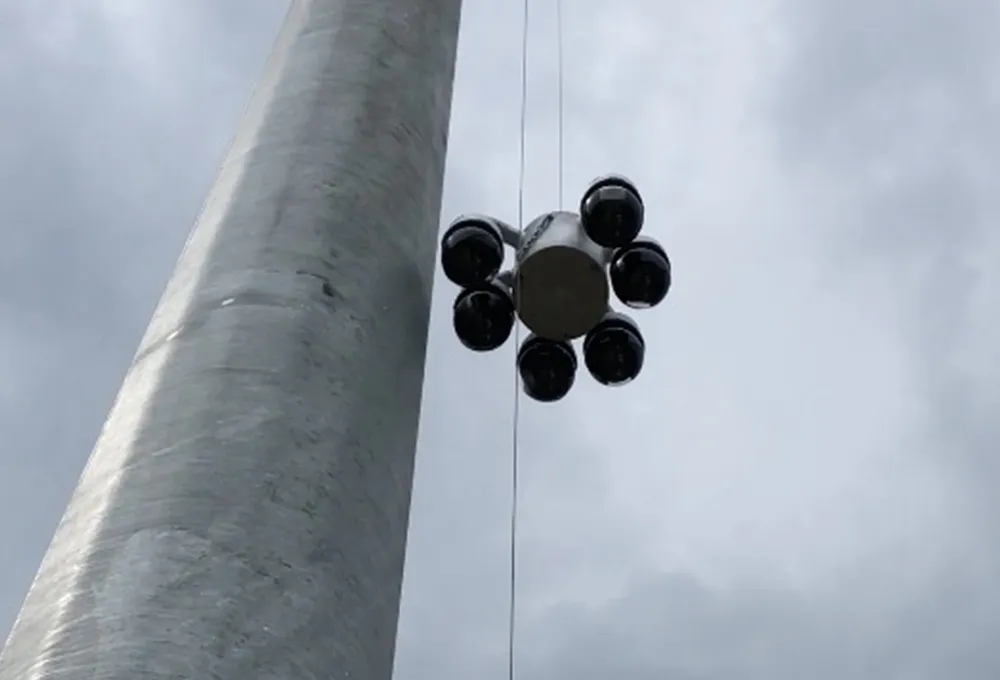
    When Vanderbilt University needed a camera lowering device that could consistently deliver a high-quality constant Ethernet signal simultaneously to six – 4K resolution – PTZ cameras, MG Squared was the top of the class. Additionally, when Vanderbilt University needed a custom, heavy-duty lowering device mount that would strategically secure and position six cameras on a single lowering device, MG Squared’s team, led by Jeffrey Watson, brought to life “The Beetle”.
  • Mobility as a Service gaining traction in US and Europe
    December 15, 2015
    As Mobility as a Service starts to move into the mainstream of transport planning, David Crawford compares European and North American initiatives. Mobility as a Service (MaaS) is a concept fast gaining traction on both sides of the Atlantic as a way of giving travellers digital multimodal one-stop shops and journey planning tools as an alternative to private car use. Planned delivery methods include subscription-based travel packages in Europe, and 'mobility aggregator' apps, including employee commute ben




