
Siemens to equip Line 4 of Paris Metro for driverless operation

Siemens received an order from the Paris public transport operator RATP (Régie Autonome des Transports Parisiens) to equip the 27 stations of Paris Metro the twelve kilometre Line 4 with signalling and operations control systems. Siemens will supply its Trainguard MT automatic train control system that uses communications-based technology to achieve fully automatic, driverless operation. All train movements will be supervised via the operation control centre, which will also be supplied by Siemens. Spec
January 12, 2016 Read time: 2 mins
189 Siemens received an order from the Paris public transport operator RATP (Régie Autonome des Transports Parisiens) to equip the 27 stations of Paris Metro the twelve kilometre Line 4 with signalling and operations control systems.

Siemens will supply its Trainguard MT automatic train control system that uses communications-based technology to achieve fully automatic, driverless operation. All train movements will be supervised via the operation control centre, which will also be supplied by Siemens. Special doors at the platforms will ensure additional safety at all 27 metro stations.

With around 700,000 passengers a day, Line 4 of the Paris Metro is one of the most frequented sections of the whole Paris mass transit network and the most important north-south metro link in the city. On its way through France's capital it stops at three major long-distance railway stations and is also the only line with transfer terminals to all 16 other mass transit lines.

"Automatic operation will enable Line 4 to offer a service interval of 85 seconds. At the same time, the automatic control will allow to reduce energy consumption by up to 15 percent," says Jochen Eickholt, CEO of Siemens Mobility. The order is worth around US$76 million. Work on the line is scheduled for completion in 2022.

For more information on companies in this article

Related Content

  • New opportunities in a data-rich future
    March 19, 2014
    Jason Barnes looks at where the detection and monitoring sector is heading. In the future, there will be no such thing as an un-instrumented road. Just a short time ago, that could have been a quote from a high-level policy document but with the first arrivals of vehicles with 802.11p connectivity – the door-opener to Vehicle-to-X (V2X) applications – it’s a statement which has increasing validity. The technology which uses our roads will also provide information on road conditions but V2X isn’t the only
  • Asecap Days 2025: seizing the opportunities
    May 28, 2025
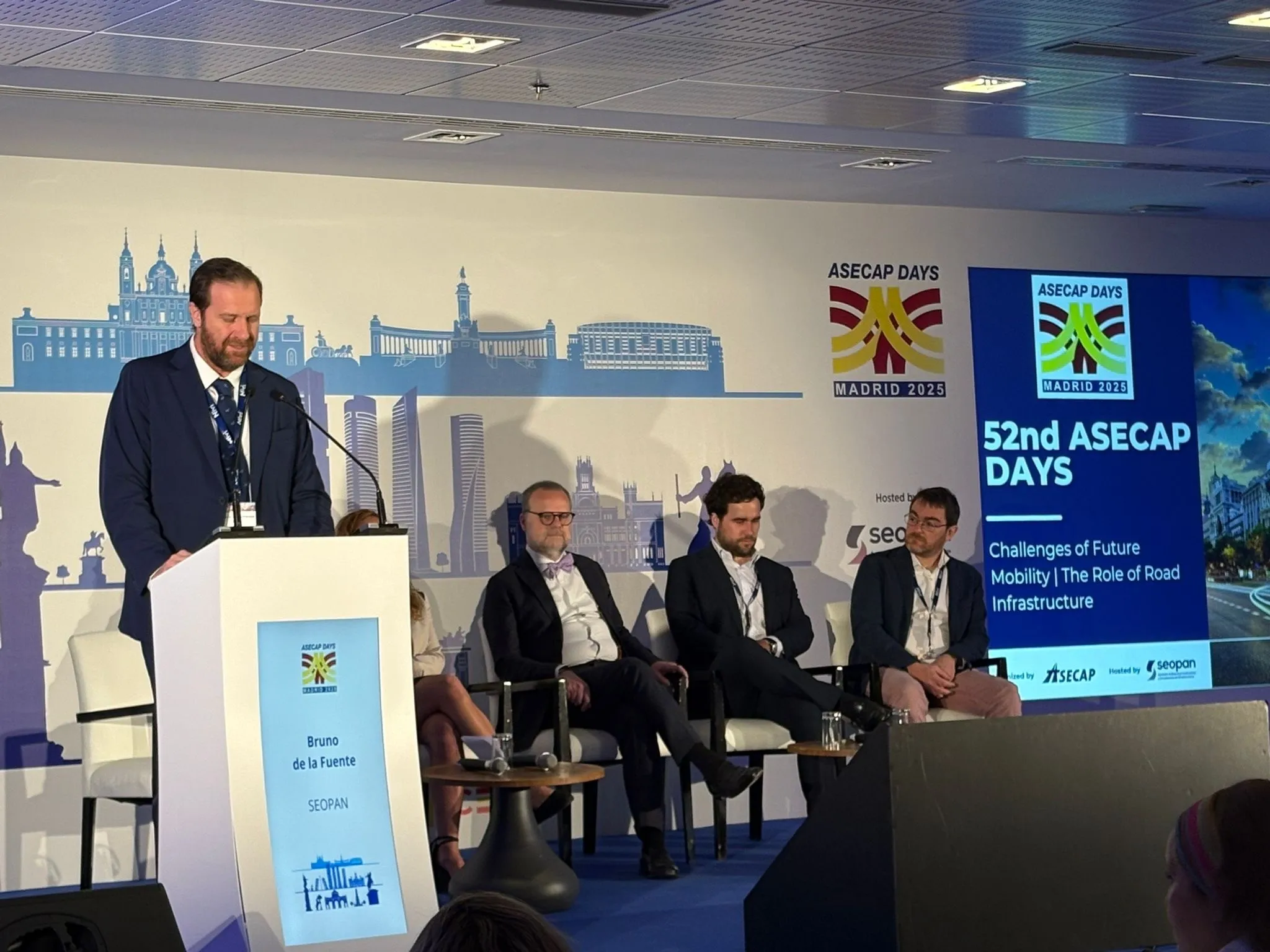
    Delegates during day one of the two-day 52nd Asecap Days conference in Madrid were left in no doubt the financial challenges that face motorway concessionaires as the transition to different mobility increases in pace...
  • Thales upgrading Kuala Lumpur monorail signalling
    March 23, 2012
    Scomi Engineering, which is upgrading Kuala Lumpur monorail for its operator Prasarana, has selected Thales to supply a turnkey signalling solution costing some US$18.6 million. The monorail, operational since 2003 in Malaysia’s capital, is currently expanding its passenger transportation capacity by the introduction of new rolling stock with four-carriage trains and by the replacement of the existing signalling along the eleven stations of the monorail.
  • World first Bluetooth reader for e-Tickets
    March 26, 2012
    Höft & Wessel is developing what it claims is the world's first Bluetooth reader for e-tickets as a wireless extension for handheld devices in long-distance passenger transport for the Danish State Railway (DSB).




