Siemens to equip Line 4 of Paris Metro for driverless operation

Siemens received an order from the Paris public transport operator RATP (Régie Autonome des Transports Parisiens) to equip the 27 stations of Paris Metro the twelve kilometre Line 4 with signalling and operations control systems. Siemens will supply its Trainguard MT automatic train control system that uses communications-based technology to achieve fully automatic, driverless operation. All train movements will be supervised via the operation control centre, which will also be supplied by Siemens. Spec
January 12, 2016 Read time: 2 mins
189 Siemens received an order from the Paris public transport operator RATP (Régie Autonome des Transports Parisiens) to equip the 27 stations of Paris Metro the twelve kilometre Line 4 with signalling and operations control systems.

Siemens will supply its Trainguard MT automatic train control system that uses communications-based technology to achieve fully automatic, driverless operation. All train movements will be supervised via the operation control centre, which will also be supplied by Siemens. Special doors at the platforms will ensure additional safety at all 27 metro stations.

With around 700,000 passengers a day, Line 4 of the Paris Metro is one of the most frequented sections of the whole Paris mass transit network and the most important north-south metro link in the city. On its way through France's capital it stops at three major long-distance railway stations and is also the only line with transfer terminals to all 16 other mass transit lines.

"Automatic operation will enable Line 4 to offer a service interval of 85 seconds. At the same time, the automatic control will allow to reduce energy consumption by up to 15 percent," says Jochen Eickholt, CEO of Siemens Mobility. The order is worth around US$76 million. Work on the line is scheduled for completion in 2022.

For more information on companies in this article

Related Content

  • Single system simplicity for smarter city transport
    February 23, 2017
    All encompassing, city-wide transport monitoring and control systems are beginning to make their way onto the market, as Colin Sowman hears. The futuristic vision of cities where everything is connected and operated with maximum efficiency by a gigantic computer remains a distant prospect but related sectors and services are beginning to coalesce: transport monitoring and control for instance.
  • The rise and rise of robo-car
    July 23, 2019
    When it comes to driverless cars, there are many variables – but one thing is for certain: autonomous driving will have a significant impact on vehicle design, says Andreas Herrmann The transition to autonomous vehicles (AVs) means that many of the factors which have shaped automotive design for the past 130 years no longer apply. At present, the design of a car is largely determined by the anticipated direction of travel: the car’s silhouette immediately shows where the front and back are. Driverless ve
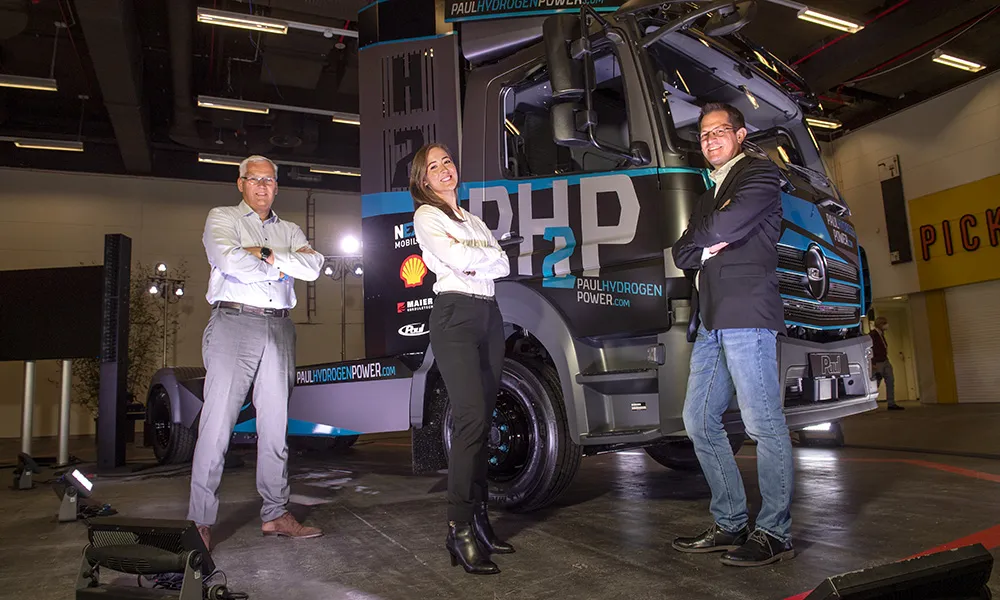
  • Shell introduces fuel cell truck
    October 14, 2021
    Shell, MaierKorduletsch and Paul Nutzfahrzeuge are introducing a medium-duty fuel cell truck to activate the market for hydrogen used as a fuel in the medium to heavy duty road transport sector
  • Idaho adds human dimension to winter savings
    September 23, 2014
    Idaho leverages the increased capability and reliability of its road weather sensor network to reduce costs and prevent accidents. Weather-related accidents can form a significant chunk of an authorities’ annual road casualty statistics. While authorities cannot control the weather, the technology exists to monitor the road conditions and react with warnings to motorists and the treatment of icy or snow-covered roads. However, with all capital expenditure now placed under the microscope of public scrutiny,