SenseTime and Honda partner to accelerate R&D of smart AI Cars

Chinese artificial intelligence (AI) company SenseTime (ST) has signed a long-term agreement that will combine its AI algorithms with Honda’s vehicle control system to build autonomous smart AI cars. The partnership is expected to accelerate the research and development of these vehicles. The autonomous driving solution is said to provide advantages to a variety of passenger vehicle scenarios and lower transducer manufacturing costs. In addition, ST has also developed chips and embedded systems for the car
December 7, 2017 Read time: 2 mins

Chinese artificial intelligence (AI) company SenseTime (ST) has signed a long-term agreement that will combine its AI algorithms with Honda’s vehicle control system to build autonomous smart AI cars. The partnership is expected to accelerate the research and development of these vehicles.

The autonomous driving solution is said to provide advantages to a variety of passenger vehicle scenarios and lower transducer manufacturing costs. In addition, ST has also developed chips and embedded systems for the cars with a set of core technologies and patents for autonomous driving.

Lao Shihong, chief executive officer of ST, said: “Safety is the utmost priority when it comes to driving, and it also constitutes the core of our autonomous driving solution. By combining SenseTime's strengths in computer vision technologies with Honda's superior vehicle control technologies, we will together enable a safe and pleasant autonomous driving experience. Moreover, the fact that SenseTime provides core technology to a global enterprise like Honda marks a milestone."

Related Content

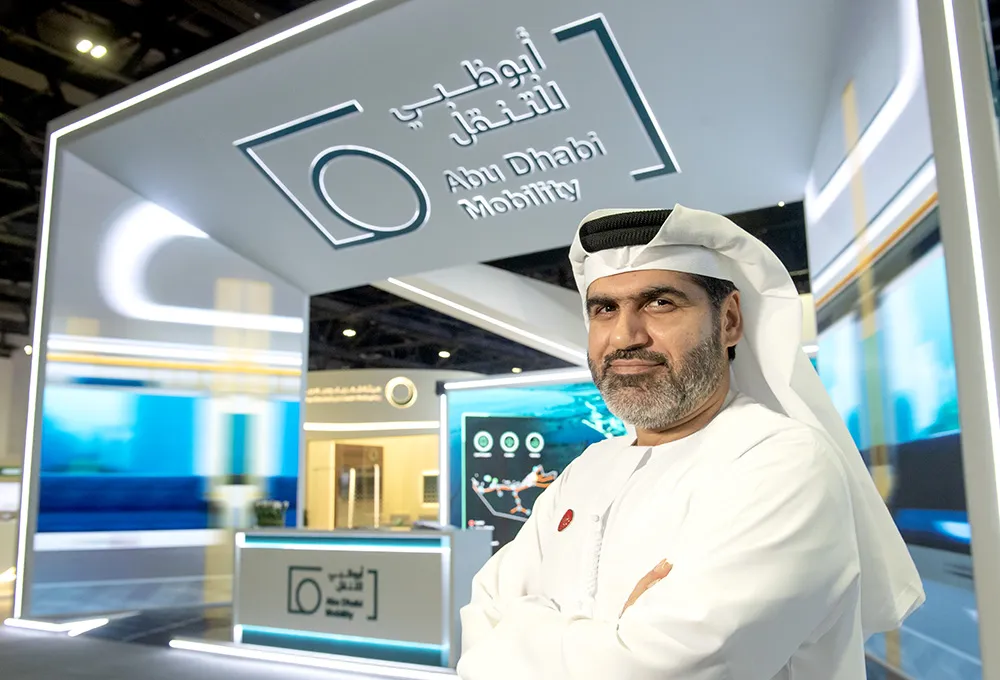
  • Safety is priority number one for Abu Dhabi Mobility
    September 19, 2024

    The Integrated Transport Centre (Abu Dhabi Mobility) has a range of smart traffic projects to highlight at #ITSDubai2024. His Excellency Abdulla Al Marzouqi, director general of the organisation, says: “Through partnerships with global experts, we aim to explore the best practices and exchange knowledge on future innovations in smart transport.” Its Intelligent Transport Central Platform (ITCP) uses artificial intelligence to integrate monitoring and incident management systems into a unified platform, enabling automatic detection of problems on the roads.

  • Camera technology a flexible and cost-effective option
    June 7, 2012
    Perceptions of machine vision being an expensive solution are being challenged by developments in both core technologies and ancillaries. Here, Jason Barnes and David Crawford look at the latest developments in the sector. A notable aspect of machine vision is the flexibility it offers in terms of how and how much data is passed around a network. With smart cameras, processing capabilities at the front end mean that only that which is valid need be communicated back to a central processor of any descripti
  • SafeRide and Irdeto partner on cybersecurity for C/AVs
    June 8, 2018
    Cybersecurity company SafeRide Technologies Ltd and Dutch firm Irdeto have launched a solution to help original equipment manufacturers and Tier-1 suppliers protect connected and autonomous vehicles (C/AVs). Called Vsentry, the device combines network security with software security of the engine control unit to allow users to detect anomalies and respond to attacks. Vsentry uses an artificial intelligence engine and provides multi-layer protection for securing the connectivity perimeter and the in-vehi
  • Imaging technologies to reduce driver distraction ‘expected to gain traction by 2020’
    July 21, 2015
    Frost and Sullivan’s latest report indicates that following a series of high-technology head up display (HUD) roll-outs, the automotive industry appears keen to adopt the imaging technology with the widest field of view (FOV) of up to 12 degrees x 5 degrees. Another HUD product feature to improve considerably is the brightness of virtual images, which increased up to 15000cd/m², even with lower power consumption. Digital light processing (DLP) and laser display are emerging as compelling alternatives to the