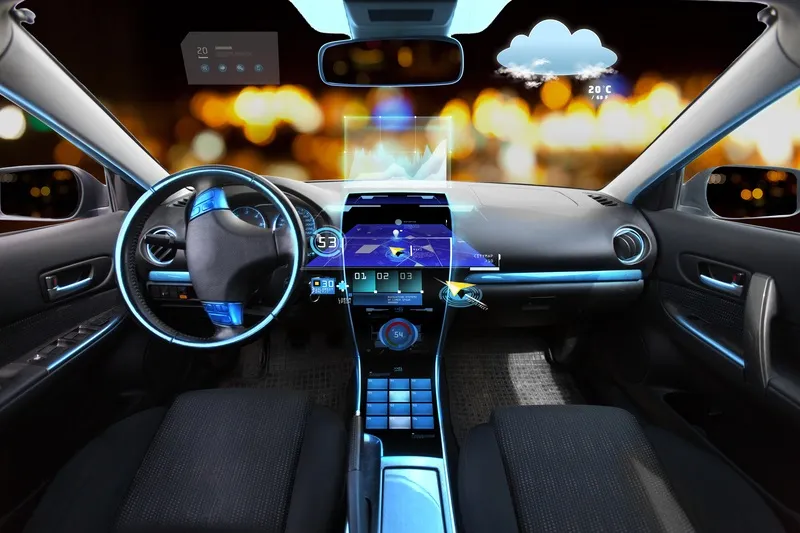
Global management consultancy, Arthur D. Little (ADL) has released a new study, The Future of Automotive Mobility, based on a global survey of 6,500 participants, including customers, industry players and regulators. The report examines how the megatrends of electric mobility, car sharing and autonomous driving are likely to impact on the global automotive ecosystem and future OEM sales.
The report notes that the future of mobility will no longer depend primarily on the preferences of customers, but wil

Global management consultancy, Arthur D. Little (ADL) has released a new study, The Future of Automotive Mobility, based on a global survey of 6,500 participants, including customers, industry players and regulators. The report examines how the megatrends of electric mobility, car sharing and autonomous driving are likely to impact on the global automotive ecosystem and future OEM sales.
The report notes that the future of mobility will no longer depend primarily on the preferences of customers, but will increasingly be driven by regulation as cities seek to resolve traffic-generated problems such as congestion and poor air quality. Electric mobility, car sharing and autonomous driving solutions all have an important role to play in meeting these challenges. However, ADL believes the effect on traditional OEMs’ production volume may not be as severe as some experts have predicted.
As an example, the report says a key component of autonomous driving will be “mobility-on-demand” solutions, in which customers use “robot taxis.” Based on real mobility data from almost 100 mega-cities, ADL simulated the effect of robot taxis upon mobility behaviour and car sales. The findings revealed that even with total market coverage, their effect was not as bad as the predicted worst case scenario.
The report details how new roles are being created in the automotive-supplier pyramid, with the shift to the electric drive train and the increasing importance of software being additional factors to consider. However, a major challenge for manufacturers is the loss of direct access to the mobility customer.
Wolf-Dieter Hoppe, author of the study and associate director at ADL, warns: “Millions of individual customers will be replaced by a few very large, multinational fleet operators. These could take over the dominant role of OEMs in the ecosystem, as they would have direct customer access as well as considerable volume power. In particular, this would be a problem for today’s premium manufacturers.”
The report notes that the future of mobility will no longer depend primarily on the preferences of customers, but will increasingly be driven by regulation as cities seek to resolve traffic-generated problems such as congestion and poor air quality. Electric mobility, car sharing and autonomous driving solutions all have an important role to play in meeting these challenges. However, ADL believes the effect on traditional OEMs’ production volume may not be as severe as some experts have predicted.
As an example, the report says a key component of autonomous driving will be “mobility-on-demand” solutions, in which customers use “robot taxis.” Based on real mobility data from almost 100 mega-cities, ADL simulated the effect of robot taxis upon mobility behaviour and car sales. The findings revealed that even with total market coverage, their effect was not as bad as the predicted worst case scenario.
The report details how new roles are being created in the automotive-supplier pyramid, with the shift to the electric drive train and the increasing importance of software being additional factors to consider. However, a major challenge for manufacturers is the loss of direct access to the mobility customer.
Wolf-Dieter Hoppe, author of the study and associate director at ADL, warns: “Millions of individual customers will be replaced by a few very large, multinational fleet operators. These could take over the dominant role of OEMs in the ecosystem, as they would have direct customer access as well as considerable volume power. In particular, this would be a problem for today’s premium manufacturers.”