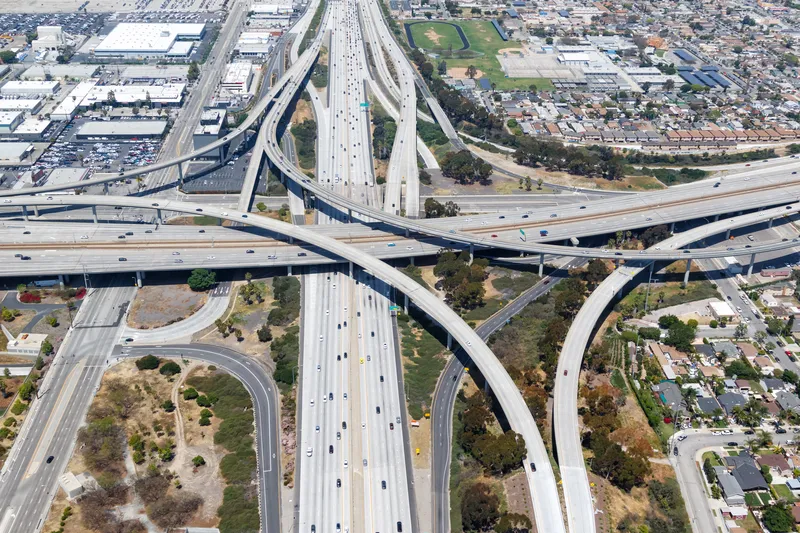
The Oklahoma Federal Highway Administration has designated the I-35, I-40 and I-44 highways as alternative fuel corridors, a special designation aimed at improving the mobility of passenger and commercial vehicles that run on alternative fuels. This new designation means special highway signage indicating the nearest alternative fuelling station will eventually be placed along these highways by the Oklahoma Department of Transportation.
The federal Fixing America’s Surface Transportation Act directed th

The Oklahoma 831 Federal Highway Administration has designated the I-35, I-40 and I-44 highways as alternative fuel corridors, a special designation aimed at improving the mobility of passenger and commercial vehicles that run on alternative fuels. This new designation means special highway signage indicating the nearest alternative fuelling station will eventually be placed along these highways by the Oklahoma Department of Transportation.
The federal Fixing America’s Surface Transportation Act directed the FHWA to designate national highway corridors for EV charging, hydrogen, propane and CNG fuelling.
The Association of Central Oklahoma Governments and the Indian Nations Council of Governments partnered with ODOT to nominate several Oklahoma highways as alternative fuel corridors. The FHWA approved I-35, I-40 and I-44 as signage ready natural gas fuel corridors and planned electric vehicle (EV) charging corridors, meaning Oklahoma is making strides in development of its EV infrastructure. Oklahoma is the only state with all of its interstate system designated as signage ready for CNG and is now linked to a national network of alternative fuel corridors via highway connections with Texas and Missouri.
Oklahoma was uniquely qualified to designate natural gas corridors due to the wide availability of CNG fuelling along the state’s interstates and highways, and its central position along major highways that cross the nation from coast to coast and from Mexico to Canada. Oklahoma leads the nation in CNG fuelling stations per capita, with at least one natural gas fuelling station on every 100 miles of interstate highway in the state. Most stations can accommodate both passenger and commercial vehicle fuelling.
While Oklahoma’s electric vehicle charging network is less developed, a diverse group of EV stakeholders including convenience stores, electric utilities, auto dealerships, and local governments is working together to identify and construct strategic locations for high-capacity EV chargers that will ensure border-to-border charging within Oklahoma, and connections to neighbouring states.
The federal Fixing America’s Surface Transportation Act directed the FHWA to designate national highway corridors for EV charging, hydrogen, propane and CNG fuelling.
The Association of Central Oklahoma Governments and the Indian Nations Council of Governments partnered with ODOT to nominate several Oklahoma highways as alternative fuel corridors. The FHWA approved I-35, I-40 and I-44 as signage ready natural gas fuel corridors and planned electric vehicle (EV) charging corridors, meaning Oklahoma is making strides in development of its EV infrastructure. Oklahoma is the only state with all of its interstate system designated as signage ready for CNG and is now linked to a national network of alternative fuel corridors via highway connections with Texas and Missouri.
Oklahoma was uniquely qualified to designate natural gas corridors due to the wide availability of CNG fuelling along the state’s interstates and highways, and its central position along major highways that cross the nation from coast to coast and from Mexico to Canada. Oklahoma leads the nation in CNG fuelling stations per capita, with at least one natural gas fuelling station on every 100 miles of interstate highway in the state. Most stations can accommodate both passenger and commercial vehicle fuelling.
While Oklahoma’s electric vehicle charging network is less developed, a diverse group of EV stakeholders including convenience stores, electric utilities, auto dealerships, and local governments is working together to identify and construct strategic locations for high-capacity EV chargers that will ensure border-to-border charging within Oklahoma, and connections to neighbouring states.