The first congestion charging scheme in a US city has finally come into force.
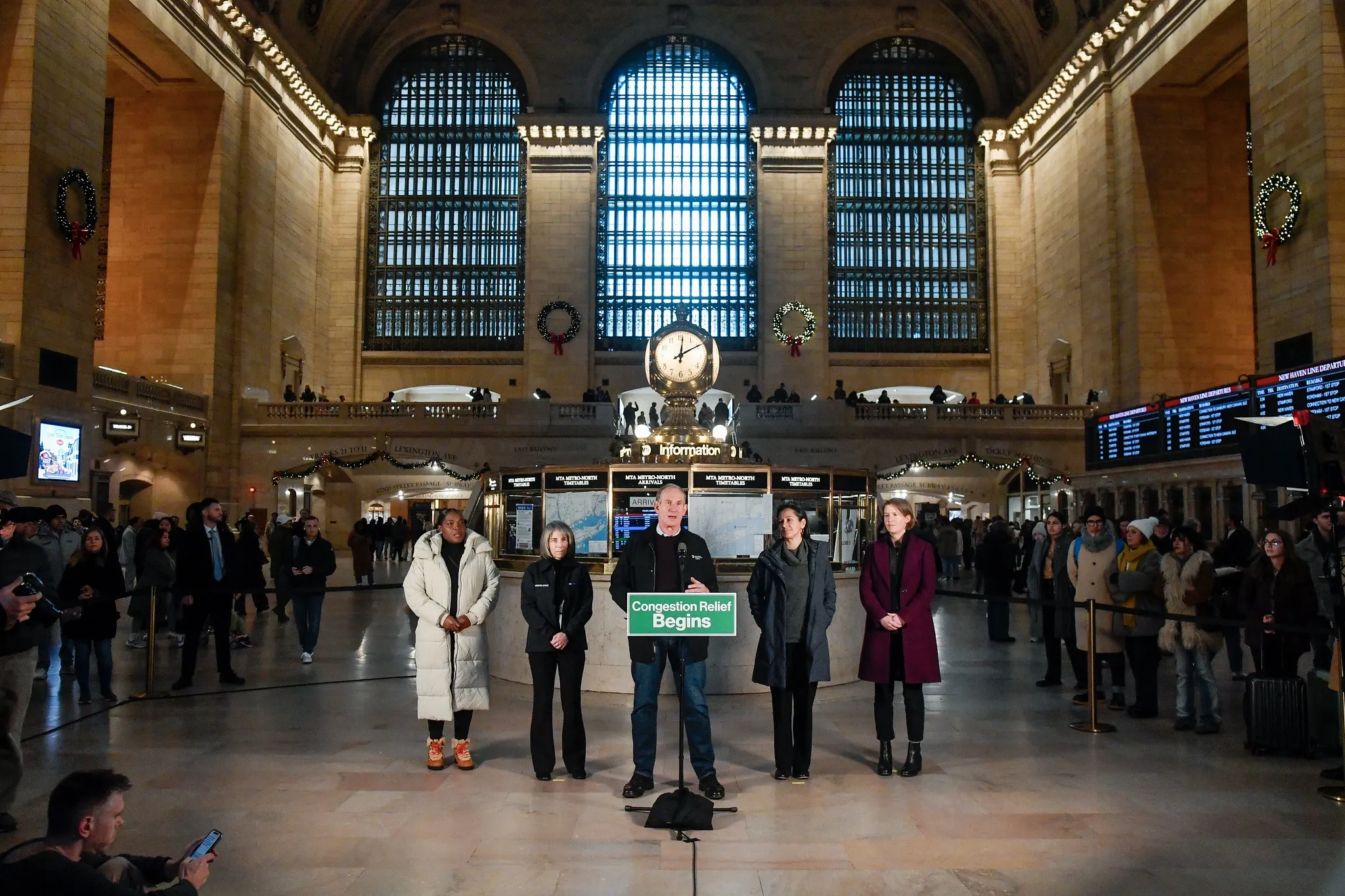
New York City's Congestion Relief Zone - which was put on ice indefinitely by New York Governor Kathy Hochul last year, in a surprise move - is now live.
It means that car drivers pay a $9 daily toll to enter Manhattan south of 60th Street during peak hours; the overnight rate is $2.25.
New York's Metropolitan Transportation Authority (MTA) says the move is required to reduce traffic congestion and raise revenue to improve public transportation services: it is expected to lead to 80,000 fewer vehicles entering the zone each day, while providing $15 billion in funding "for critical transit investments to improve the lives of the millions of people who rely on the MTA every day".
The zone is enforced by 1,400 cameras, with more than 110 detection points, MTA says.
A study commissioned by the Partnership for New York City in 2018 found that average traffic speeds of just 7mph led to 117 hours per person per year wasted sitting in gridlock "and annual economic costs – ultimately passed on to consumers – of $20 billion a year".
MTA explains the Congestion Relief Zone is the most transit-rich area in the US, with 94 subway stations, 99 MTA bus routes and 2,500 regional/commuter trains per day on the Long Island Rail Road, Metro-North Railroad, NJ Transit and Path, "allowing more than 85% of commuters into the zone to rely on transit".
MTA chair and CEO Janno Lieber says: “We want to encourage trucks to do more deliveries at night, we want improvements to vehicle speeds especially for buses, we want to make sure that emergency response vehicles can get where they are going faster, and I hope drivers will take another look at the speed and convenience of mass transit.”
MTA Bridges and Tunnels president Cathy Sheridan says: “Congestion pricing will not only benefit mass transit users, but less congestion means safer streets for both pedestrians and motorists – aligning with our own efforts of moving traffic safely and efficiently on our nine iconic crossings."
NYC DoT commissioner Ydanis Rodriguez says his agency is "closely coordinating with the MTA on the rollout of congestion pricing".
Eighty percent of the revenue generated will go to capital improvements on NYC subways and buses, with 10% to Metro-North Railroad and 10% to the Long Island Rail Road.
Drivers are encourage to sign up for the E-ZPass to receive the lowest toll rates, discounts and tunnel crossing credits.
MTA is buying 265 zero-emission buses and says it is beginning five projects, including phase 2 of the Second Avenue Subway; modernisation of signals in Brooklyn, designed to allow the MTA to operate trains more frequently and more reliably on the line serving 640,000 people per day; and upgrading three subway stations - Gates Av , Briarwood and Parsons - to make them accessible to all in accordance with the Americans with Disabilities Act.