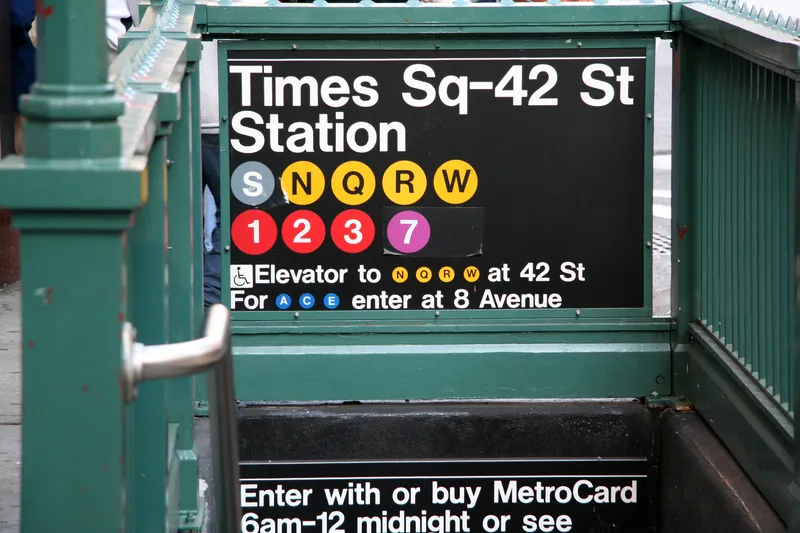
New analysis from Frost & Sullivan, Strategic Analysis of the US Automated Fare Collection Market in Rail and Urban Transit Systems, finds that the market earned revenues of US$324.5 million in 2014 and estimates this to reach US$634.8 million by 2021.
The rising cost of fare management, coupled with the increasing presence of computing, sensors and connected devices, have made public transit systems more accessible to end users, thus boosting interest in automated fare collection (AFC) systems. With 33

New analysis from 2097 Frost & Sullivan, Strategic Analysis of the US Automated Fare Collection Market in Rail and Urban Transit Systems, finds that the market earned revenues of US$324.5 million in 2014 and estimates this to reach US$634.8 million by 2021.
The rising cost of fare management, coupled with the increasing presence of computing, sensors and connected devices, have made public transit systems more accessible to end users, thus boosting interest in automated fare collection (AFC) systems. With 33 billion connected devices expected to be used globally by 2020, the passenger transit environment has had to adapt and employ new methods, such as AFC, to interact with customers.
"By adopting AFC systems, passenger data can be collected in a structured format and will remain secure," said Frost & Sullivan Automotive & Transportation Rail Program manager Shyam Raman. "Moreover, this will also enable passenger data to be stored and various payment modes to be used for specific purposes."
Overall, AFC provides a coherent and simple pricing system, as well as, a reasonable number of tickets in line with US passengers' needs. In addition, it also reduces cash management at railway stations by functioning through sales points distributed across cities via ticket vending machines, the internet and mobile devices.
However, a key technological challenge transport authorities and operators face in the implementation of AFC is linking a variety of enterprises, both physically and logically, to one system. Creating such a network that incorporates all relevant data systems is essential for issuing electronic tickets that can be used countrywide.
The daunting cost to ensure that the infrastructure and equipment have a uniform design, as well as, the standardisation of information exchanged across regions is a cause of concern for transport authorities in the US. However, there is no other viable option to achieve smooth communication between involved organisations.
"Overall, the structure of the US AFC market in rail and urban transit systems is changing across three key dimensions – the transport mode, value chain and payment media," noted Raman. "Future AFC systems will use open-loop payment methods and cater to multimodal transport."
The rising cost of fare management, coupled with the increasing presence of computing, sensors and connected devices, have made public transit systems more accessible to end users, thus boosting interest in automated fare collection (AFC) systems. With 33 billion connected devices expected to be used globally by 2020, the passenger transit environment has had to adapt and employ new methods, such as AFC, to interact with customers.
"By adopting AFC systems, passenger data can be collected in a structured format and will remain secure," said Frost & Sullivan Automotive & Transportation Rail Program manager Shyam Raman. "Moreover, this will also enable passenger data to be stored and various payment modes to be used for specific purposes."
Overall, AFC provides a coherent and simple pricing system, as well as, a reasonable number of tickets in line with US passengers' needs. In addition, it also reduces cash management at railway stations by functioning through sales points distributed across cities via ticket vending machines, the internet and mobile devices.
However, a key technological challenge transport authorities and operators face in the implementation of AFC is linking a variety of enterprises, both physically and logically, to one system. Creating such a network that incorporates all relevant data systems is essential for issuing electronic tickets that can be used countrywide.
The daunting cost to ensure that the infrastructure and equipment have a uniform design, as well as, the standardisation of information exchanged across regions is a cause of concern for transport authorities in the US. However, there is no other viable option to achieve smooth communication between involved organisations.
"Overall, the structure of the US AFC market in rail and urban transit systems is changing across three key dimensions – the transport mode, value chain and payment media," noted Raman. "Future AFC systems will use open-loop payment methods and cater to multimodal transport."