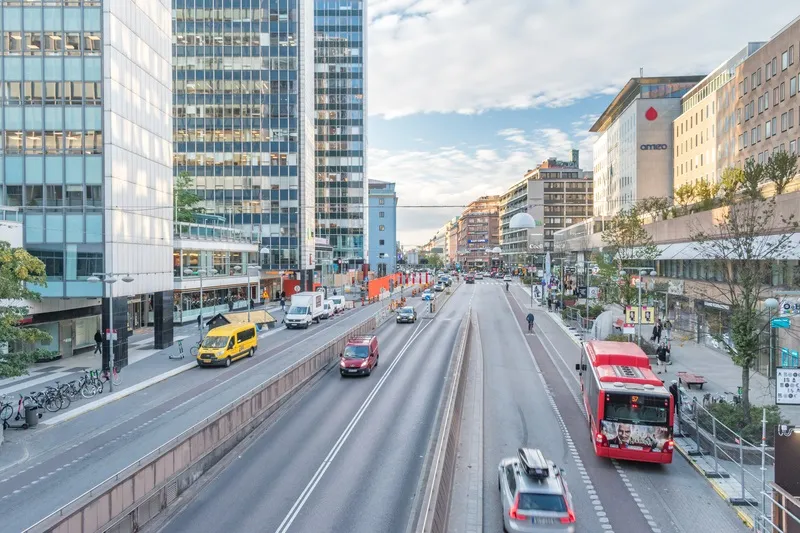
In a new report, UK policy think tank The Institute for Public Policy Research (IPPR) argues that London is at a crossroads between two futures. One where the transport network is increasingly gridlocked, the air grows ever dirtier and the cost of accessing good transport increases. Or one where all can harness the best of digital technology, reducing journeys and air pollution, and opening up new opportunities to make London a more attractive place to live.
The report investigates how new technology co

In a new report, UK policy think tank The Institute for Public Policy Research (IPPR) argues that London is at a crossroads between two futures. One where the transport network is increasingly gridlocked, the air grows ever dirtier and the cost of accessing good transport increases. Or one where all can harness the best of digital technology, reducing journeys and air pollution, and opening up new opportunities to make London a more attractive place to live.
The report investigates how new technology could help or hinder efforts to effect more sustainable forms of travel behaviour and are already having a tangible impact on the way that Londoner’s move around the city. New private hire technology like8336 Uber and new delivery patterns driven by companies like Amazon are just a first glimpse of the size of the revolution that digital technologies will unleash on London’s transport system. Future technologies, like autonomous vehicles and Mobility as Service platforms, promise even bigger and more rapid change.
There are potentially many positive effects of including these services into London’s integrated transport network; IPPR argues that Mayor of London Sadiq Khan needs to seize the opportunity, saying that car clubs such as6452 DriveNow and 3874 ZipCar should be a key part of his vision for London’s transport system. It also recommends developing a framework for new travel markets, setting out a set of positive outcomes for the transport system and appointing a chief digital officer for the capital, as well as making 1466 Transport for London the central hub for travel data.
The report investigates how new technology could help or hinder efforts to effect more sustainable forms of travel behaviour and are already having a tangible impact on the way that Londoner’s move around the city. New private hire technology like
There are potentially many positive effects of including these services into London’s integrated transport network; IPPR argues that Mayor of London Sadiq Khan needs to seize the opportunity, saying that car clubs such as