
New Brussels transport plan criticised

Belgian automotive association Touring has criticised the new transport plan for Brussels, calling it a crusade against driving and arguing that it will lead to gridlocks and push companies to move elsewhere. According to Touring, all of the major routes into the centre of the city are to be closed or have their capacity severely reduced, while the number of parking places in Brussels has been cut by more than 1,000 over the past five years. The RER regional train service is not due to become fully operatio
May 9, 2012 Read time: 2 mins
Belgian automotive association Touring has criticised the new transport plan for Brussels, calling it a crusade against driving and arguing that it will lead to gridlocks and push companies to move elsewhere. According to Touring, all of the major routes into the centre of the city are to be closed or have their capacity severely reduced, while the number of parking places in Brussels has been cut by more than 1,000 over the past five years. The RER regional train service is not due to become fully operational until 2020 and so is not seen as a viable replacement for the reduction in automotive capacity. Touring argues that the city council should take advantage of the economic resources of regional public transport operator 5461 STIB; improve traffic light synchronisation; prioritise the construction of park-and-ride facilities in the outskirts of the city; and improve transport links with the other regions nearby.
For more information on companies in this article

Related Content

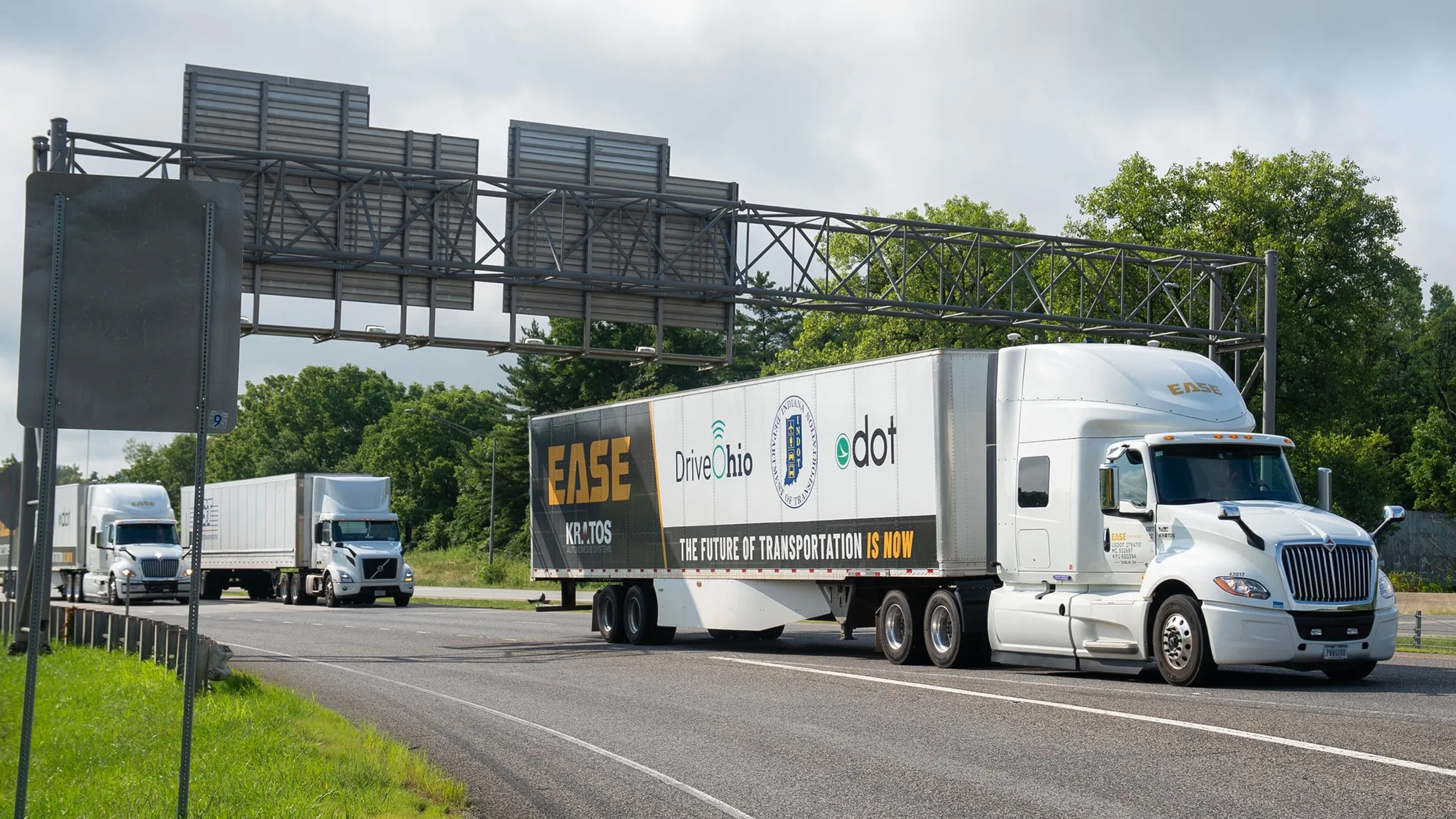
  • Platooning with Ease on the I-70
    July 15, 2025
    What would happen to truck platooning - a nascent technology - if the weather turns nasty? The I-70 Truck Automation Corridor Project in the northern US should provide some answers, reports David Arminas…
  • Public transport operators implement passenger safety systems
    December 4, 2012
    Operators of public transport systems are arming themselves with sophisticated systems of technology to ward off terrorism threats to passenger safety. David Crawford reports. City transportation authorities worldwide are looking more keenly than ever for mass transit solutions to overcome traffic congestion and manage commuter flows. As they do so, concerns over passenger security are driving development of new technologies for terrorist incident detection, response and emergency passenger evacuation. The
  • Bronx benefits from mesoscopic-microscopic modelling
    January 7, 2014
    Michael Marsico, Andrew Weeks, Keir Opie and Murat Ayçin explain the application of hybrid traffic simulation to a planning study in New York City. Traffic modelling, particularly mesoscopic-microscopic hybrid simulation, has played a key role in planning for the future of one of America's shortest interstates, the 1.3-mile Sheridan Expressway. New York City has just completed a two-year, interagency study federally funded by a TIGER II grant on how to improve the Sheridan Expressway and its surroundi
  • Programming a smoother commute
    January 18, 2013
    Work being carried out by the University of Toronto’s Intelligent Transportation Systems Centre could have a beneficial effect on the city’s congestion problems. Says Professor Baher Abdulhai of the Centre, "Everybody realises that we have a big congestion problem in Toronto and the scarier part is that it's getting worse, exponentially." One of the solutions he's working on is smarter traffic lights using artificial intelligence to control the flow of traffic. "Each traffic light would learn how to time i




