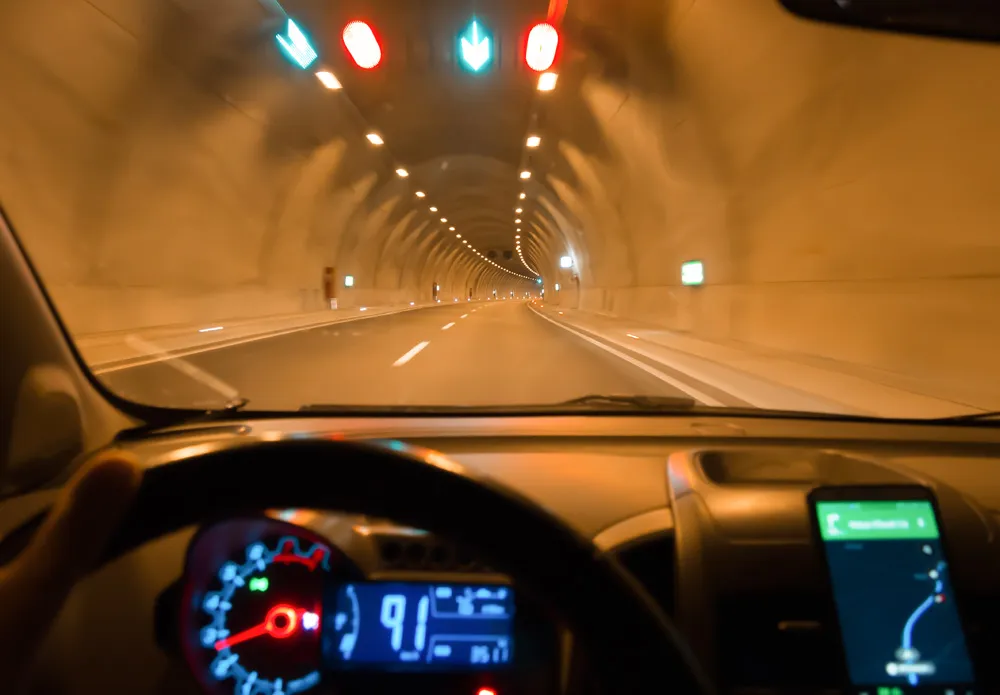
More than 21,000 Astucia SolarLite F series embedded intelligent road studs with built-in solar-powered light-emitting diodes are being deployed on two of the busiest sections of the A2 trunk route near the port of Dover, in Kent, England.

More than 21,000 1875 Astucia SolarLite F series embedded intelligent road studs with built-in solar-powered light-emitting diodes are being deployed on two of the busiest sections of the A2 trunk route near the port of Dover, in Kent, England.
The aim is to improve night-time road safety with enhanced full lane and edge delineation on both stretches of dual carriageway which are also prone to fog and mist. Being within a conservation area, alternative measures, such as traditional street lighting, were neither viable nor cost-effective options.
The Astucia SolarLite intelligent road studs automatically illuminate from dusk to dawn and provide drivers with up to 900m of visibility; 10 times greater than the traditional, retro-reflective, passive road stud which is limited by the headlight beam of the vehicle. With the increased visibility of the studs, driver reaction time to a potential hazard in the road ahead is increased from 3.2 to over 30 seconds, when driving at 100km/h.
The aim is to improve night-time road safety with enhanced full lane and edge delineation on both stretches of dual carriageway which are also prone to fog and mist. Being within a conservation area, alternative measures, such as traditional street lighting, were neither viable nor cost-effective options.
The Astucia SolarLite intelligent road studs automatically illuminate from dusk to dawn and provide drivers with up to 900m of visibility; 10 times greater than the traditional, retro-reflective, passive road stud which is limited by the headlight beam of the vehicle. With the increased visibility of the studs, driver reaction time to a potential hazard in the road ahead is increased from 3.2 to over 30 seconds, when driving at 100km/h.