
Look to the future of transportation with Xerox at ITSA 2016

Transportation of the future could include driverless cars, high-speed rail, or even flying cars. But as Xerox points out, what is clear is that today’s mobility is akin to the Wild West – everyone is staking their claims around the globe, and the government is trying to figure out its role.
June 3, 2016 Read time: 2 mins

Transportation of the future could include driverless cars, high-speed rail, or even flying cars. But as 4186 Xerox points out, what is clear is that today’s mobility is akin to the Wild West – everyone is staking their claims around the globe, and the government is trying to figure out its role.

Xerox believes that the network that’s built should be developed with four guiding principles in mind. Firstly, be open. Think about how the data exchange will benefit both public and private sectors. With an open data platform, app developers and startups can create the next best way to get around.

Secondly, be driven by demand. Demand is always higher than supply no matter what mode of transportation we’re talking about.

Another key guiding principle is to be flexible. As Xerox points out, though we don’t know what mobility will look like in the future, we do know that the network needs to be flexible to respond to all innovations.

Finally, be regulated. Even though regulations can be overdone, our Wild West mobility today doesn’t mesh with our society or the need for a coordinated platform.

With the above in mind, the Xerox booth at ITS America 2016 San Jose will focus on re-envisioning mobility: it’s not entirely about transit or cars – it’s about building a platform that public and private providers can develop and flourish upon. As Xerox says, the cities that build those networks will have a distinct competitive advantage, and those that don’t, will be stuck in gridlock.
For more information on companies in this article

Related Content

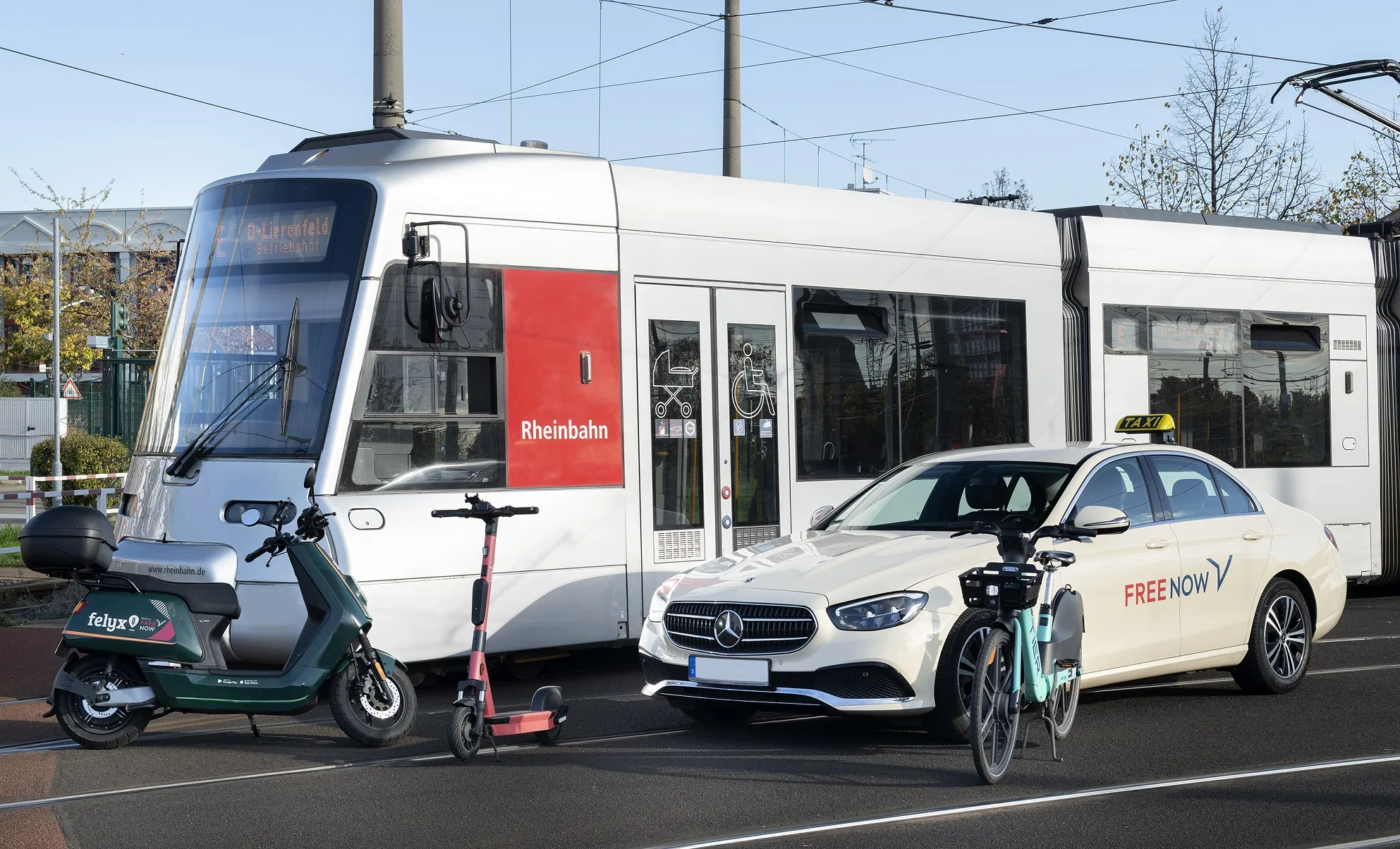
  • German public transport now on Free Now
    November 8, 2022
    Mobility app has added buses, trams and underground trains from VRR to its service
  • Addison Lee and Oxbotica to implement AV services in London by 2021
    October 23, 2018
    Addison Lee has partnered with self-driving vehicle software company Oxbotica in a bid to bring autonomous ride-sharing services to London by 2021. Addison Lee, a UK private taxi hire firm, says it will also explore opportunities to provide corporate shuttles, airport and campus-based services. Andy Boland, CEO of Addison Lee, says: “By providing ride-sharing services, we can help address congestion, free space used for parking and improve urban air quality through zero-emission vehicles.” The partners
  • Driverless-vehicle options now include scooters
    November 9, 2016
    Researchers have developed an autonomous mobility scooter which could, in principle, use a scooter to get down the hall and through the lobby of an apartment building, take a golf cart across the building’s parking lot, and pick up an autonomous car on the public roads.
  • Driver training saves lives, increases profits, reduces costs
    February 3, 2012
    An innovative UK Government initiative on work-related driver training has resulted in astonishing success, not only in terms of government objectives, but also in substantial cost-benefits for companies and public sector authorities participating in the scheme: they save lives and increase profits/reduce costs Here, we present an overview of the initiative and, overleaf, provide a detailed cost-benefit analysis which amply illustrates why it has been enthusiastically embraced by industry and the public sec




