
Look to the future of transportation with Xerox at ITSA 2016

Transportation of the future could include driverless cars, high-speed rail, or even flying cars. But as Xerox points out, what is clear is that today’s mobility is akin to the Wild West – everyone is staking their claims around the globe, and the government is trying to figure out its role.
June 3, 2016 Read time: 2 mins

Transportation of the future could include driverless cars, high-speed rail, or even flying cars. But as 4186 Xerox points out, what is clear is that today’s mobility is akin to the Wild West – everyone is staking their claims around the globe, and the government is trying to figure out its role.

Xerox believes that the network that’s built should be developed with four guiding principles in mind. Firstly, be open. Think about how the data exchange will benefit both public and private sectors. With an open data platform, app developers and startups can create the next best way to get around.

Secondly, be driven by demand. Demand is always higher than supply no matter what mode of transportation we’re talking about.

Another key guiding principle is to be flexible. As Xerox points out, though we don’t know what mobility will look like in the future, we do know that the network needs to be flexible to respond to all innovations.

Finally, be regulated. Even though regulations can be overdone, our Wild West mobility today doesn’t mesh with our society or the need for a coordinated platform.

With the above in mind, the Xerox booth at ITS America 2016 San Jose will focus on re-envisioning mobility: it’s not entirely about transit or cars – it’s about building a platform that public and private providers can develop and flourish upon. As Xerox says, the cities that build those networks will have a distinct competitive advantage, and those that don’t, will be stuck in gridlock.

For more information on companies in this article

Related Content

  • Fast moving walkways could move 7,000 people per hour
    November 28, 2016
    Researchers at the Swiss Federal Institute of Technology in Lausanne (EPFL) researchers have been studying futuristic transport solutions for car-free urban centres and have come up with an optimal design for a network of accelerating moving walkways. This is not a new concept – the first moving walkways were seen in Chicago in 1893 and seven years later they were used at the world’s fair in Paris. They are also regularly used the world over in airports and transport terminals. As part of the PostCarW
  • Transportation applications move to machine vision’s mainstream
    June 11, 2015
    The adaptation of machine vision to transport applications continues apace. That the machine vision industry is taking traffic installations seriously is evident by the amount of hardware and software products tailor-made for ITS applications that are now available on the market. A good example comes from US-based Gridsmart Technologies which has developed a single wire fisheye camera that provides a horizon to horizon view for use at intersections. Not only does the single camera replace four or more in a
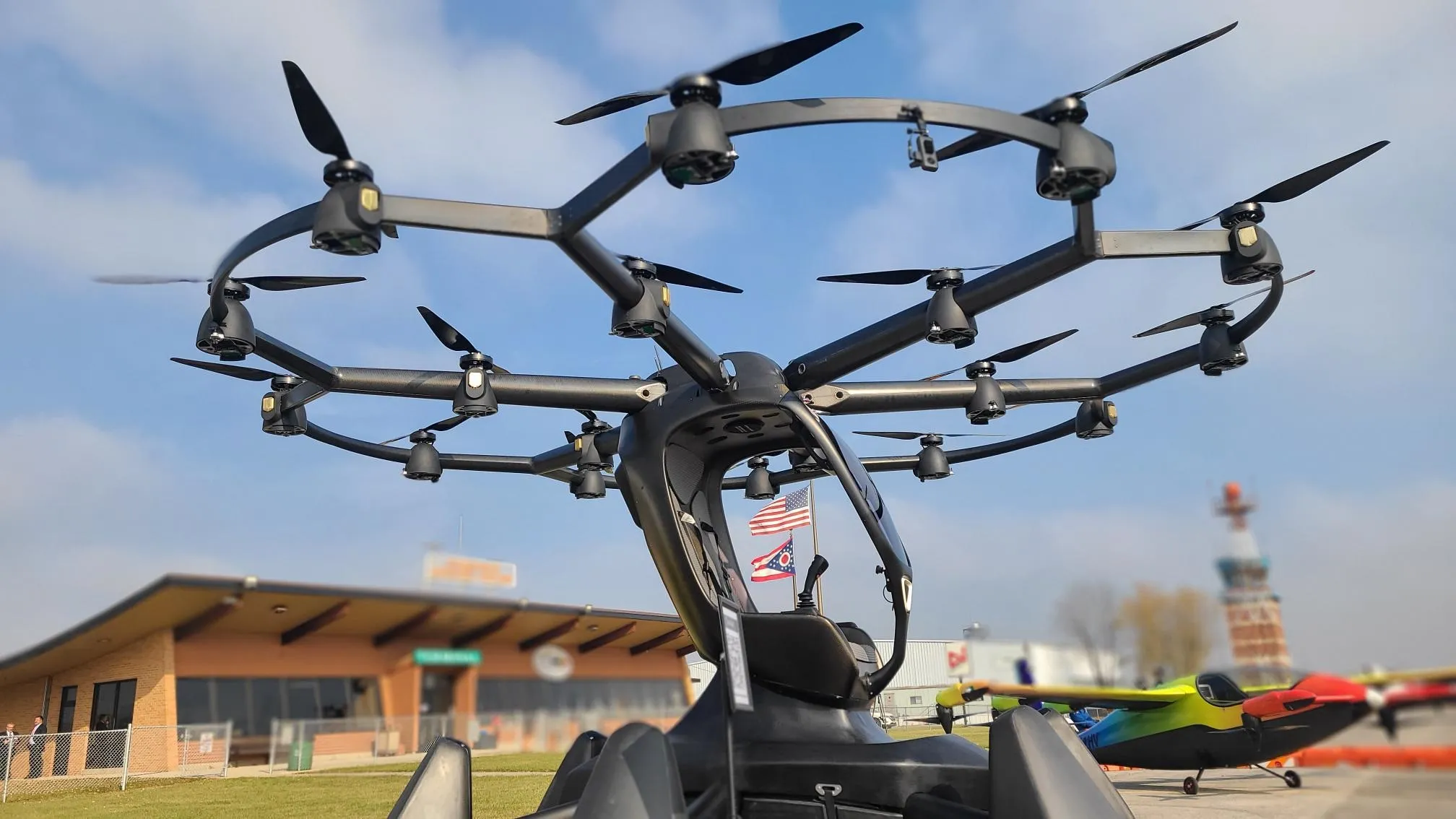
  • FlyOhio showcases eVTOL flights 
    November 25, 2021
    Ohio DoT's DriveOhio initiative saw air mobility demos by Kitty Hawk and Lift
  • Vision technology: the future in focus
    November 23, 2018
    Just a few years ago, terms such as ‘embedded’ and ‘polarisation’ were buzzwords. But now they are real and present examples of vision technology in action – and, Adam Hill finds, the ITS industry is waking up to a number of possible applications Every aspect of the intelligent transportation systems industry moves quickly – but developments in camera technology change with a rapidity which can appear quite bewildering. And with ITS providers constantly searching for an edge against fierce competitio




