
Look to the future of transportation with Xerox at ITSA 2016

Transportation of the future could include driverless cars, high-speed rail, or even flying cars. But as Xerox points out, what is clear is that today’s mobility is akin to the Wild West – everyone is staking their claims around the globe, and the government is trying to figure out its role.
June 3, 2016 Read time: 2 mins

Transportation of the future could include driverless cars, high-speed rail, or even flying cars. But as 4186 Xerox points out, what is clear is that today’s mobility is akin to the Wild West – everyone is staking their claims around the globe, and the government is trying to figure out its role.

Xerox believes that the network that’s built should be developed with four guiding principles in mind. Firstly, be open. Think about how the data exchange will benefit both public and private sectors. With an open data platform, app developers and startups can create the next best way to get around.

Secondly, be driven by demand. Demand is always higher than supply no matter what mode of transportation we’re talking about.

Another key guiding principle is to be flexible. As Xerox points out, though we don’t know what mobility will look like in the future, we do know that the network needs to be flexible to respond to all innovations.

Finally, be regulated. Even though regulations can be overdone, our Wild West mobility today doesn’t mesh with our society or the need for a coordinated platform.

With the above in mind, the Xerox booth at ITS America 2016 San Jose will focus on re-envisioning mobility: it’s not entirely about transit or cars – it’s about building a platform that public and private providers can develop and flourish upon. As Xerox says, the cities that build those networks will have a distinct competitive advantage, and those that don’t, will be stuck in gridlock.

For more information on companies in this article

Related Content

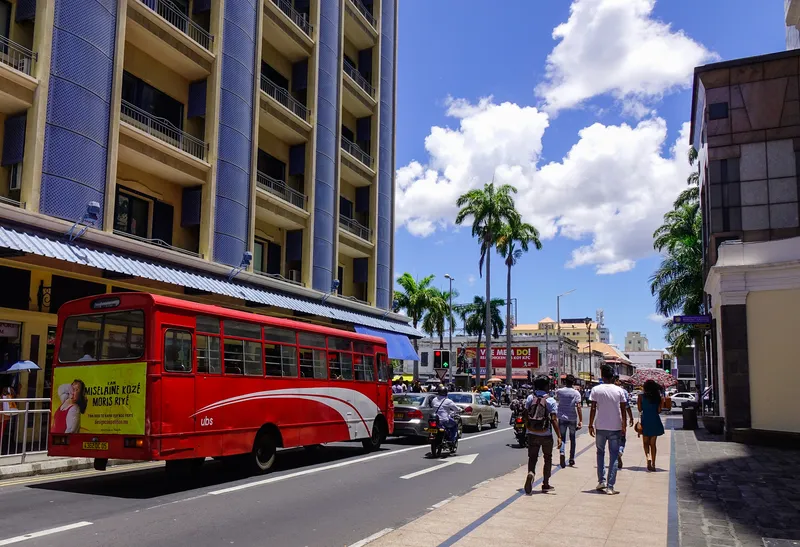
  • Mauritius sets out to modernise public transport 
    March 19, 2020
    The National Land Transport Authority (NLTA) in Mauritius is using LIT Transit's mobility platform to provide integrated mobility management and passenger information capabilities on public transport. 
  • Integrated transport network proposed for Montréal
    April 25, 2016
    DPQ Infra, a subsidiary of Caisse de dépôt et placement du Québec, has unveiled for its Réseau électrique métropolitain (REM), an integrated public transportation project. Under the proposal, the REM will link downtown Montréal, the South Shore, the West Island (Sainte-Anne-de-Bellevue), the North Shore (Deux-Montagnes) and the airport in a unified, fully automated, 67km light rail transit (LRT) system comprising 24 stations and operating 20 hours a day, 7 days a week. The solution proposed by CDPQ Infra wi
  • Trains and no planes or automobiles
    August 3, 2021
    Moves are afoot in France and Germany for legislation to prioritise rail over air travel. Iomob’s Boyd Cohen suggests that Mobility as a Service can help to support this shift
  • Siemens offers Stamford a ‘bird’s eye view’
    April 29, 2019
    Stamford, Connecticut is a vibrant, diverse community overlooking the Long Island Sound, within commuting distance of New York City. Stamford hosts the largest financial district in the greater New York metro area outside of Manhattan and is home to a high concentration of large corporations and corporate HQs. With a population of 130,000, Stamford is Connecticut’s third largest city and the fastest-growing municipality in the state. Like many US cities, Stamford had previously relied on an antiquated traf




