Look to the future of transportation with Xerox at ITSA 2016

Transportation of the future could include driverless cars, high-speed rail, or even flying cars. But as Xerox points out, what is clear is that today’s mobility is akin to the Wild West – everyone is staking their claims around the globe, and the government is trying to figure out its role.
June 3, 2016 Read time: 2 mins

Transportation of the future could include driverless cars, high-speed rail, or even flying cars. But as 4186 Xerox points out, what is clear is that today’s mobility is akin to the Wild West – everyone is staking their claims around the globe, and the government is trying to figure out its role.

Xerox believes that the network that’s built should be developed with four guiding principles in mind. Firstly, be open. Think about how the data exchange will benefit both public and private sectors. With an open data platform, app developers and startups can create the next best way to get around.

Secondly, be driven by demand. Demand is always higher than supply no matter what mode of transportation we’re talking about.

Another key guiding principle is to be flexible. As Xerox points out, though we don’t know what mobility will look like in the future, we do know that the network needs to be flexible to respond to all innovations.

Finally, be regulated. Even though regulations can be overdone, our Wild West mobility today doesn’t mesh with our society or the need for a coordinated platform.

With the above in mind, the Xerox booth at ITS America 2016 San Jose will focus on re-envisioning mobility: it’s not entirely about transit or cars – it’s about building a platform that public and private providers can develop and flourish upon. As Xerox says, the cities that build those networks will have a distinct competitive advantage, and those that don’t, will be stuck in gridlock.

For more information on companies in this article

Related Content

  • QMIC brings Gulf Region expertise to ITS
    October 24, 2012
    The Qatar Mobility Innovations Center (QMIC) is the first independent innovation institute in the Gulf Region to focus on creating and delivering to the market mobility solutions based on emerging wireless technologies. It is exhibiting here at the World Congress for the first time in order to showcase growing transport technology expertise in the Gulf region and to attract international partners for the two-way exchange of information and expertise. “Each of the world’s markets has its unique characteristi
  • Missouri’s smart solution for rural road monitoring
    July 7, 2017
    David Crawford sees how Missouri is using commercially available information to rapidly improve monitoring and driver information on rural highways. Missouri is a predominantly rural state with the second largest number of farms in the country and agriculture the main occupation in 97 of its 114 counties. US statistics starkly reveal how road accidents in rural areas tend to be more serious than in urban regions and of the 32,000 US motorists killed each year, 54% die on roads in rural areas even though onl
  • Australia preparing for an automated future
    October 6, 2015
    WSP/Parsons Brinckerhoff has been awarded a pivotal consulting study for the association of Australasian road transport and traffic agencies, Austroads, to identify and assess key issues road operators will face with the introduction of automated vehicles (AV) to Australia’s roads. The companies believe that AVs will operate on the country’s roads in the next five to twenty years. WSP/Parsons Brinckerhoff section executive, Scot Coleman, said, “It’s not a matter of if, but when, we will see the introduc
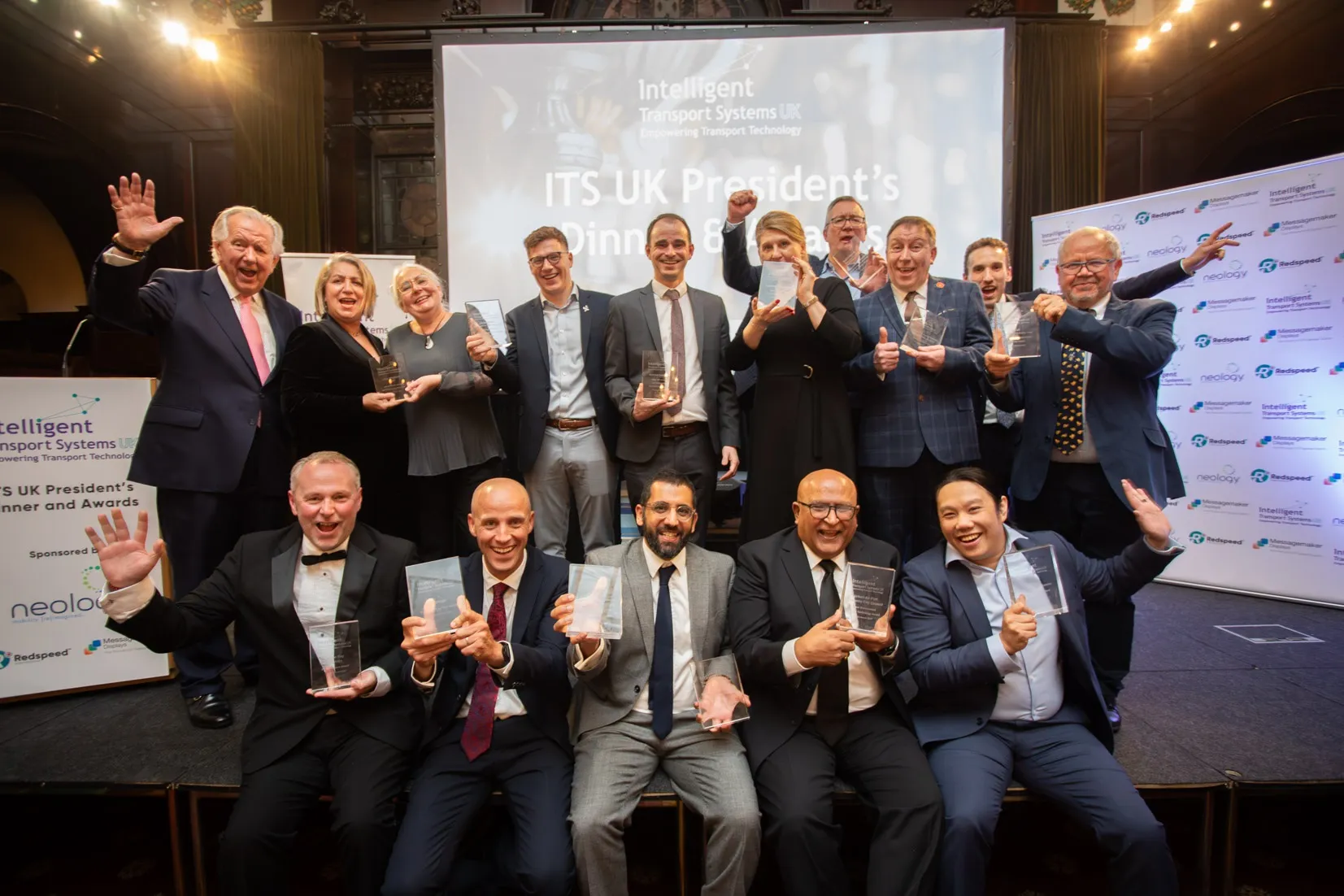
  • ITS UK Awards 2023: and the winners are...
    November 2, 2023
    Schemes and products included Software as a Service, active travel and urban air mobility