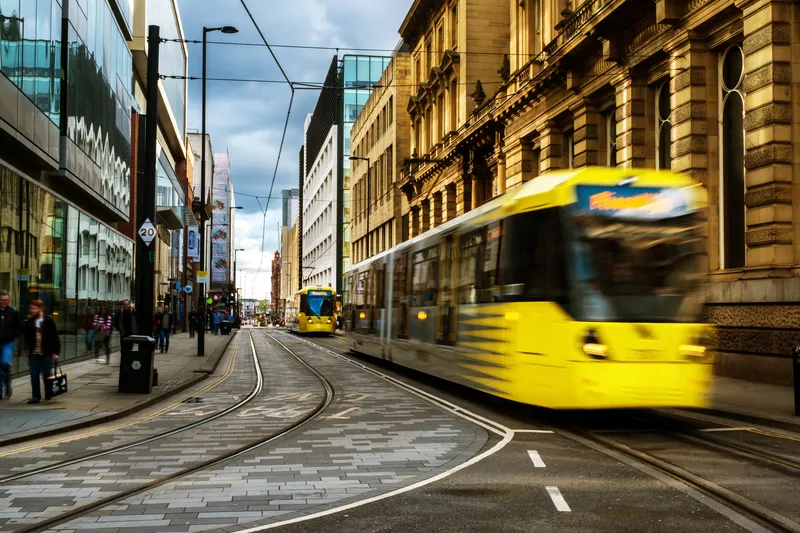
Look to the future of transportation with Xerox at ITSA 2016

Transportation of the future could include driverless cars, high-speed rail, or even flying cars. But as Xerox points out, what is clear is that today’s mobility is akin to the Wild West – everyone is staking their claims around the globe, and the government is trying to figure out its role.
June 3, 2016 Read time: 2 mins

Transportation of the future could include driverless cars, high-speed rail, or even flying cars. But as 4186 Xerox points out, what is clear is that today’s mobility is akin to the Wild West – everyone is staking their claims around the globe, and the government is trying to figure out its role.

Xerox believes that the network that’s built should be developed with four guiding principles in mind. Firstly, be open. Think about how the data exchange will benefit both public and private sectors. With an open data platform, app developers and startups can create the next best way to get around.

Secondly, be driven by demand. Demand is always higher than supply no matter what mode of transportation we’re talking about.

Another key guiding principle is to be flexible. As Xerox points out, though we don’t know what mobility will look like in the future, we do know that the network needs to be flexible to respond to all innovations.

Finally, be regulated. Even though regulations can be overdone, our Wild West mobility today doesn’t mesh with our society or the need for a coordinated platform.

With the above in mind, the Xerox booth at ITS America 2016 San Jose will focus on re-envisioning mobility: it’s not entirely about transit or cars – it’s about building a platform that public and private providers can develop and flourish upon. As Xerox says, the cities that build those networks will have a distinct competitive advantage, and those that don’t, will be stuck in gridlock.

For more information on companies in this article

Related Content

  • Bringing V2I and V2V communications to workzone safety
    January 26, 2012
    Imran Hayee of the University of Minnesota Duluth's Department of Electrical and Computer Engineering talks about efforts to bring V2I and V2V communications into work zones. With USDOT backing and under the auspices of the ITS Joint Program Office Connected Vehicle Research (formerly IntelliDrive) research programme, M. Imran Hayee of the University of Minnesota Duluth's Department of Electrical and Computer Engineering along with team of his students, have been conducting research into the application of
  • AI: a means to an end
    October 12, 2022
    Artificial intelligence is a powerful tool to create a balance between safety, resilience, sustainability and inclusivity when it comes to connected and automated driving, says Margriet van Schijndel of TU/e
  • Improved productivity and advanced technology benefits ITS
    December 13, 2012
    John Horsley will hang up his hat as executive director of AASHTO in February 2013. After 14 years at the helm, he will bow out convinced of the current and future benefits of ITS for US transportation. Alot of exciting career opportunities still await young engineers in US transportation, says John Horsley, outgoing executive director of AASHTO – the American Association of State Highway & Transportation Officials. Horsley will be dedicating more of his time to matters of ITS after he stands down in Februa
  • OPINION: Pursuing transit-first policies is best way to cut car dependency
    April 3, 2023
    It's frustrating to see the UK’s new green strategy once again centre around EVs