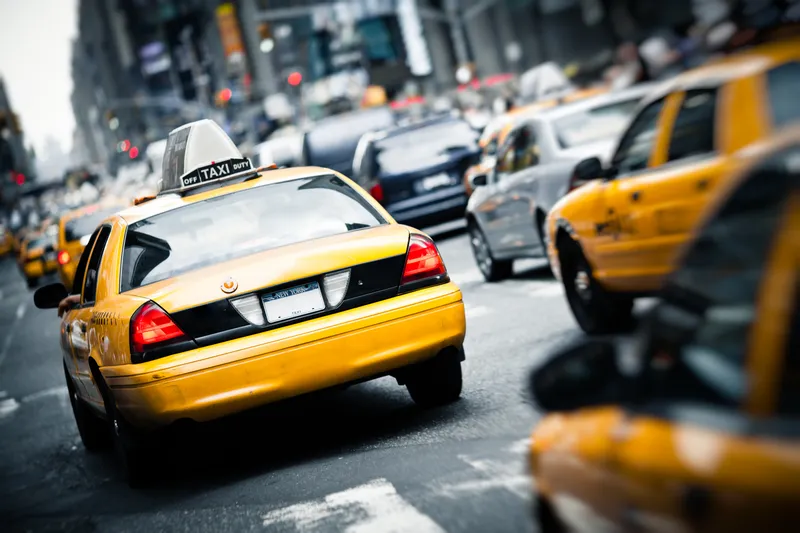
Not even two months after it was introduced, New York City's congestion charge scheme is under threat of being shut down by the US government.
A letter signed by transportation secretary Sean Duffy says the US Department of Transportation’s Federal Highway Administration (FHWA) has terminated approval of the central business district tolling programme (CBDTP) pilot.
The FHWA "will work with the project sponsors on an orderly termination of the tolls".
US president Donald Trump was even more emphatic, posting on his Truth Social platform: "CONGESTION PRICING IS DEAD. Manhattan, and all of New York, is SAVED. LONG LIVE THE KING!"
However, New York's Metropolitan Transportation Authority (MTA) has issued a legal challenge against the decision, and the agency's chair and CEO Janno Lieber was defiant: "We’re not turning off the tolls until there’s a verdict."
Drivers are currently charged $9 per day to enter Lower Manhattan - Duffy called this "a slap in the face to working class Americans and small business owners".
He said that commuters using roads to enter the city "have already financed the construction and improvement of these highways through the payment of gas taxes and other taxes".
He adds: "But now the toll programme leaves drivers without any free highway alternative, and instead, takes more money from working people to pay for a transit system and not highways. It’s backwards and unfair."
It also hurts small businesses in New York that rely on customers from New Jersey and Connecticut, Duffy insists: "Finally, it impedes the flow of commerce into New York by increasing costs for trucks, which in turn could make goods more expensive for consumer. Every American should be able to access New York City regardless of their economic means. It shouldn’t be reserved for an elite few.”
Duffy cites two reasons for the decision. Firstly, "the scope of the CBDTP is unprecedented and provides no toll-free option for many drivers who want or need to travel by vehicle in this major urbanised area".
Secondly, the toll was set primarily to fund the city's transit network, "rather than at an amount needed to reduce congestion". This, Duffy says, runs contrary to the Value Pricing Pilot Program (VPPP) under which it was agreed, "which is to impose tolls for congestion reduction – not transit revenue generation".
'Roadkill on Donald Trump's revenge tour against New York'
MTA has filed legal papers in the US federal court to prevent the shut down of the "highly successful programme" which has "dramatically reduced congestion", and increased speeds for buses and emergency vehicles.
"It’s mystifying that after four years and 4,000 pages of federally-supervised environmental review – and barely three months after giving final approval to the Congestion Relief Program – USDoT would seek to totally reverse course," says MTA chair and CEO Janno Lieber.
Although New York governor Kathy Hochul scuttled congestion pricing herself in a surprise move last year before the scheme was finally reinstated, she was scathing about the Trump Administration letter.
"The commuters of our city and our region are now the roadkill on Donald Trump's revenge tour against New York", she said.
There are "a lot of legal reasons why we know we're going to be victorious", Hochul added.
She insisted the MTA had been prepared for potential legal action.
"We knew this could come and filed a lawsuit within minutes. I'm very confident we will be successful. And I also want to say, the cameras are staying on. We are keeping the cameras on. Lights, cameras, action. They're staying on."
Lieber made the case for improvements made since congestion pricing was introduced at the beginning of January in terms of traffic reduction (down 9%), safer cross-streets and faster bus journeys.
He concludes: "New York ain't going back. We tried gridlock for 60 years. It didn't work. It cost our economy billions. But you know what's helping our economy? What's making New York a better place? Congestion pricing."