Lagos, Nigeria, is about to get a mass transit system with a difference, which the manufacturer says will play its part in reducing congestion and air pollution in the city. For the first time in the country’s history of Nigeria, a cable car company, Ropeways Transport, is set to launch a cable car mass urban transit system in the nation’s commercial capital. Under the terms of a thirty-year franchise agreement between Ropeways Transport, the Lagos Metropolitan Area Transport Authority (LAMATA) and the Lag

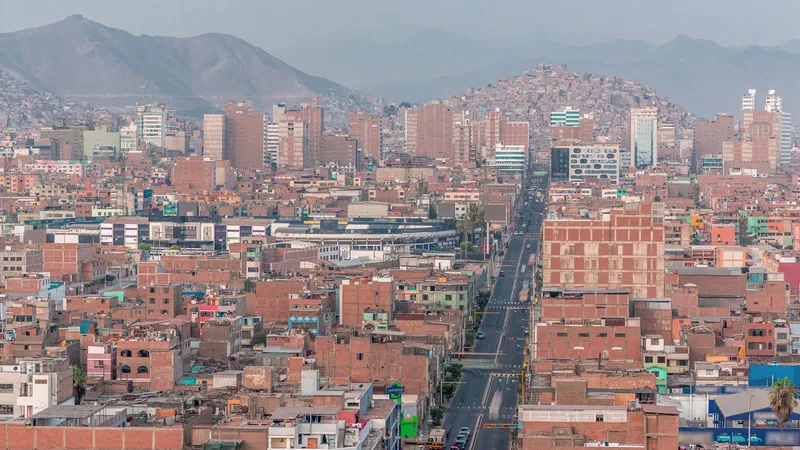
Lagos, Nigeria, is about to get a mass transit system with a difference, which the manufacturer says will play its part in reducing congestion and air pollution in the city. For the first time in the country’s history, a cable car company, Ropeways Transport, is set to launch a cable car mass urban transit system in the nation’s commercial capital.
Under the terms of a thirty-year franchise agreement between Ropeways Transport, the7133 Lagos Metropolitan Area Transport Authority (LAMATA) and the Lagos State government, Ropeways Transport will begin the construction of towers, stations and connecting network cables along various routes covered in the first phase of the project in November 2013. The project will be partly financed by the 5980 African Development Bank and it is expected to be completed and commissioned by early 2015.
According to the chief executive officer of Ropeways Transport, Dapo Olumide, the Lagos cable car transit system will provide an alternative means of mass transportation in the city and help to ease the current transportation problems.
“By complementing existing transport modes, the Lagos cable car transit system will play its part in reducing the traffic congestion in the city,” he said.
“The existing metropolitan highway infrastructure is severely constrained, with journeys to and from work within the city regularly exceeding three hours. In addition, studies carried out in 2009 on vehicle registration shows that an additional 200,000 vehicles are registered annually in Lagos State. This equates to 222 vehicles per kilometer of road in Lagos, which by far, outweighs the national average of just 11vehicles per kilometer of road, with vehicles estimated to contribute more than 70 per cent of the ambient air pollution in Lagos,” he said.
These problems, he said, can be effectively eliminated with this new technology. “Presently, there is need to ameliorate the existing congestion on the three bridges connecting Lagos mainland to Lagos island and to provide a link between Apapa and the central business district on Lagos island, and also to link Victoria island with the central business district of Lagos island. This is what we hope to achieve with the launch of the cable transit system,” Olumide said.
On the safety of the cable car system, the Ropeways CEO described it as one of the safest means of transport worldwide. A 2009 study by the Vancouver Metropolitan Transport Agency in Canada determined that passengers are 20,000 times more likely to be involved in a fatal accident in a vehicle than in a cable car.
The Lagos cable car transit system will incorporate several standard safety features, including auxiliary drives and hydraulic brakes to prevent passengers being stranded, lightning protection on towers, ropes and stations, as well as solar panels on each cabin roof to provide power for cabin interior and exterior lighting. There will also be passenger monitoring with CCTV and audio communication links and passenger address systems.
The project will be powered by several sources namely, dual-fired primary power turbines and dual-fired back up power turbines with sufficient numbers of static inverters to provide 30 minutes of backup power.
The project uses proprietary technology developed by Doppelmayr, a Swiss/Austrian specialist company that manufactures chairlifts, cable cars, gondolas, surface tows for ski and amusement parks as well as urban transport systems. The technology has been successfully used on projects in Venezuela, New York and Portland, USA, Columbia, Algeria, Germany, Hong Kong, Singapore and Australia. The company is currently executing similar projects in Turkey, Brazil, Bolivia and London.
Under the terms of a thirty-year franchise agreement between Ropeways Transport, the
According to the chief executive officer of Ropeways Transport, Dapo Olumide, the Lagos cable car transit system will provide an alternative means of mass transportation in the city and help to ease the current transportation problems.
“By complementing existing transport modes, the Lagos cable car transit system will play its part in reducing the traffic congestion in the city,” he said.
“The existing metropolitan highway infrastructure is severely constrained, with journeys to and from work within the city regularly exceeding three hours. In addition, studies carried out in 2009 on vehicle registration shows that an additional 200,000 vehicles are registered annually in Lagos State. This equates to 222 vehicles per kilometer of road in Lagos, which by far, outweighs the national average of just 11vehicles per kilometer of road, with vehicles estimated to contribute more than 70 per cent of the ambient air pollution in Lagos,” he said.
These problems, he said, can be effectively eliminated with this new technology. “Presently, there is need to ameliorate the existing congestion on the three bridges connecting Lagos mainland to Lagos island and to provide a link between Apapa and the central business district on Lagos island, and also to link Victoria island with the central business district of Lagos island. This is what we hope to achieve with the launch of the cable transit system,” Olumide said.
On the safety of the cable car system, the Ropeways CEO described it as one of the safest means of transport worldwide. A 2009 study by the Vancouver Metropolitan Transport Agency in Canada determined that passengers are 20,000 times more likely to be involved in a fatal accident in a vehicle than in a cable car.
The Lagos cable car transit system will incorporate several standard safety features, including auxiliary drives and hydraulic brakes to prevent passengers being stranded, lightning protection on towers, ropes and stations, as well as solar panels on each cabin roof to provide power for cabin interior and exterior lighting. There will also be passenger monitoring with CCTV and audio communication links and passenger address systems.
The project will be powered by several sources namely, dual-fired primary power turbines and dual-fired back up power turbines with sufficient numbers of static inverters to provide 30 minutes of backup power.
The project uses proprietary technology developed by Doppelmayr, a Swiss/Austrian specialist company that manufactures chairlifts, cable cars, gondolas, surface tows for ski and amusement parks as well as urban transport systems. The technology has been successfully used on projects in Venezuela, New York and Portland, USA, Columbia, Algeria, Germany, Hong Kong, Singapore and Australia. The company is currently executing similar projects in Turkey, Brazil, Bolivia and London.