
KeolisAmey reappointed to operate London's automated rail system

New eight-year €140m deal from Transport for London to run Docklands Light Railway
By Adam Hill October 7, 2024 Read time: 2 mins
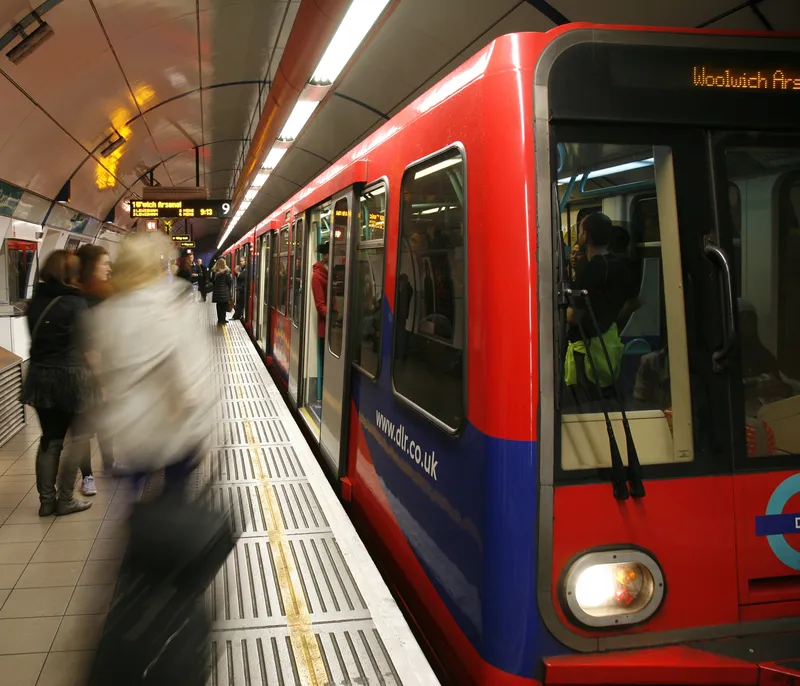
The DLR has 40km of track and 45 stations and carries around 100 million passengers per year (© Anizza | Dreamstime.com)

Transport for London (TfL) has reappointed KeolisAmey to operate and maintain its automated metro network in the UK capital. 

The driverless Docklands Light Railway (DLR) opened in 1987 to cover a redeveloped docks area in the east of the city, and KeolisAmey - a joint venture between Keolis and Amey - began operating it in December 2014.

The new eight-year contract is worth around €140 million in revenue and will begin on 1 April 2025.

The DLR has 40km of track and 45 stations and carries around 100 million passengers per year.

Marie-Ange Debon, chairwoman of the Keolis Executive Board, says she is "proud of the role we have played over the past decade, setting records for ridership and customer satisfaction".

“The new DLR contract allows us to build on our work, operating one of the capital’s busiest rail networks, bringing new technologies onboard to improve passengers’ experiences and give back to local communities," adds Andy Milner, CEO of Amey.

"With new trains, greater innovation, a core commitment to decarbonising and a focus on safety for both customers and colleagues, it’s a really important time for the DLR," comments Tom Page, TfL’s general manager for DLR.

KeolisAmey says it will support TfL in introducing 54 new trains to the network, adding new timetables with increased service frequency, and deploying AI-based tech to improve passenger safety in stations and manage footfall during major events.

Keolis operates a dozen automated metro networks, including the world’s longest - in Dubai - which has 280km of lines in operation or under construction.

The first automated metro launched in 1983 in Lille, France.

For more information on companies in this article

Related Content

  • Bombardier to supply new propulsion technology to London Underground
    August 29, 2017
    Rail technology supplier Bombardier Transportation has been awarded a contract by London Underground to supply new motors and traction control equipment for its fleet of Central line trains. This contract, which includes ongoing maintenance support, will run until 2024 and is valued by Bombardier Transportation at approximately US$143.7 million (£112.1 million). Bombardier's re-traction project is part of London Underground's larger Central Line Improvement Programme (which aims to bring a number of pas
  • EU to fund common train control system
    April 15, 2015
    The EU's TEN-T Programme is to provide funding of over US$16 million for the development and installation of the common European Train Control System (ETCS) in Belgium, Luxembourg, Denmark and the UK. The new system is expected to improve the interoperability, safety, reliability and capacity on European railways. Seven separate projects aim to contribute to the deployment of the European Rail Traffic Management System (ERTMS) in the EU and enhance interoperability of European rail services. While increa
  • Bombardier wins UK order for 130 Electrostar cars
    March 23, 2012
    Bombardier Transportation yesterday announced that it has secured an additional order, valued at US$296 million, for 130 Electrostar cars for Southern rail in the UK. The new trains, which will augment the operator’s existing fleet of Bombardier’s electric multiple units, will be manufactured in the UK with initial production commencing in the latter half of 2012.
  • Bluetooth aids rail passenger monitoring
    April 12, 2013
    In an effort to reduce congestion and improve passenger flow at railway stations in the Netherlands, Danish software company Blip Systems and Dutch railway consultants NPC have teamed up to monitor passenger movements using Bluetooth and wi-fi tracking. In an eight-week study at Groningen railway station, Blip Systems has installed 22 of its BlipTrack sensors which anonymously detect wi-fi and Bluetooth-enabled devices such as mobile phones and laptops. The sensors will monitor passengers and transmit the



