First look at brand new IRD product

Visitors to ITS America 2016 San Jose will be the first to see a new product from International Road Dynamics – the company’s very recently announced light-weight, cost-effective, portable UVAS under-vehicle surveillance system. The real-time UVAS system is designed to provide an affordable, robust and dependable under-vehicle inspection process for all vehicle check points in any terrain – day or night. Global weigh-in-motion technology specialist IRD says it provides the perfect solution to scan, inspect,
May 31, 2016 Read time: 2 mins

Visitors to ITS America 2016 San Jose will be the first to see a new product from 69 International Road Dynamics – the company’s very recently announced light-weight, cost-effective, portable UVAS under-vehicle surveillance system.

The real-time UVAS system is designed to provide an affordable, robust and dependable under-vehicle inspection process for all vehicle check points in any terrain – day or night.

Global weigh-in-motion technology specialist IRD says it provides the perfect solution to scan, inspect, and digitally record the underside of any road vehicle.

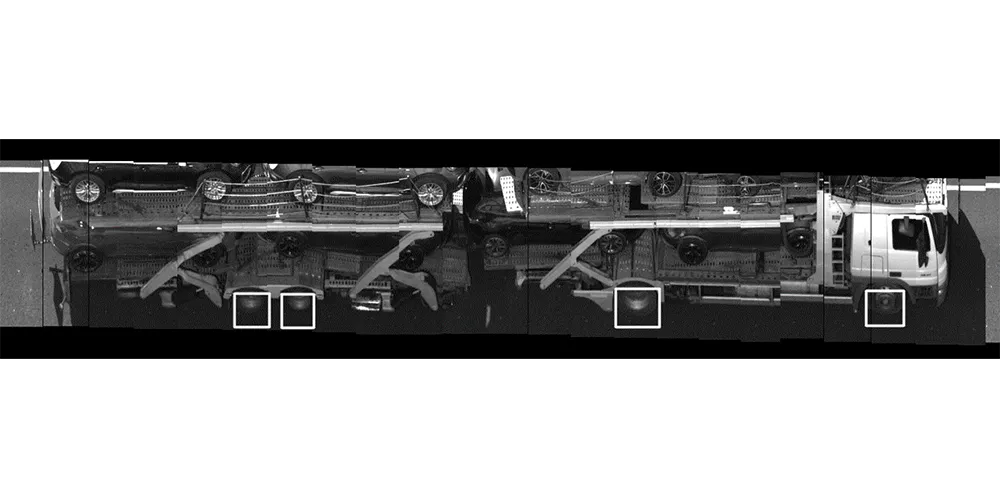
The UVAS system is mainly for 24/7 remote or temporary service applicable to checking for hidden explosives or other suspicious packages. The system produces a full-colour image of the entire underside within seconds of the vehicle passing over the scanning unit. Images are captured and displayed in real time on a high-definition display and stored for archive on a large-capacity hard drive.

The IRD package includes all the necessary components to set up a temporary vehicle check point. Mounted in a ruggedised fibre case, the main computer elements include a high-performance processor with a large-capacity hard disk drive. Attached to the hinged top is a 22” LCD display supporting resolutions up to 1920x1080. The case is mounted on heavy-duty casters and includes AC outlet plugs supporting operating voltages at 110-240VAC, 50-60Hz.

Included with the system are two separate cameras – one for the driver image / scene camera and the second one for LPR. The camera housing contains high-intensity LEDs with a high-speed scanning camera that is programmed to capture the undercarriage of a moving vehicle up to a speed of 30 km/h.

Images are instantly displayed and processed in real time for analysis.
For more information on companies in this article

Related Content

  • Tattile to unveil axle counting perfection
    March 7, 2022
    A real exhibition highlight at the Tattile stand during Intertraffic 2022 will be the unveiling the final version of the Tattile Axle Counter. The company says the system fills the missing link of automatically providing all relevant vehicle information for a variety of applications, including tolling. According to Tattile, full onboard processing makes any other external devices unnecessary.
  • “We don’t want to catch you!”
    May 23, 2022
    Effective enforcement and compliance programs catch very few offenders. IRD explains why…
  • VTT launches AV for snow and ice conditions, Finland
    December 18, 2017
    VTT Technical Research Centre (VTT) of Finland has launched what it claims to be the first autonomous car (AC) to have successfully driven on a real snow-covered road. It also reached speeds of up to 40 km/h during a trial on the Aurora E8 intelligent road in Muonio.
  • Advanced in-vehicle user interface - future developments
    February 1, 2012
    Dave McNamara and Craig Simonds, Autotechinsider LLC, look at human-machine interface development out to 2015. The US auto industry is going through the worst crisis it has faced since the Great Depression. But it has embraced technologies that will produce the best-possible driving experience for the public. Ford was the first OEM to announce in-car internet radio and SYNC, its signature-branded User Interface (UI), is held up as the shining example of change embracement.