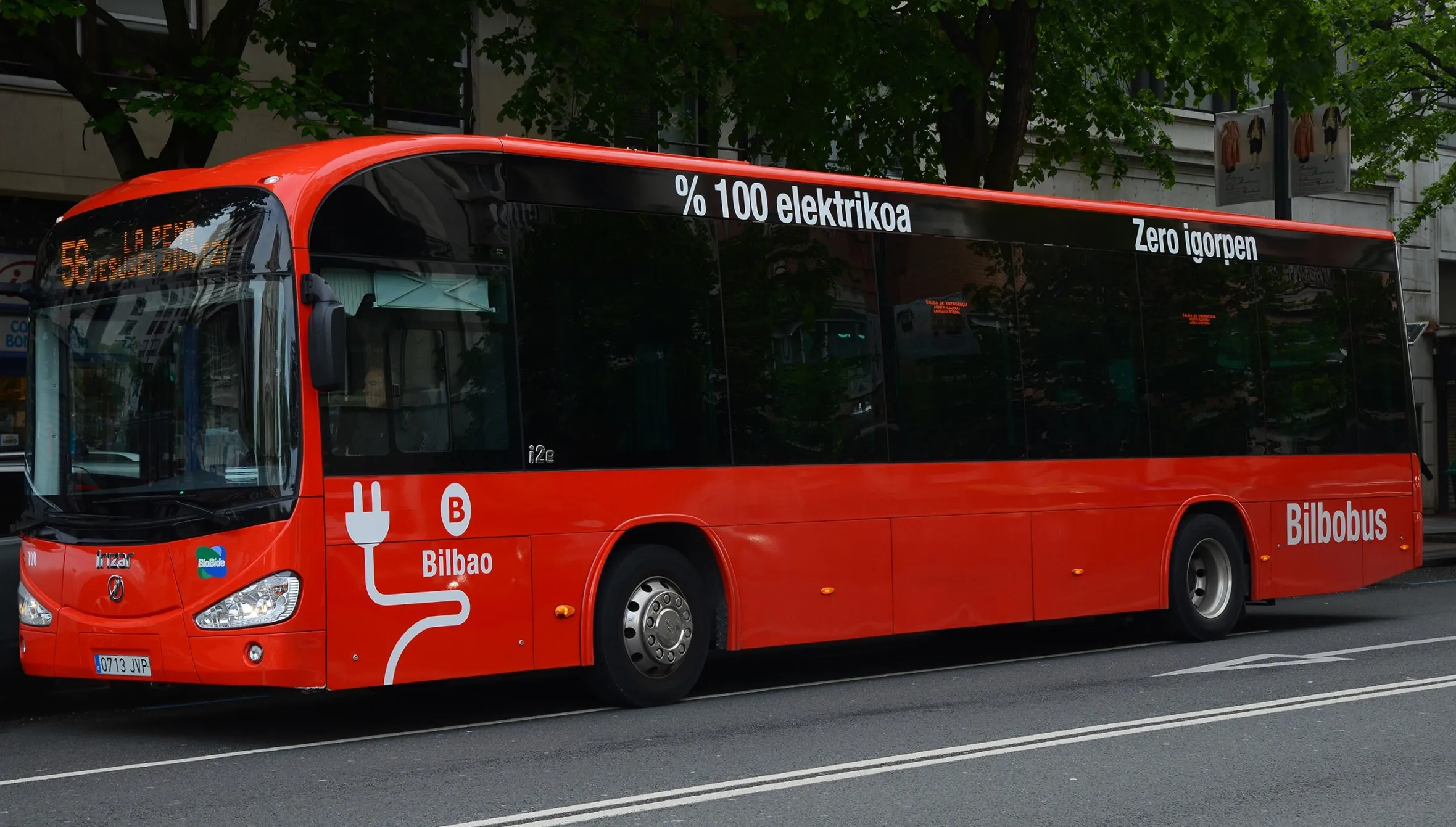
The Living Lab Bus joint project, coordinated VTT Technical Research Centre of Finland and launched at the beginning of 2016, is using Finnish electric buses acquired by Helsinki Region Transport as tangible development and testing platforms for businesses to validate their solutions in a real use environment. The buses can be used for testing user-oriented smart services and technologies, ranging from user interfaces and passenger services to sensors and transport operators’ solutions.
VTT says the goa

The Living Lab Bus joint project, coordinated 814 VTT Technical Research Centre of Finland and launched at the beginning of 2016, is using Finnish electric buses acquired by 6995 Helsinki Region Transport as tangible development and testing platforms for businesses to validate their solutions in a real use environment. The buses can be used for testing user-oriented smart services and technologies, ranging from user interfaces and passenger services to sensors and transport operators’ solutions.
VTT says the goal is to create a new type of everyday development environment for accelerating the product development of businesses by means of agile experiments, in close cooperation with end-users and research institutions. Potential new solutions include easy-to-use passenger feedback solutions, automated passenger counting, and automated road condition observations.
In addition to the Helsinki region, the City of Tampere is also participating in the project, exploiting the results in its own public transport development.
The project supports the creation of new services for transport service users and providers; the business operations of companies are promoted by accelerating the cost-effective introduction of new solutions. The Living Lab Bus showcases Finnish expertise, while also increasing the attractiveness of public transport and cooperation between various players, as well as producing new research information on the needs of public transport users and service developers.
Identifying utilisation interests and needs of various players associated with implementing and using the development platform and setting some common rules for the operations are scheduled for spring 2016. After that, the project will be expanded by bringing in new players, who will utilise the platform in their development activities.
VTT says the goal is to create a new type of everyday development environment for accelerating the product development of businesses by means of agile experiments, in close cooperation with end-users and research institutions. Potential new solutions include easy-to-use passenger feedback solutions, automated passenger counting, and automated road condition observations.
In addition to the Helsinki region, the City of Tampere is also participating in the project, exploiting the results in its own public transport development.
The project supports the creation of new services for transport service users and providers; the business operations of companies are promoted by accelerating the cost-effective introduction of new solutions. The Living Lab Bus showcases Finnish expertise, while also increasing the attractiveness of public transport and cooperation between various players, as well as producing new research information on the needs of public transport users and service developers.
Identifying utilisation interests and needs of various players associated with implementing and using the development platform and setting some common rules for the operations are scheduled for spring 2016. After that, the project will be expanded by bringing in new players, who will utilise the platform in their development activities.