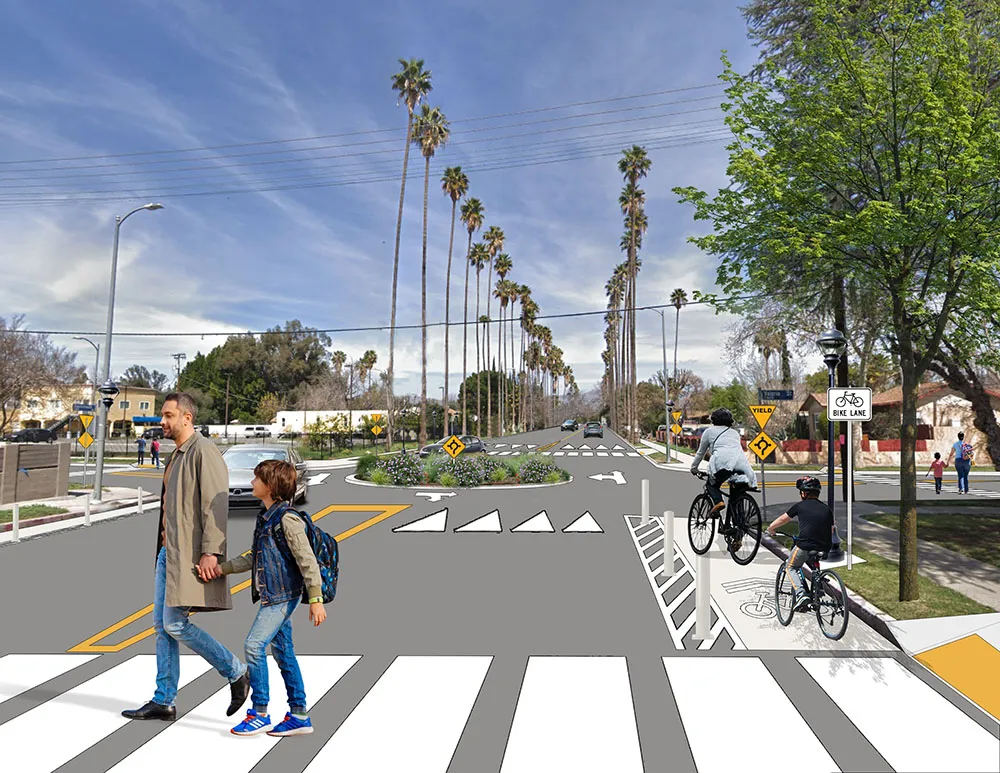
Deloitte's Public Sector Research organisation has released a report titled, Smart Mobility: Reducing congestion and fostering faster, greener, and cheaper transportation options, which indicates that the expansion of alternative modes of transportation could lead to reduced congestion and other benefits, and identified the types of transportation suited to a city or suburb.
The study uses geospatial analytics, such as coupling location data with existing government data, to examine the potential conges

The study uses geospatial analytics, such as coupling location data with existing government data, to examine the potential congestion reduction benefits in major metropolitan areas across the US. Congestion reduction could result from the expansion of alternative modes of commuting including: ridesharing services (carpooling), bike commuting, car-sharing and on-demand ride services.
To understand which major metropolitan areas potentially stand to gain the most congestion relief from these alternative mobility strategies, Deloitte analysed commuter-behaviour data at the census-tract level. Deloitte then formulated estimates on the potential savings if commuters who could reasonably use alternative commuting modes did so and found that:
• Ridesharing has the potential to offer US$30.3 billion in annual savings to individuals and cities from reduced congestions, deferred road construction, safety improvements and lower carbon emissions. Ridesharing could also reduce annual traffic accidents by 22,915 and lower carbon emissions by 9.1 million metric tons annually.
• Bike commuting has nearly the same potential benefits as ride sharing with US$27.6 billion in annual savings spread between commuters and cities, and reduced annual carbon emissions of 5 million metric tons.
• Car-sharing could provide up to US$3 billion in annual savings to individuals and cities from reduced congestion, deferred road construction and lower carbon emissions. Car-sharing could lower annual accidents by 1,391 and carbon emissions by nearly 6.6 metric tons annually.
• On-demand ride services have the potential to reach underserved portions of cities. Substituting shared rides for some taxi trips could reduce total taxi trip miles in some cities by as much as 30 percent – thereby contributing to reduced congestion.
"This report utilises open government data on commuting to determine the feasibility of alternative modes of transportation," says William D. Eggers, director of public sector research at Deloitte Services LP. "Our data analysis demonstrates that alternative mobility services can help reduce traffic congestion, lower the number of traffic accidents and fatalities, and improve air quality, in most cases at a far lower cost than traditional approaches to congestion reduction."
The report found that the potential benefits from these four modes are distributed differently across America's cities and within each city. Car-sharing works well in dense urban cores. On-demand ride services extend services to underserved portions of cities. Ridesharing provides returns in a ring 10 to 15 miles outside a city centre, and bike commuting benefits neighbourhoods in the urban core and clustered around suburban commercial centres.
Based on the report findings, the arrival and increasing popularity of dynamic, smart mobility services can offer promising new possibilities for making more efficient use of existing infrastructure. At a fraction of the cost of new roads, smart mobility ecosystems can help reduce gridlock, lower accident rates, improve air quality, and shrink the urban footprint required for parking.
Incorporated in the report are statistical analyses on the possible congestion savings metropolitan areas could achieve if each alternative mode were implemented.