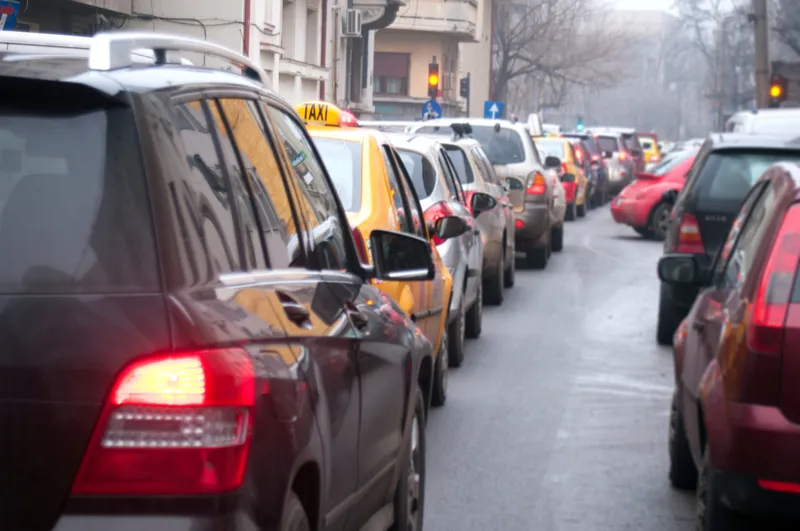
Bolt pledges not to ‘serve up eyeballs for advertisers’

Bolt, the ride-share firm which was previously called Taxify, has insisted that the ITS industry must be careful what it does with the data it collects. Speaking at ITS International’s MaaS Market conference in London last week, Dominick Moxon-Tritsch, Bolt’s director of regulation and public policy, told delegates: “In principle we’ve got no problem with data sharing.” The company already works with public authorities across Europe, he said, but there is an obligation on firms in the mobility sector
March 26, 2019 Read time: 1 min

Bolt, the ride-share firm which was previously called Taxify, has insisted that the ITS industry must be careful what it does with the data it collects.

Speaking at 1846 ITS International’s 8545 MaaS Market conference in London last week, Dominick Moxon-Tritsch, Bolt’s director of regulation and public policy, told delegates: “In principle we’ve got no problem with data sharing.”

The company already works with public authorities across Europe, he said, but there is an obligation on firms in the mobility sector to use data responsibly.

“There’s a reckoning coming: we don’t intend to be monetising our dataset,” he added. “We’re not in the business of serving up eyeballs for advertisers. We’re a transport business.”

2069 Daimler and Chinese ride-share group DiDi have invested in Bolt, which was set up in Estonia in 2013 by entrepreneur Markus Villig.

For more information on companies in this article

Related Content
  • MaaS Global buys Wondo
    June 7, 2021
    Ferrovial has also been named as one of the Whim app owner's strategic investors
  • Here & Yunex anticipate jams
    October 22, 2021
    Partners to focus on expanding Yunex’s Journey Time as a Service globally
  • Polarisation is glaringly obvious, says Sony
    December 3, 2018
    Glare from the sun is a factor in a large number of road accidents – many of them fatal. But there is a solution at hand: using polarisation can mitigate the effect of glare and improve ITS camera enforcement, explains Stephane Clauss The effect of glare on driver safety has been well documented. A 2013 UK study by the country’s largest driver organisation, the AA, calculated sun glare was a contributing cause in almost 3,000 road accidents in 2012 alone. This represented one in 33 accidents on Britain’s
  • London Science Museum hosts free driverless vehicle exhibition
    March 8, 2019
    Autonomous vehicles (AVs) are at the heart of a new exhibition at the London Science Museum. Driverless: Who is in control? opens on 12 June and looks at “how close we are to living in a world driven by thinking machines”. Continuing until October 2020, the show examines themes familiar to ITS professionals wrestling with the legal, ethical and logistical issues around the introduction of driverless cars to public roads. The museum says it will focus on “how much of this seemingly futuristic technolog