Autoliv joins OSCCAR future automotive safety project

Automotive safety systems company Autoliv has joined safety initiative OSCCAR, part of the European Union’s Horizon 2020 research project. OSCCAR (Occupant Safety for Crashes in Cars) also includes partners such as Toyota, Siemens and various academic institutions. Autoliv says it will help develop harmonised methods and tools for vehicle restraint systems which could feature in automated vehicles. Cecilia Sunnevång, vice president, research at Autoliv, says the project will provide information on
July 24, 2018 Read time: 1 min
Automotive safety systems company 4171 Autoliv has joined safety initiative OSCCAR, part of the European Union’s Horizon 2020 research project.


OSCCAR (Occupant Safety for Crashes in Cars) also includes partners such as 1686 Toyota, 189 Siemens and various academic institutions.

Autoliv says it will help develop harmonised methods and tools for vehicle restraint systems which could feature in automated vehicles.

Cecilia Sunnevång, vice president, research at Autoliv, says the project will provide information on understanding future accident scenarios and how to provide the best restraint systems for interiors and seating positions for occupants.

“The project will provide input to regulation and consumer tests on how future occupant protection can be assessed by including tools such as crash test dummies and human body models, and risk functions,” Sunnevång adds.

Additionally, guiding principles and concepts for occupant protection will be developed and assessed by using harmonised human body models.

For more information on companies in this article

Related Content

  • Partially automated cars ‘provide financial and safety benefits’
    July 19, 2016
    Carnegie Mellon College of Engineering researchers in the US have concluded that the public could derive economic and social benefits today if safety-oriented, partially automated vehicle technologies were deployed in all cars. The researchers examined forward collision warning, lane departure warning and blind spot monitoring systems. These technologies can include partially autonomous braking or controls to help vehicles avoid crashes. Chris T. Hendrickson, director of the Carnegie Mellon Traffic21 In
  • Panasonic gets connected on The Ray
    June 5, 2020
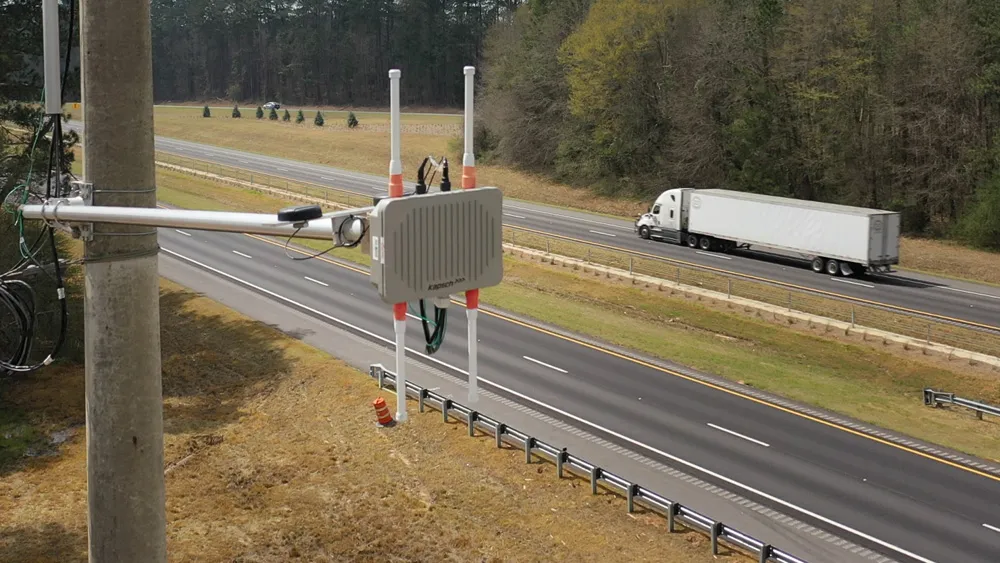
    A stretch of rural Georgia highway called The Ray is a particularly useful testbed for V2X technology. Panasonic’s Chris Armstrong tells Adam Hill what’s so special about it
  • Open communication platform to support cooperative infrastructure
    July 23, 2012
    Within the European Commission's CVIS project, work is going on to shrink the open vehicle communication platform to make it more market-ready and to remove barriers to the creation of appropriate applications by those external to the project. Here, ERTICO's Zeljko Jeftic and Paul Kompfner and Q-Free's Knut Evensen discuss progress. Development of the open communication platform which will support the various applications developed by the European Commission's (EC's) Cooperative Vehicle-Infrastructure Syste
  • Future of tolling: the priorities
    January 14, 2020
    In the final part of his investigation into the future of tolling technology, Josef Czako of Moving Forward Consulting asks what industry figures see as the priorities going forward…