2getthere’s Group Rapid Transit vehicle passes desert climate test

2getthere’s Group Rapid Tansit (GRT) autonomous vehicle has proven in a simulated desert climate that it can maintain an indoor temperature of 23˚C even in the worst scenario (52˚C outside temperature and 3% humidity). The climate test took place in the Utrecht province and is one of many tests regarding the mega-order received from United Arab Emirates earlier this year. From 2020, five vehicles will perform fully autonomous shuttle services to and from Bluewater Island in Dubai.
October 26, 2017 Read time: 2 mins

8172 2getthere’s Group Rapid Tansit (GRT) autonomous vehicle has proven in a simulated desert climate that it can maintain an indoor temperature of 23˚C even in the worst scenario (52˚C outside temperature and 3% humidity). The climate test took place in the Utrecht province and is one of many tests regarding the mega-order received from United Arab Emirates earlier this year. From 2020, five vehicles will perform fully autonomous shuttle services to and from Bluewater Island in Dubai.

GRT was subject to three tests in weather conditions such as ‘hot dry’ and ‘hot humid’ with a focus on the performance of the air conditioning system (ACS) at the vehicles maximum capacity of 24 passengers.

13 ACS has been developed in collaboration with suppliers DC Airco and Netherlands Aerospace Centre (NLR) who used the simulation of heat management in relation to airflow within the vehicle in its design of the air conditioning. Its development has been partly financed through a 2024 Massachusetts Institute of Technology research grant in which DC Airco and 2getthere have both participated.

The simulated weather conditions included extremely high temperatures and sun radiation with average peaks in the sun radiation of 1,040 Watts per square metre and peaks in temperature of 52˚C around 3.30pm. In the climatic chamber, both peaks were simulated at the same time.

The GRT’s 16 standing passengers represented 120 Watts each and eight seated passengers each represented 100 Watts were simulated by placing a 3000-Watt heat source inside the vehicle. Part of the test focused on performance during transition: the speed at which indoor conditions are brought back to the most comfortable level for passengers after the doors close and the vehicle starts its journey. The most extreme test was based on the vehicle standing still with the doors open for six minutes, but in actual circumstances much shorter stops will be sufficient to allow 24 passengers to enter the vehicle and find their seats.

According to 2getthere the test marks another step towards the operational deployment of the system, scheduled for 2019/2020.

For more information on companies in this article

Related Content
  • Jenoptik aims for smart sustainability
    March 7, 2022
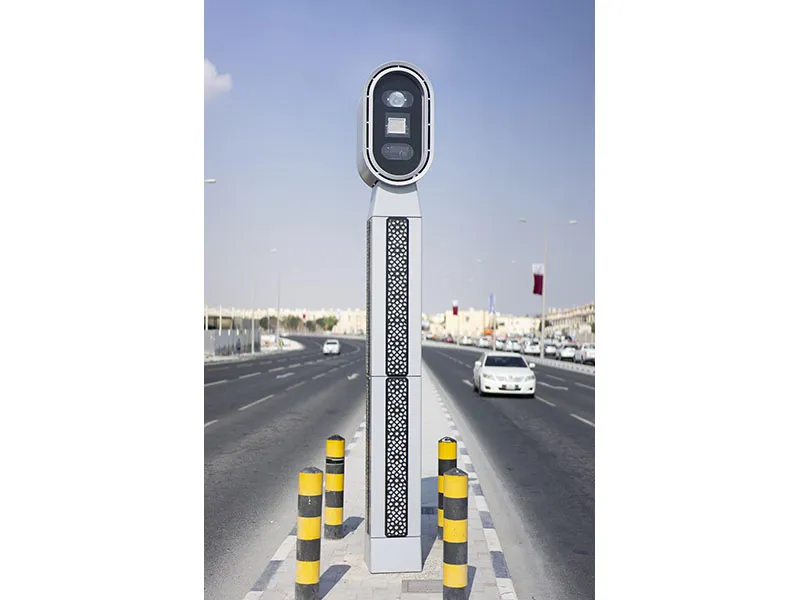
    Jenoptik will be at Intertraffic to highlight that it provides innovative and sustainable smart mobility solutions, including technology and services for road safety, public security, and road user charging. Visitors will be able to experience the company’s brand-new video-based camera family covering a wide range of applications in road safety, civil security and commercial use.
  • Jenoptik zooms in on smarter mobility
    March 30, 2022
    As visitors to Jenoptik’s stand will see, the company provides innovative and sustainable smart mobility solutions, including technology and services for road safety, public security and road user charging. They can experience the company’s brand new video-based camera family covering a wide range of applications in road safety, civil security and commercial use.
  • Continental eHorizon to offer real time weather information service
    April 27, 2017
    Automotive technology company Continental is working in partnership with French national weather service Météo-France on a project which will expand its electronic horizon, or eHorizon, for use as eHorizon.Weather to provide real-time weather information. Vehicles equipped with eHorizon.Weather supply exact weather information to optimise short-term forecasts and integrate real-time, location-specific weather data to alert drivers in advance of critical weather conditions. Continental is currently testing t
  • Uber to implement clean air fee for all London trips
    October 25, 2018
    Uber will introduce a fee of 15p per mile for all trips booked via its app in London to help its drivers purchase an electric vehicle (EV). The surcharge will be introduced in early 2019. Uber says drivers working 40 hours per week for two years could receive around £3,000 of support towards the purchase of an EV. The initiative is part of Uber’s Clean Air Plan in which the company expects to raise more than £200 million in the next few years to support the switch to electric. Uber estimates tha