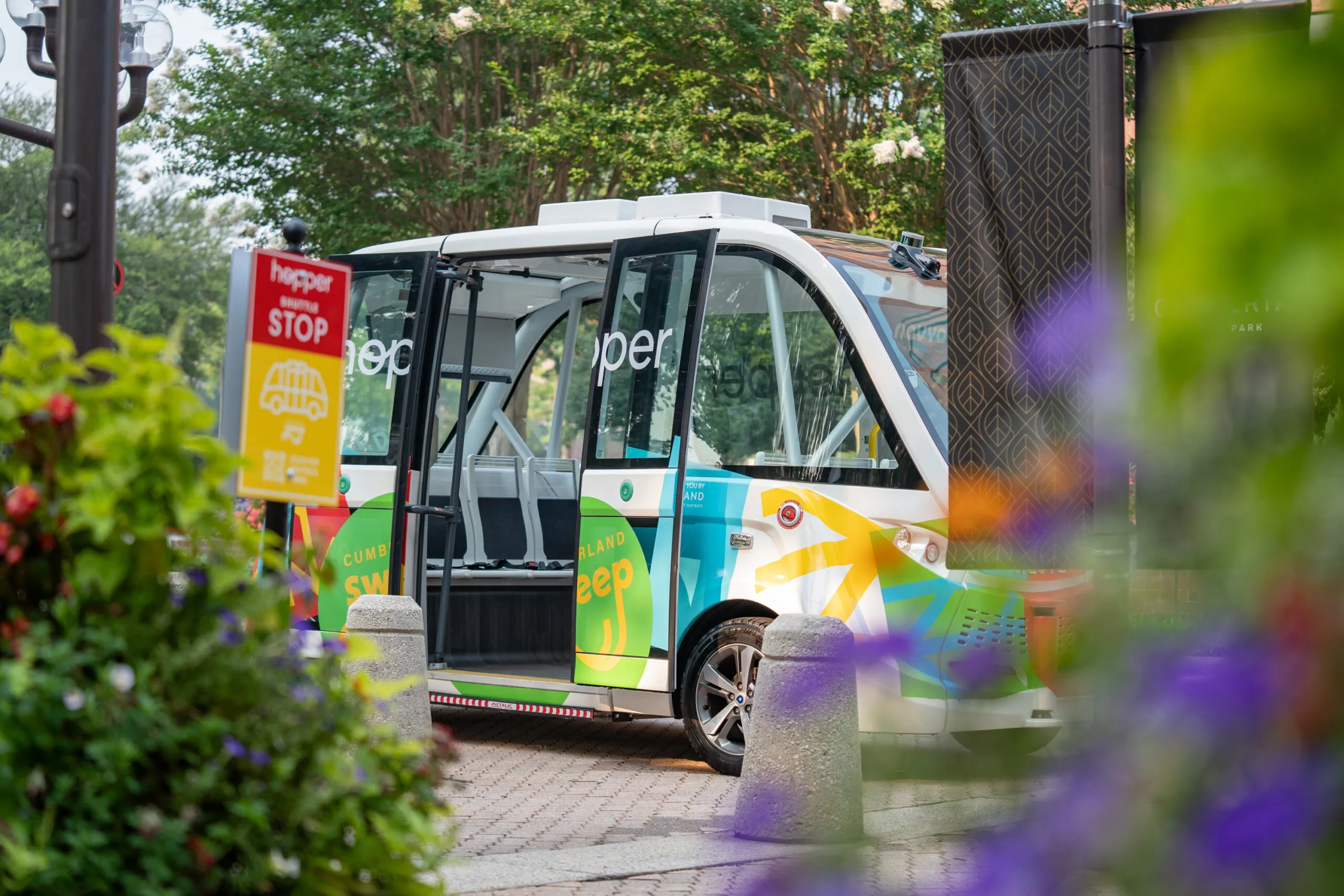
2getthere’s Group Rapid Transit vehicle passes desert climate test

2getthere’s Group Rapid Tansit (GRT) autonomous vehicle has proven in a simulated desert climate that it can maintain an indoor temperature of 23˚C even in the worst scenario (52˚C outside temperature and 3% humidity). The climate test took place in the Utrecht province and is one of many tests regarding the mega-order received from United Arab Emirates earlier this year. From 2020, five vehicles will perform fully autonomous shuttle services to and from Bluewater Island in Dubai.
October 26, 2017 Read time: 2 mins

8172 2getthere’s Group Rapid Tansit (GRT) autonomous vehicle has proven in a simulated desert climate that it can maintain an indoor temperature of 23˚C even in the worst scenario (52˚C outside temperature and 3% humidity). The climate test took place in the Utrecht province and is one of many tests regarding the mega-order received from United Arab Emirates earlier this year. From 2020, five vehicles will perform fully autonomous shuttle services to and from Bluewater Island in Dubai.

GRT was subject to three tests in weather conditions such as ‘hot dry’ and ‘hot humid’ with a focus on the performance of the air conditioning system (ACS) at the vehicles maximum capacity of 24 passengers.

13 ACS has been developed in collaboration with suppliers DC Airco and Netherlands Aerospace Centre (NLR) who used the simulation of heat management in relation to airflow within the vehicle in its design of the air conditioning. Its development has been partly financed through a 2024 Massachusetts Institute of Technology research grant in which DC Airco and 2getthere have both participated.

The simulated weather conditions included extremely high temperatures and sun radiation with average peaks in the sun radiation of 1,040 Watts per square metre and peaks in temperature of 52˚C around 3.30pm. In the climatic chamber, both peaks were simulated at the same time.

The GRT’s 16 standing passengers represented 120 Watts each and eight seated passengers each represented 100 Watts were simulated by placing a 3000-Watt heat source inside the vehicle. Part of the test focused on performance during transition: the speed at which indoor conditions are brought back to the most comfortable level for passengers after the doors close and the vehicle starts its journey. The most extreme test was based on the vehicle standing still with the doors open for six minutes, but in actual circumstances much shorter stops will be sufficient to allow 24 passengers to enter the vehicle and find their seats.

According to 2getthere the test marks another step towards the operational deployment of the system, scheduled for 2019/2020.

For more information on companies in this article

Related Content

  • Refurbishing ageing VMS with new technology
    January 26, 2012
    Virginia DoT faced a challenge common to many highway authorities around the world: the need, in economically challenging times, to replace ageing variable message signs reaching the end of their operational life. For some 25 years now, since the mid 80s, Virginia Department of Transportation (VDoT), has deployed variable message signs (VMS) as part of its motorist information systems. Throughout the state there are still many old 'flip-disk' signs. Some of the companies that provided these electronic messa
  • Asecap Days 2024 in Milan: early-bird registration extended
    March 26, 2024
    2 April is new deadline for discounts to global tolling event in northern Italian city
  • Beep autonomous shuttle launches in Atlanta
    July 28, 2023
    Electric Cumberland Hopper will connect various sites as part of wider mobility strategy
  • Dubai plans major transportation projects
    September 25, 2014
    According to Mattar Al Tayer, chairman and executive director of Dubai’s Roads and Transport Authority (RTA), the authority is planning at least another 35 mega projects in the future after spending about US$19.8 billion so far in upgrading services in the city. Speaking at InnoTrans 2014 in Berlin, Al Tayer said work was progressing on projects related to Expo 2020. He said these would include the extension of the Red Line of the Dubai Metro, upgrading roads and junctions surrounding and leading to t