2getthere’s Group Rapid Transit vehicle passes desert climate test

2getthere’s Group Rapid Tansit (GRT) autonomous vehicle has proven in a simulated desert climate that it can maintain an indoor temperature of 23˚C even in the worst scenario (52˚C outside temperature and 3% humidity). The climate test took place in the Utrecht province and is one of many tests regarding the mega-order received from United Arab Emirates earlier this year. From 2020, five vehicles will perform fully autonomous shuttle services to and from Bluewater Island in Dubai.
October 26, 2017 Read time: 2 mins

8172 2getthere’s Group Rapid Tansit (GRT) autonomous vehicle has proven in a simulated desert climate that it can maintain an indoor temperature of 23˚C even in the worst scenario (52˚C outside temperature and 3% humidity). The climate test took place in the Utrecht province and is one of many tests regarding the mega-order received from United Arab Emirates earlier this year. From 2020, five vehicles will perform fully autonomous shuttle services to and from Bluewater Island in Dubai.

GRT was subject to three tests in weather conditions such as ‘hot dry’ and ‘hot humid’ with a focus on the performance of the air conditioning system (ACS) at the vehicles maximum capacity of 24 passengers.

13 ACS has been developed in collaboration with suppliers DC Airco and Netherlands Aerospace Centre (NLR) who used the simulation of heat management in relation to airflow within the vehicle in its design of the air conditioning. Its development has been partly financed through a 2024 Massachusetts Institute of Technology research grant in which DC Airco and 2getthere have both participated.

The simulated weather conditions included extremely high temperatures and sun radiation with average peaks in the sun radiation of 1,040 Watts per square metre and peaks in temperature of 52˚C around 3.30pm. In the climatic chamber, both peaks were simulated at the same time.

The GRT’s 16 standing passengers represented 120 Watts each and eight seated passengers each represented 100 Watts were simulated by placing a 3000-Watt heat source inside the vehicle. Part of the test focused on performance during transition: the speed at which indoor conditions are brought back to the most comfortable level for passengers after the doors close and the vehicle starts its journey. The most extreme test was based on the vehicle standing still with the doors open for six minutes, but in actual circumstances much shorter stops will be sufficient to allow 24 passengers to enter the vehicle and find their seats.

According to 2getthere the test marks another step towards the operational deployment of the system, scheduled for 2019/2020.

For more information on companies in this article

Related Content

  • The long road to Spanish enlightenment
    October 22, 2018
    Julián Núñez, immediate past president of ASECAP, gets his teeth into the vision of a European strategy for toll roads. David Arminas reports from Madrid. Getting European politicians to agree to a long-term cross-border highway infrastructure programme for toll roads is extremely difficult. It’s a bit like pulling teeth: people want to avoid the pain. But pain is something that Spanish operators, including Abertis, OHL, ACS, FCC and Acciona, have been going through for the past decade. The country has
  • Xerox takes youthful view of future transport
    August 23, 2016
    Xerox’s David Cummins talks to Colin Sowman about the lessons for city authorities from its survey of younger peoples’ attitude to transport. There can be no better way to get a handle on the future of transport demand than to ask the younger generation about how they view and consume today’s transport. Sociologists have called this group Generation Z – those born between 1995 and 2007 – which will make up 40% of all US consumers by 2020.
  • Rating agency Standard and Poor Tolling sees a bright future for tolling
    September 6, 2017
    Few disruptions appear on the horizon for global toll road operators, with the US poised to become a better bet for major investment, according to ratings agency Standard and Poor’s (S&P’s) Global Ratings’ 2017 report, which rates toll road operators according to their ability to raise capital. The outlook is generally stable for business conditions and credit quality for toll roads worldwide. One positive exception is the US where the overall outlook is ‘positive’ as S&P expects traffic growth to increase
  • VanJee will focus on its Lidar systems
    March 20, 2024
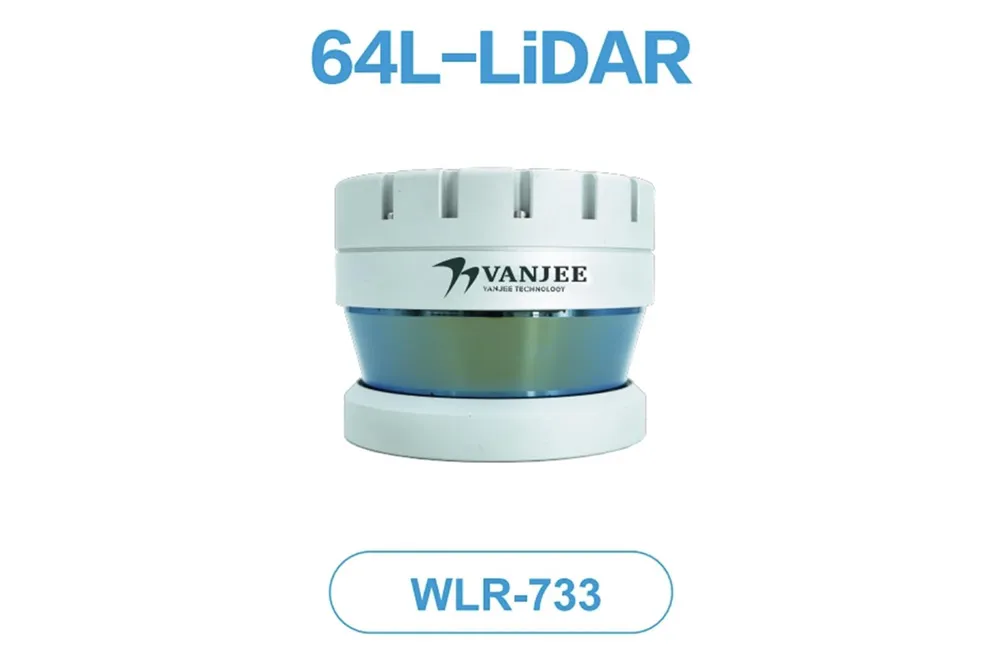
    Beijing-headquartered VanJee, a global ITS and lidar company, will be showcasing its innovative WLR-733 real time scanning radar.