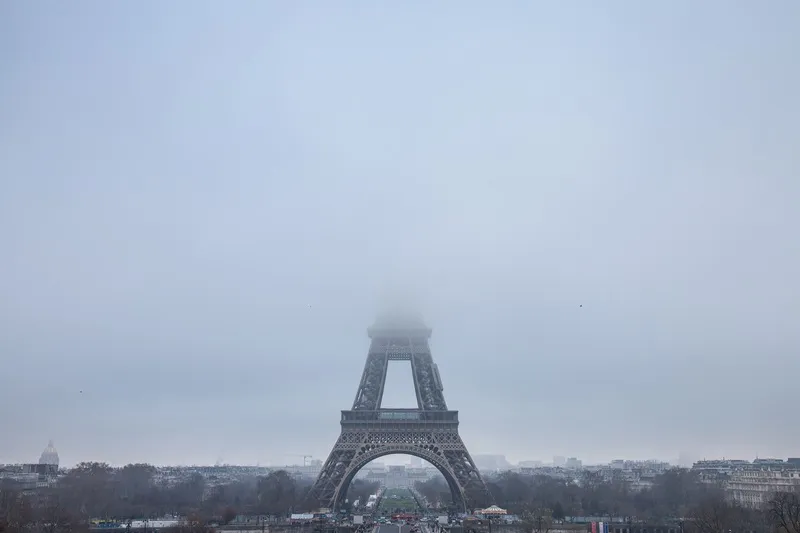
Well, that didn't last long: one of the few benefits of the Covid-19 lockdown - cleaner air - is disappearing fast in Paris, according to new research.
Analysis of official air quality monitoring data by the Centre for Research on Energy and Clean Air (Creca) shows that the city has seen the largest 'rebound' in NO2 pollution among European capitals, followed by Brussels and Bucharest.
The organisation says its definition of rebound is the difference between the ‘lowest’ and the ‘latest’ 30-day mean, until June 20.
Urban lockdowns due to the pandemic resulted in sharp decreases in NO2 levels, with cities reaching "their minimum level 24 days after first measures were implemented".
It is not all bad news: while pollution is on the rise again, all capitals apart from Budapest are below their pre-Covid-19 levels after accounting for weather conditions.
They "have seen a significant decrease of air pollution compared to the previous years", with each city below the 40µg/m3 limit set by European Union regulations.
Yet many are still above the 20µg/m3 threshold, above which the risk of death increases according to the World Health Organisation.
Bucharest, Paris, Lisbon and Milan saw the largest reductions in air pollution during lockdown, "demonstrating the benefits to be reaped if air pollution can be reduced in a more sustainable way".
However, the report notes that the four cities "were among the most-polluted European cities before the pandemic outbreak".
Paris saw the second largest decrease attributable to lockdown - a 60% fall compared to the city's pre-Covid level.
"The increase in pollution is not an inevitable price to be paid for freedom of movement - clean transport solutions can enable mobility without pollution," insists Creca in its report.
The report recommends moving quickly towards "clean energy and clean transport", in part by supporting cycling and walking - and creating space for both as a priority in urban planning.