A new road sensor system is set to offer more accurate warnings for slippery surfaces. The TrackIce system, developed by Mowic, is to be installed by road maintenance contractor Peab along a 30 kilometre stretch of highway E4 between Stora Essingen and Södertälje in Sweden. According to Mowic, the TrackIce system is quick to install without the need for cables, enabling it to be installed in remote areas where no power is available. The TrackIce central unit can also handle information from other sensors su

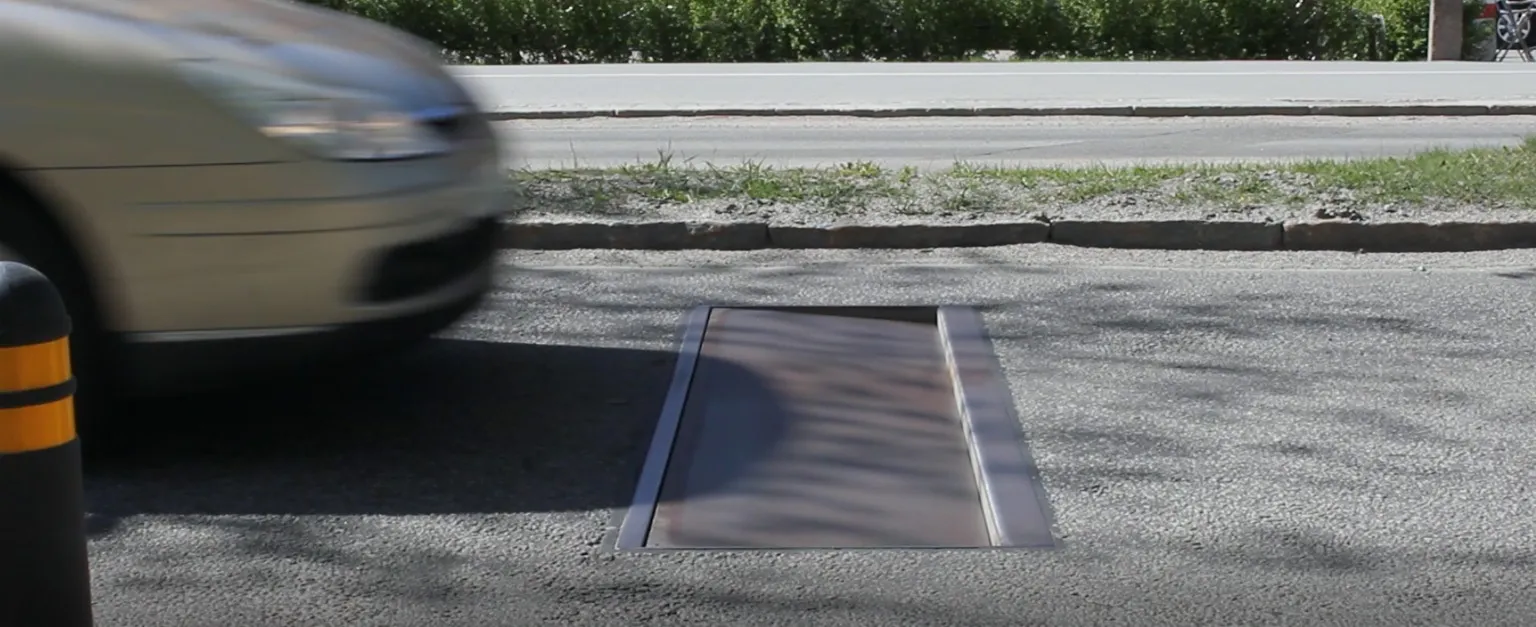
A new road sensor system is set to offer more accurate warnings for slippery surfaces.
The TrackIce system, developed by7134 Mowic, is to be installed by road maintenance contractor Peab along a 30 kilometre stretch of highway E4 between Stora Essingen and Södertälje in Sweden.
According to Mowic, the TrackIce system is quick to install without the need for cables, enabling it to be installed in remote areas where no power is available. The TrackIce central unit can also handle information from other sensors such as wind sensors and snow depth sensors. The weather data from the TrackIce system is then analysed and transmitted to the customer’s weather forecasting system, such as MeteoGroup´s Roadcast service which is used by many contractors.
“As the TrackIce equipment requires no power or data cables we were able to install the sensors exactly where we wanted to. The installation is easy and quick, we just drill a small hole for each sensor, ensures it is aligned with the road surface and mold it into place”, says Per Hallberg, operations manager at Peab district Western Södertörn.
TrackIce is currently in operation at several places in the Stockholm area, including Södertälje municipality where the system is placed in a sensitive location were icing occurs early.
“In Södertälje we have a known road section very prone to accidents. This is where we placed our TrackIce sensor. When the road surface is wet and we get a warning from the system, we know that in about two hours’ time, it is very likely there will be icy roads in the entire region. We will then begin anti-icing activities by spreading salt to prevent black ice, says Jan Johansson, Operations planning manager in Södertälje.
The TrackIce system, developed by
According to Mowic, the TrackIce system is quick to install without the need for cables, enabling it to be installed in remote areas where no power is available. The TrackIce central unit can also handle information from other sensors such as wind sensors and snow depth sensors. The weather data from the TrackIce system is then analysed and transmitted to the customer’s weather forecasting system, such as MeteoGroup´s Roadcast service which is used by many contractors.
“As the TrackIce equipment requires no power or data cables we were able to install the sensors exactly where we wanted to. The installation is easy and quick, we just drill a small hole for each sensor, ensures it is aligned with the road surface and mold it into place”, says Per Hallberg, operations manager at Peab district Western Södertörn.
TrackIce is currently in operation at several places in the Stockholm area, including Södertälje municipality where the system is placed in a sensitive location were icing occurs early.
“In Södertälje we have a known road section very prone to accidents. This is where we placed our TrackIce sensor. When the road surface is wet and we get a warning from the system, we know that in about two hours’ time, it is very likely there will be icy roads in the entire region. We will then begin anti-icing activities by spreading salt to prevent black ice, says Jan Johansson, Operations planning manager in Södertälje.