
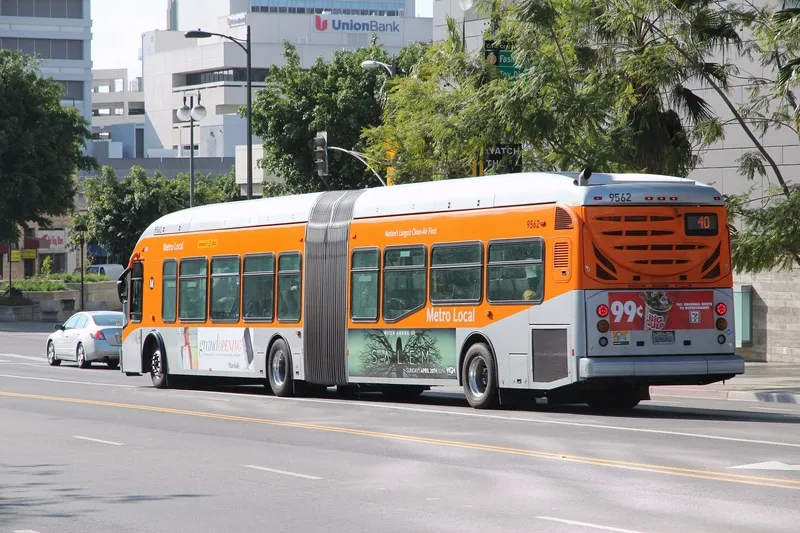
LA Metro seeks to attract more bus riders

Transport authorities in Los Angeles are trying to attract more people to bus services in a bid to halt falling ridership and entice drivers out of their cars.
By Ben Spencer January 17, 2020 Read time: 2 mins
ID 153990287 © Tupungato | Dreamstime.comv

A report in the Los Angeles Times says that LA Metro officials have come up with plans for more frequent services on more routes, amounting to the “first overhaul of the region’s bus network in more than 25 years”. 

Greater speed and efficiency is the aim of the new blueprint: buses would arrive as often as every five minutes on 29 major routes. This means that 83% of Metro passengers could walk to a stop – whereas at present only 48% can do that, according to LA Metro officials.

Investment of $1 billion over five years is also on the agenda, including $750 million for bus lanes and smarter signalling, with $150 million for shelters and improvements at popular stops.

The report suggests that ridership – which has dropped nearly 25% over a decade - could be improved by 15-20% if the changes are carried out.
However, there will be no extra buses on the street – instead, existing services would be reallocated.

The changes are to be discussed next week, with public meetings beginning in February and a final decision expected in September.

LA mayor Eric Garcetti says it would mean the city is going “in the right direction, toward dedicated bus lanes, higher ridership, and faster, more reliable service”.
For more information on companies in this article

Related Content

  • Private investment in Latin American infrastructure on the rise
    January 23, 2015
    Private investment in infrastructure projects has grown significantly over the past decade in Latin America's six largest economies, with the exception of Mexico and Argentina, according to a Standard & Poor's report. In Mexico the retraction in private investment is explained by poor planning and execution of projects on the part of the government. Meanwhile in Argentina, the dip is explained by government intervention, according to the report. Outside the two regional powerhouses, private sector par
  • Inrix identifies the worst traffic hotspots in the 25 most congested US cities
    September 28, 2017
    Inrix has published its latest research on the worst traffic hotspots in America. Using Inrix Roadway Analytics, a cloud-based traffic analysis tool, Inrix analysed and ranked more than 100,000 traffic hotspots in the 25 most congested US cities. The economic cost of hotspots was also calculated in terms of wasted time, lost fuel and carbon emissions over the next decade. The research identified and ranked 108,000 traffic hotspots in the 25 most congested cities in the US identified by the INRIX Global T
  • Cities get road priorities right
    March 22, 2022
    Cities including Paris, Milan and London have all announced serious expansions to their bicycling infrastructure over the last few years. The era of active travel is here, finds Alan Dron
  • MoceanLab discovers new Covid car-share use
    October 20, 2020
    The coronavirus pandemic has prompted some radical re-thinking of mobility services. Ben Spencer hears how MoceanLab car-share vehicles are delivering care to LA's homeless




