HORIBA MIRA opens new advanced emissions test centre

Independent automotive engineering and testing organisation HORIBA MIRA has expanded its test and engineering capabilities following the official launch of its dedicated Advanced Emissions Test Centre (AETC).
July 7, 2017 Read time: 1 min

Independent automotive engineering and testing organisation HORIBA 4310 MIRA has expanded its test and engineering capabilities following the official launch of its dedicated Advanced Emissions Test Centre (AETC).

Developed in response to increased scrutiny around tailpipe emissions, as well as new legislation requiring extensive and increasingly complex testing methodologies, the AETC facilities will provide testing capabilities for global compliance, This includes Euro 6d Worldwide Harmonised Light Vehicles Test Procedure (WLTP), as well as incorporating Real World Driving Emissions (RDE) testing capabilities. 

Located at HORIBA MIRA's headquarters in the UK, the facility is centred around a four-wheel drive (4WD) climatic chassis dynamometer and includes three individual climatic soak rooms and an ambient soak room. The combination of the 4WD dynamometer, range of climatic conditions and state-of-the-art HORIBA emissions systems will allow the determination of exhaust pollutants over a range of climatic conditions, from temperatures of -20°C to 35°C.

Engineers at the facility will work closely with vehicle manufacturers, offering the full gamut of emissions testing which comply with current and foreseen future emissions regulations, including additional type approval for RDE.

For more information on companies in this article

Related Content
  • Video as a Sensor tech drives safer roadways
    October 1, 2021
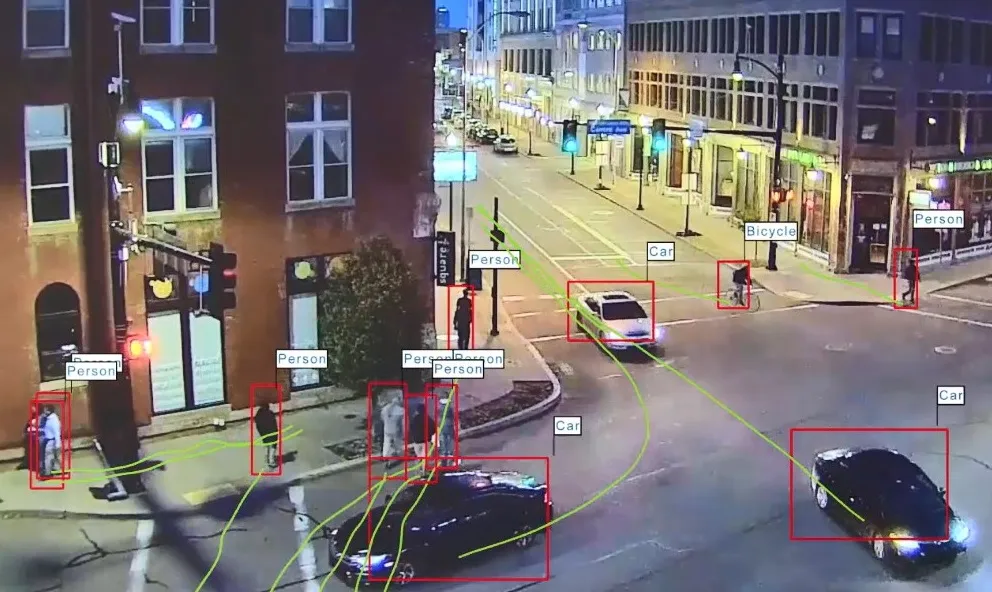
    Bosch products integrate with partner offerings to provide end-to-end ITS safety solutions
  • Integrated corridor management 'to enhance travel efficiency'
    August 29, 2012
    New systems of software are coming together to form the technological backbone of a project that will apply practically to one corridor in Dallas, but influence travel across a wider area. Dallas Area Rapid Transit (DART) is the lead agency for an extensive Integrated Corridor Management (ICM) project in Dallas, covering an area stretching north east of downtown Dallas, 20 miles long by two miles wide. The corridor is defined loosely by the US-75 freeway and DART’s light rail ‘red line’. These are the theor
  • Radar reinforces detection efficiency
    March 16, 2016
    Radar can have distinct advantages in some transport-related situations as Colin Sowman found out during a visit to Navtech Radar. Despite tremendous advances in machine vision techniques, the accuracy and reliability of camera-based detection systems suffer during periods of poor visibility where other technologies may offer an alternative. Radar is one such technology. It too has seen significant development in recent years and according to Navtech Radar, the technology can often fulfil detection and moni
  • Lidar: recipes for success
    March 28, 2022
    Lidar is being deployed all over the world - and you can even read a cookbook on the subject...