
WSP/Parsons Brinckerhoff to develop Staten Island transportation improvement strategy

WSP/Parsons Brinckerhoff is to develop a transportation improvement strategy (TIS) to address existing congestion and physical/geometrical issues as well as projected future development on the North Shore of Staten Island. The study, which emerges from the recommendations developed as part of the North Shore 2030 Plan, will be carried out on behalf of the New York City Economic Development Corporation, the New York City Department of City Planning and the New York City Department of Transportation. The s
March 22, 2016 Read time: 2 mins
6666 WSP/4983 Parsons Brinckerhoff is to develop a transportation improvement strategy (TIS) to address existing congestion and physical/geometrical issues as well as projected future development on the North Shore of Staten Island.

The study, which emerges from the recommendations developed as part of the North Shore 2030 Plan, will be carried out on behalf of the New York City Economic Development Corporation, the New York City Department of City Planning and the New York City Department of Transportation.

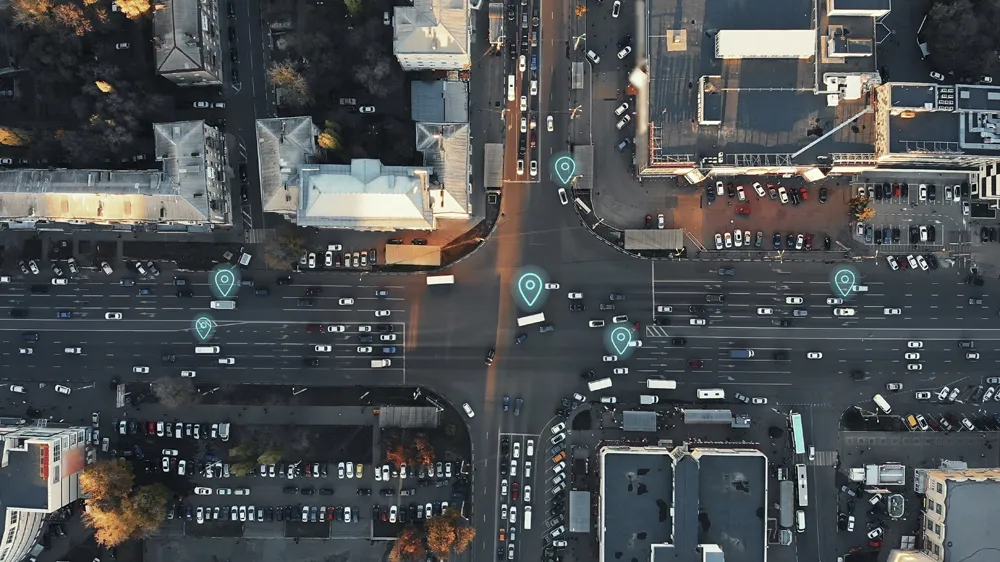
The study area encompasses the three main arteries connecting Staten Island’s busiest neighbourhoods to most of the borough’s popular destinations. These corridors lead to four large development projects on the North Shore, as well as to the borough’s main transportation hub, the St. George Ferry Terminal. In addition, the Bay Street corridor runs through the area targeted by the city for a neighbourhood re-zoning plan with the goal of creating new housing opportunities.

The arteries have limited capacity and are irregular in their design, and there is community concern that future development will add to existing congestion in the area. The study will recommend improvements related to addressing the demands exerted by new development, and the need for improved mobility and safety, and will establish strategies for transportation improvements for all modes, including pedestrian, ferry, bus, bicycle, and motor vehicles. Existing transportation challenges will be identified, as well as challenges and opportunities anticipated in the near future.

The final TIS document is expected to be completed in summer 2016.
For more information on companies in this article

Related Content

  • Future Standards Forum - guidance for the future of machine vision standards
    November 9, 2012
    The Future Standards Forum (FSF), a joint initiative by European Machine Vision Association (EMVA), Automated Imaging Association (AIA) and Japan Industrial Imaging Association (JIIA), has been set up to provide proactive, strategic guidance to the development of industry standards and to minimise the creation of conflicting standards within the machine vision industry and in related industries. The FSF believes the machine vision industry is a knowledge driven industry which experiences an ever increasing
  • Vision Zero is working says New York mayor, announces more funding
    January 22, 2016
    According to Mayor Bill de Blasio, 2015 was officially the safest year on New York City streets since record-keeping began in 1910, thanks to the city’s Vision Zero program.He said the 231 traffic fatalities in 2015 are 66 lower than the 297 fatalities that occurred in 2013, the year before Vision Zero began. Pedestrian deaths, a historic low of 134 in 2015, fell 27 per cent during that period. The previous lows were 2011 with 249 traffic fatalities and 2014 with 139 pedestrian fatalities.
  • Don’t forget security threat, says Econolite
    May 6, 2020
    A new level of communication is helping deliver on the promise of Vision Zero and a more sustainable future. But amid the promise, Econolite’s Sunny Chakravarty suggests we need to be mindful of the potential downsides in an age of mass connectivity
  • PTV sets its sights on Smart City solutions
    February 9, 2017
    Making a city smarter not only relies on understand technological opportunities but also human decision-making, as Miller Crockart explains. Cities are about people – a fact that can easily be forgotten when experts talk about roads, healthcare and education as though they are abstract and unconnected monoliths rather than things people use. Understanding how and why people use services is vital for making decisions on how they can be optimised for maximum efficiency across inter-connected networks that for




