Moscow selects TomTom for a smarter city future

Mapping and navigation specialist TomTom and the City of Moscow have signed a Letter of Intent to design an intelligent transportation programme developed with the goal of improving the overall situation across Moscow’s road network. Moscow recently won an Achievement Award from the International Transport Forum 2016 for its exemplary approach to improving traffic conditions in the Russian capital. Using data from TomTom’s Traffic Index, Moscow has gone from last place in 2013 to fifth place in this yea
July 5, 2016 Read time: 1 min
Mapping and navigation specialist 1692 TomTom and the City of Moscow have signed a Letter of Intent to design an intelligent transportation programme developed with the goal of improving the overall situation across Moscow’s road network.

Moscow recently won an Achievement Award from the 998 International Transport Forum 2016 for its exemplary approach to improving traffic conditions in the Russian capital. Using data from TomTom’s Traffic Index, Moscow has gone from last place in 2013 to fifth place in this year’s ranking.

For more information on companies in this article

Related Content

  • Syracuse models post-industrial revival for US cities
    August 13, 2015
    A connective corridor in Syracuse, New York State, could be a model for other post-industrial cities, as David Crawford discovers. The aim of the city of Syracuse’ 5.6km-long Connective Corridor in Onandaga County in upstate New York is to create a model ‘complete street’ for use in wider regeneration schemes. Key transport-sector components are traffic calming, high-quality transit with accessible passenger information, plus walkability and bike-friendliness.
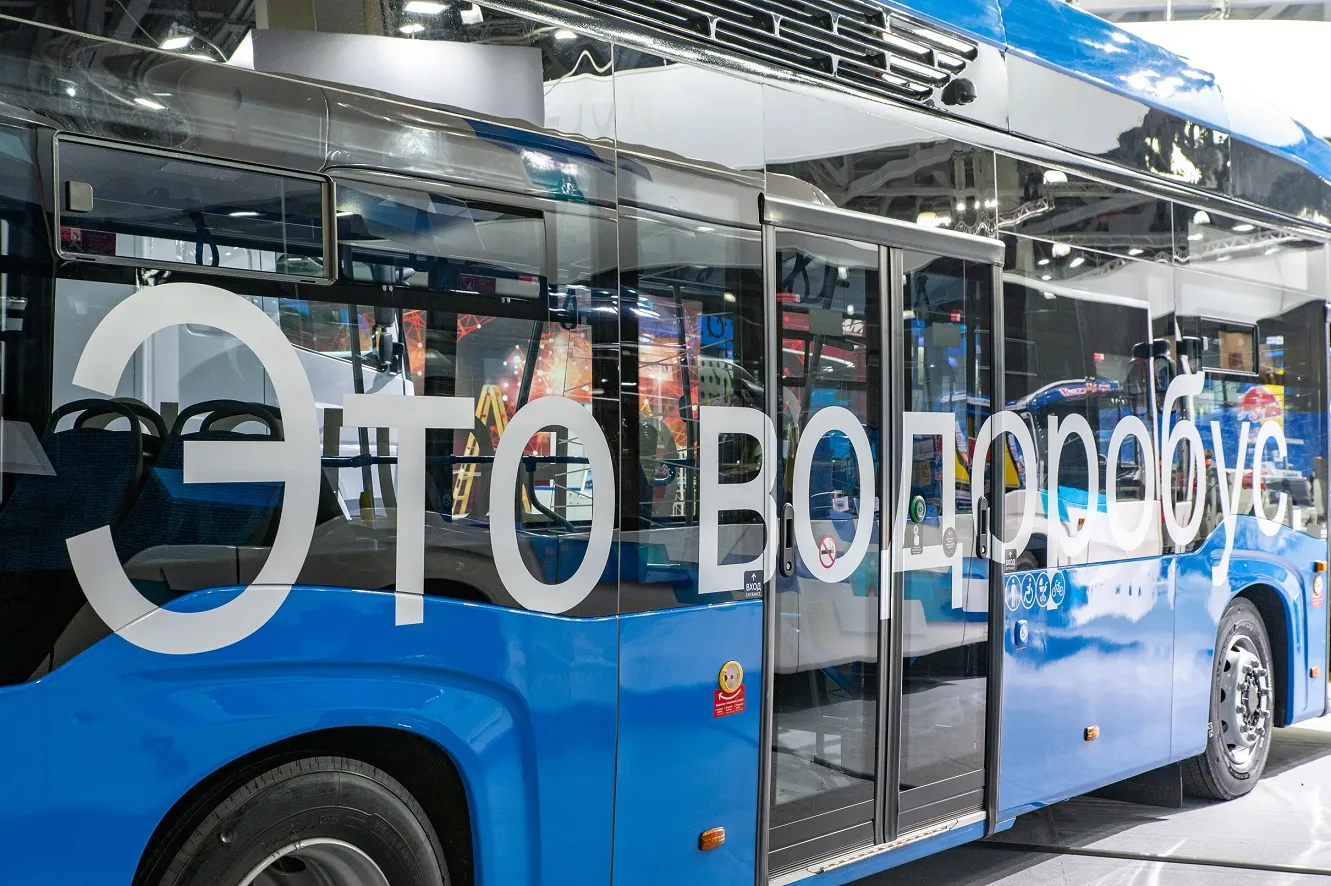
  • Hydrogen electric bus hits streets of Moscow
    September 20, 2021
    Vehicle can cover a distance of 250km and only needs refuelling once a day 
  • 2012 US Urban Mobility Report published
    February 8, 2013
    Researchers at the Texas A&M Transportation Institute (TTI) have come up with a way to measure the unreliability of trip times due to traffic congestion. The Planning Time Index (PTI) illustrates the amount of extra time needed to arrive on time for higher priority events, such as an airline departure, just-in-time shipments, medical appointments or especially important social commitments. If the PTI for a particular trip is 3.00, a traveller would allow sixty minutes for a trip that typically takes twenty
  • Harmonisation of Europe's ITS deployment still unbalanced
    January 31, 2012
    Dean Herenda, Chairman of the EasyWay project, talks about the progress made and the progress still to be made in harmonising ITS deployment across the European Union. "The deployment and use of ITS in road transport across Europe was and still is unbalanced" Although Europe can be proud of being home to some of the world's most advanced ITS solutions, the relative disparities between Member States of the European Union (EU) in terms of the extent and technological sophistication of deployments actually sta