Hawai'i Uni to improve Honolulu traffic corridor

Students will spend four years analysing opportunities for C/AV technologies
By Ben Spencer August 10, 2020 Read time: 2 mins
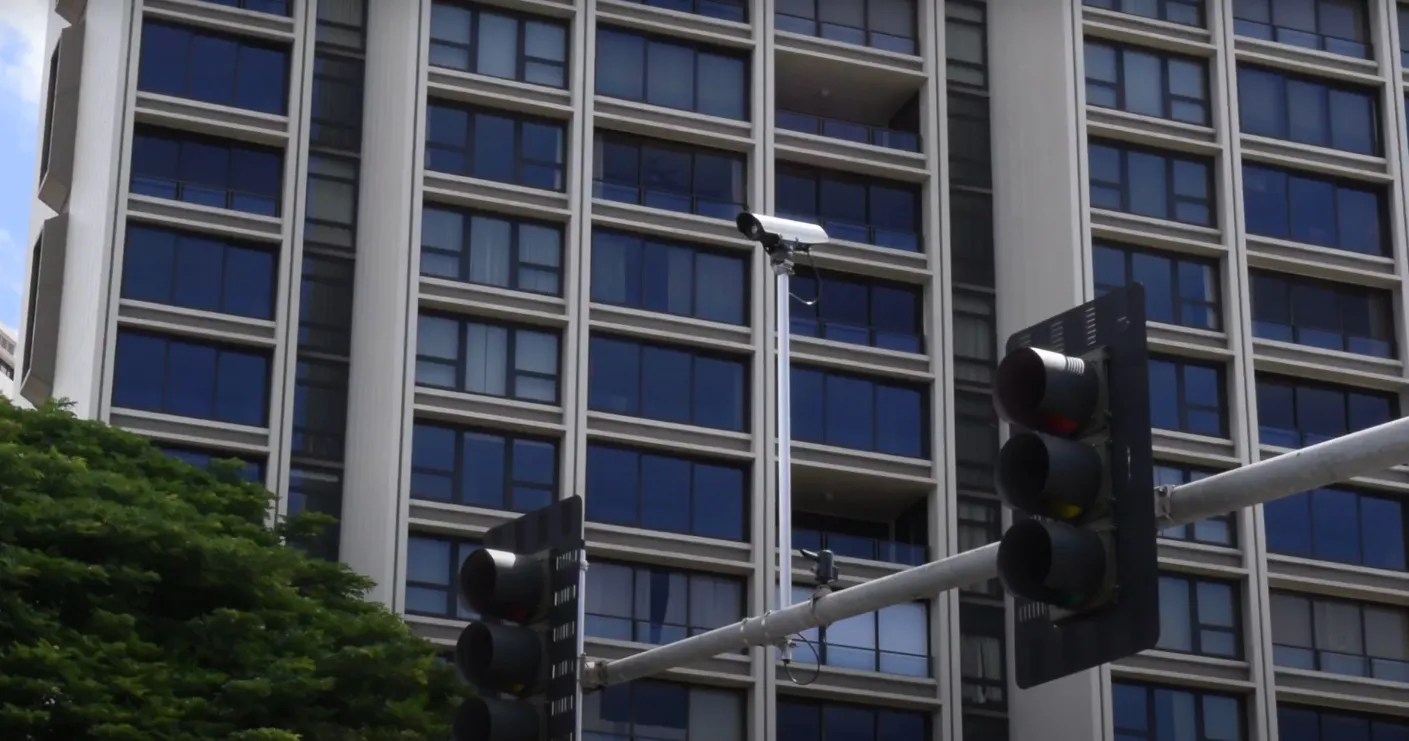
A signal device at the intersection of Atkinson Drive and Ala Moana Park Drive (image credit: University of Hawaiʻi)

The University of Hawaiʻi (UH) at Mānoa College of Engineering is leading a collaboration to upgrade a traffic signal control system in the city of Honolulu.

The system will utilise Vehicle to Everything (V2X) technology and include signal devices installed at more than 30 intersections along Nimitz Highway and Ala Moana Boulevard.

Researchers will collect data on the amount and type of vehicles moving through the area so that the public can receive alerts and information on potential impacts along the corridor via the TravelSafely app. 

Professor David Ma of Mānoa College says university students and faculty will conduct research on sensor data analytics to help the system operate at full potential.

“Not only will this project create a smart transportation corridor in the heart of downtown Honolulu, it also serves to show the state UH’s commitment both to high-tech applications and to a safer, more efficient transportation system for Hawaiʻi,” Ma adds. 

The project stems from an agreement with Econolite, the State Hawai’i Department of Transportation (HDoT) and the Federal Highway Administration.

Econolite has provided all hardware and software upgrades for the system, as well as making a donation to help UH develop an advanced traffic engineering lab.

It will include advanced traffic control, management and detection devices as well as a modern video wall for data visualisation. 

According to Ma: “The lab will become a mini traffic management centre that enables UH researchers to analyse traffic data in real-time and help HDoT staff make necessary adjustments to optimise the performance of the traffic system.”

Guohui Zhang, a civil engineering associate professor in transportation engineering, says students at the lab will have “hands-on experience” with traffic technology and will be better trained as future traffic engineers. 

For more information on companies in this article

Related Content

  • Increased automation is already improving road safety
    April 20, 2017
    Richard Cuerden considers how many of the technologies developed as part of a move toward autonomous vehicles are already being deployed as ADAS improve road safety. The drive to create autonomous vehicles has caused a re-evaluation of what is needed to safely navigate today’s roads and the development of systems that can replace the driver in many scenarios. However, many manufacturers are not waiting for ‘tomorrow’ and are already incorporating these systems in their new cars as Advanced Driver Assistanc
  • Cohda: CPM helps AVs see through blind spots 
    February 3, 2021
    Collective perceptive messaging allowed RSU to share information by using V2X tech 
  • Fort Collins gets grant for rapid-transit bus project
    May 23, 2012
    The Federal Transit Administration (FTA) has awarded a US$54.5 million grant to the city of Fort Collins in Colorado for its MAX Bus Rapid Transit project. Nearly $3.9 million will also be given by the FTA for the project via its bus facilities and bus grant programme. That amounts the overall federal commitment to the project to some $69.4 million, 80 per cent of the project. The balance of funding is to come from the Colorado State University, Fort Collins, the Downtown Development Authority and the Colo
  • The role of GIS in climate change resiliency
    May 29, 2014
    Climate change will pose global and local challenges and that includes risks to the transportation infrastructure. Climate change adaptation and resiliency has captured the attention of the transportation community for some time now. Because transportation infrastructure is often designed to last for 30, 50, or 100 years or even longer, transportation professionals are concerned not only about the impact on our existing investments, but also how to design more durable transportation systems for the future