Georgia DOT deploys ‘smart’ traffic signals

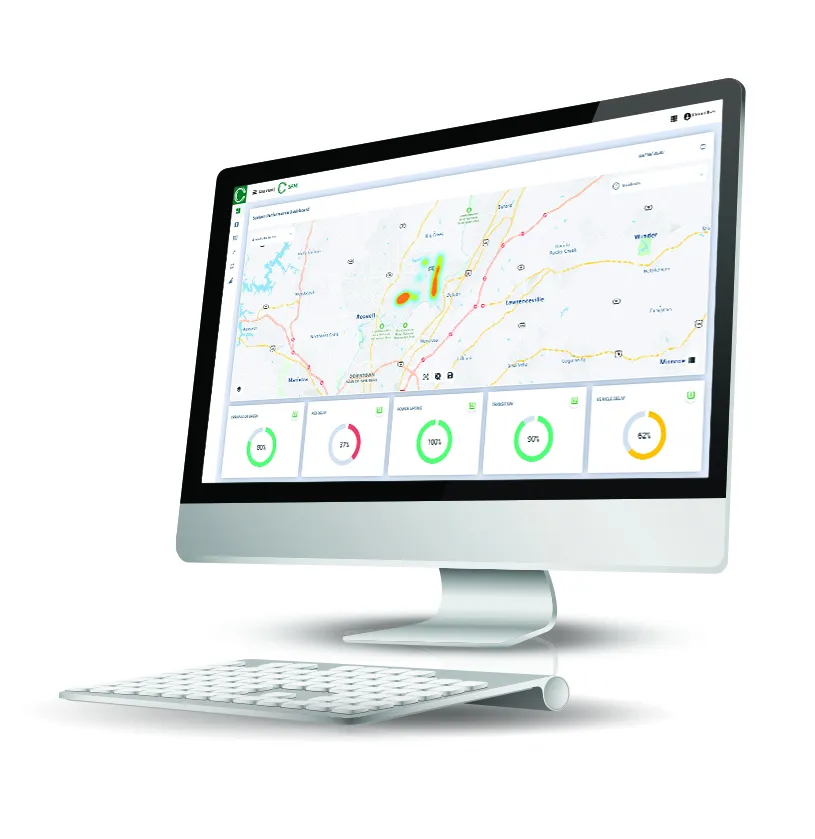
Georgia Department of Transportation, in partnership with Intelight, has deployed ‘smart’ signals at 1,000 intersections throughout the state. The project is part of a state-wide upgrade which converts traffic lights in Georgia to an up-to-the-second traffic signal controller technology. The new software provides significant improvements to how Georgia DOT and local agencies can operate their signal systems. The software, which was launched in autumn 2015 and is scheduled to be fully deployed on Geor
August 26, 2016 Read time: 2 mins
754 Georgia Department of Transportation, in partnership with 7316 Intelight, has deployed ‘smart’ signals at 1,000 intersections throughout the state.

The project is part of a state-wide upgrade which converts traffic lights in Georgia to an up-to-the-second traffic signal controller technology. The new software provides significant improvements to how Georgia DOT and local agencies can operate their signal systems.

The software, which was launched in autumn 2015 and is scheduled to be fully deployed on Georgia DOT-maintained signals across the state by fall 2017, monitors the traffic signal and automatically provides feedback to a central system in the Traffic Operations Center in real time. This enables engineers to make real time adjustments to the signals to optimise performance based on actual roadway conditions.

The 1,000 intersection milestone was achieved in late July and marks the beginning of the final project goal of deploying ‘smart’ signals at approximately 9,000 intersections. The project includes signals in Metro Atlanta, Cartersville, Thomaston, Gwinnett County and Athens-Clarke County.

For more information on companies in this article

Related Content

  • Traffic lights: There’s a better way ..
    July 9, 2014
    .. say researchers at Massachusetts Institute of Technology (MIT) who have developed a means of computing optimal timings for city stoplights that they say can significantly reduce drivers’ average travel times. Existing software for timing traffic signals has several limitations, says Carolina Osorio, an assistant professor of civil and environmental engineering at MIT and lead author of a forthcoming paper in the journal Transportation Science that describes the new system, based on a study of traffic
  • Diverse development of tolling business models
    April 25, 2013
    A diversity of tolling business models offers a wider toolbox of highway finance options, as the IBTTA’s Patrick Jones explains. The business models for America’s tolled highways have gone through several different evolutions over the last 75 years, reflecting a succession of shifts in transportation policy and politics, financing and funding models, urban patterns, customer needs, and technology. And with more and more decision-makers expressing renewed interest in tolling, it’s that very diversity that ma
  • Hawaii backs road user charging to replace fuel tax
    August 7, 2019
    Fuel tax revenue in Hawaii is falling - and even in paradise, someone has to pay. Adam Hill talks to Hawaii DoT’s Scot Uruda about a major change in the way the state funds road improvements All over the world, governments, transportation agencies and local authorities are casting around for new forms of revenue as the money from taxes imposed on fuel begins to trickle away. Spending is outstripping tax take as a combination of more efficient internal combustion engines and the increasing take-up of cars
  • Econolite supports crowdsourced traffic data analytics
    August 28, 2020
    Users can tailor the solution for specific traffic control needs, firm says.