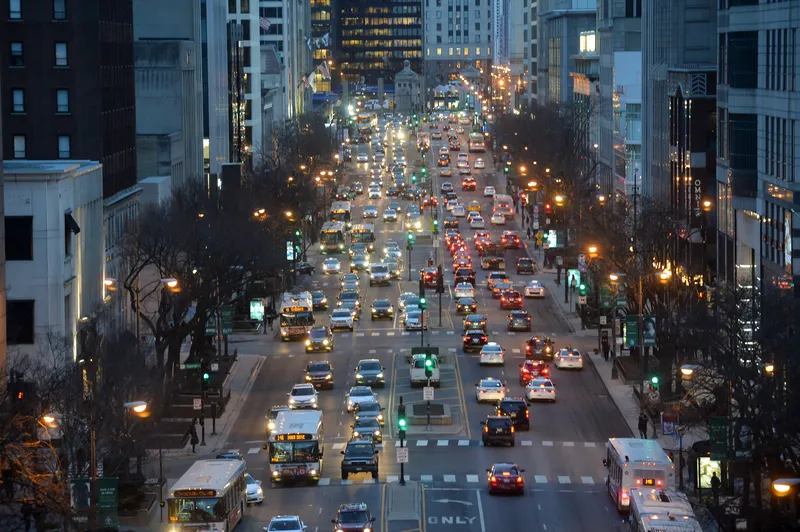
Georgia DOT deploys ‘smart’ traffic signals

Georgia Department of Transportation, in partnership with Intelight, has deployed ‘smart’ signals at 1,000 intersections throughout the state. The project is part of a state-wide upgrade which converts traffic lights in Georgia to an up-to-the-second traffic signal controller technology. The new software provides significant improvements to how Georgia DOT and local agencies can operate their signal systems. The software, which was launched in autumn 2015 and is scheduled to be fully deployed on Geor
August 26, 2016 Read time: 2 mins
754 Georgia Department of Transportation, in partnership with 7316 Intelight, has deployed ‘smart’ signals at 1,000 intersections throughout the state.

The project is part of a state-wide upgrade which converts traffic lights in Georgia to an up-to-the-second traffic signal controller technology. The new software provides significant improvements to how Georgia DOT and local agencies can operate their signal systems.

The software, which was launched in autumn 2015 and is scheduled to be fully deployed on Georgia DOT-maintained signals across the state by fall 2017, monitors the traffic signal and automatically provides feedback to a central system in the Traffic Operations Center in real time. This enables engineers to make real time adjustments to the signals to optimise performance based on actual roadway conditions.

The 1,000 intersection milestone was achieved in late July and marks the beginning of the final project goal of deploying ‘smart’ signals at approximately 9,000 intersections. The project includes signals in Metro Atlanta, Cartersville, Thomaston, Gwinnett County and Athens-Clarke County.

For more information on companies in this article

Related Content

  • Substantial savings from smarter street lighting
    February 25, 2015
    As authorities strive to reduce expenditure and carbon emissions, Colin Sowman looks at some of the smart ways of managing street lighting while containing costs and maintaining safety. Street lighting can account for 40% of an authority’s energy consumption. So, faced with the need to reduce outgoings, some authorities are looking for smart ways of managing street lighting or even turning off swathes of street lights in the small hours. Back in 2008 the E-street Initiative report concluded that authorities
  • Econolite keeps an open mind
    May 11, 2021
    If we’re going to take advantage of new technologies to improve safety, collaboration at the traffic management cabinet edge is vital, thinks Eric Raamot of Econolite
  • Iteris wins traffic management deals in Illinois
    January 30, 2024
    Contracts are with Illinois DoT & the Lake County Division of Transportation
  • Improving traffic flow with automated urban traffic control
    April 25, 2012
    Alterations to traffic signals and variable message signs are being activated to reduce congestion as soon as it occurs, through a pioneering fully automatic UTC system. Jon Masters reports In the South Yorkshire town of Barnsley in England, strategies for dealing with traffic congestion have been devised from analysis of queue data, then made to work automatically: “This represents the future of ITS for urban traffic control,” says Siemens Consultancy Services senior engineer David Carr. Over a career span