Covid-19: ‘Probably the largest street planning experiment, ever’

A ‘precipitous’ drop in urban road traffic caused by Covid-19 has brought some benefits in terms of cleaner air and empty streets – but is in most ways a negative phenomenon.
By Adam Hill April 9, 2020 Read time: 2 mins
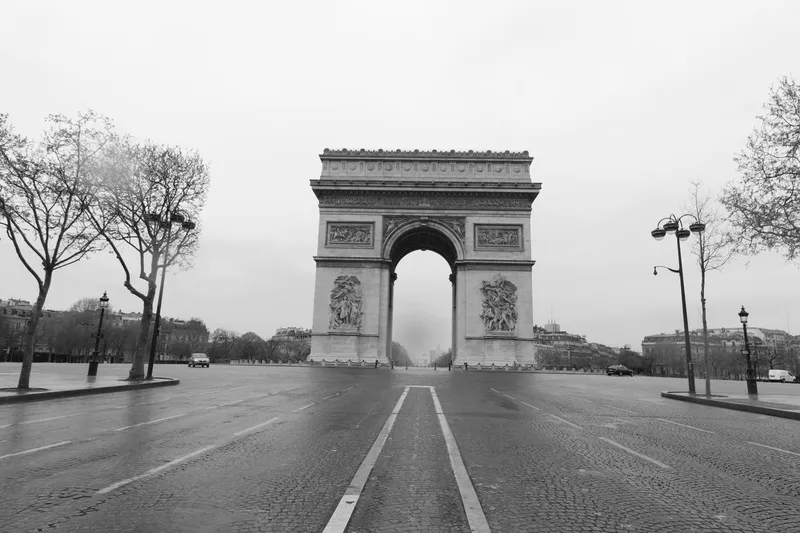
A 'precipitous' drop in city traffic might usually be good news (© Marie Lemerle | Dreamstime.com)

That is one of the main messages from Philippe Crist, advisor on innovation and foresight for the International Transport Forum at the Organisation for Economic Cooperation and Development.

Speaking on the Populus webinar Street Planning During Uncertain Times: How cities are making bold decisions to prioritise cyclists and pedestrians, he said: “I think what we're witnessing from our apartments, from our houses, from those places where you are sheltering, is probably the largest street planning experiment, ever. But one thing that is going to be hard for many of us is that some of these lessons we can never use.”

Crist insisted that people in the mobility industry must choose their words carefully when describing “what we're witnessing in our cities and how we move forward with that”.

He showed an image of a deserted Arc de Triomphe in Paris to highlight how Covid-19 has resulted in far less traffic, quieter streets and lower pollution. “All these in normal times are really good things, and yet they're happening because of something really, really bad,” he added.

The changes have been caused by a virus which has already cost tens of thousands of lives and threatens to severely disrupt the world’s economy.

“Going forward, those people who have worked in the past to try to bring about some of these things - clear skies, quiet cities, safe cities, streets that respond to people's needs - will have to be very careful not to talk about this period, this exceptional street planning experiment, in nostalgic or even positive terms.”

“Most people will see this as a very bad time, and the connotation will not be positive, it'll be quite negative. And that's just something to keep in mind.”

The mobility industry should be looking at ways of making the ‘new normal’ better when cities ‘reboot’ after prolonged lockdowns, such as improving system resilience and providing more urban space for active mobility such as walking and cycling. 

But Crist said planners will have to take into account what he termed ‘Co-voidance behaviour’, where people may be wary of shared and public transport. 

They should also be prepared for people to want things to return to the way they were before the pandemic, he said – especially when it comes to ramping up economic activity. 

“I think there will be a real push for the ‘old’ normal.”

For more information on companies in this article

Related Content

  • Keeping people on track is RATP’s raison d’etre
    June 14, 2018
    In Paris, RATP Group’s autonomous Metro Line 1 is carrying 750,000 people a day across the city. Ben Spencer is invited into the control room to take a look at how the system works Paris is visited by millions of tourists each year, keen to see for themselves stunning attractions such as the Eiffel Tower, Arc de Triomphe, Notre-Dame, the Louvre, the Seine and all the rest. But while the best-known sites of the City of Light tend to be on the surface, there is a lot going on below those iconic grand boule
  • Social media mooted for traffic management
    November 13, 2012
    SQLstream’s Ronnie Beggs discusses with Jason Barnes the potential and pitfalls of using social media for traffic monitoring and management. cataclysmic events such as hurricanes and tsunami have challenged perceptions of what constitutes robust traffic management infrastructure in recent times. Presumptions that only fixed systems could offer high levels of unbroken service, accuracy and communication bandwidth, have been taught some hard lessons by nature. In many respects wireless systems now represent t
  • Rekor: solving the data puzzle
    April 19, 2022
    AI can help transport agencies to deal with incidents on the road. Noam Maital of Rekor explains to Adam Hill how marrying up different types of data can be like putting together a 1,000-piece puzzle
  • Flir takeover of Traficon and the role of thermal imaging
    February 28, 2013
    Andy Teich, president of commercial systems at Flir, discusses the growing role of thermal technology in ITS and his company’s latest high-profile acquisition with Jason Barnes. Andy Teich, Flir’s president of commercial systems, doesn’t want to talk about infrared (IR). Instead, he’d prefer, he says, to discuss ‘thermal technology’. It is, he explains, to differentiate between the imaging technologies which his company specialises in and the LED illumination of IR cameras, an altogether different beast. Fl