Birmingham steers towards car restrictions

By Adam Hill January 15, 2020 Read time: 2 mins
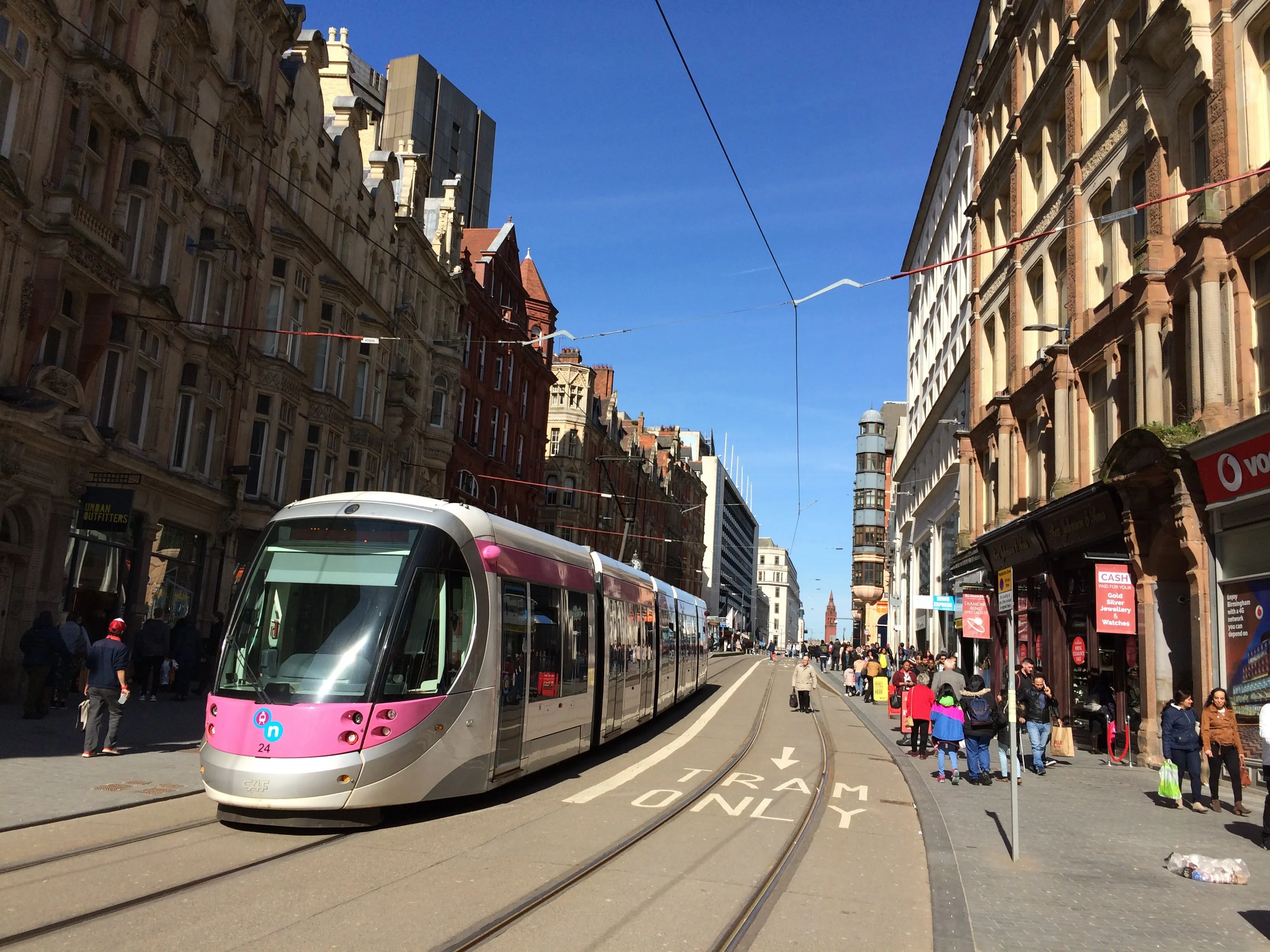
Trams are already in operation in Birmingham city centre

The UK city of Birmingham is proposing to restrict private car access to its centre as part of a wide-ranging blueprint to improve the way people move around.

The Birmingham Transport Plan 2031 “describes what the city needs to do differently to meet the demands of the future” and offers ideas to “support the delivery of a high quality, sustainable public transport system fit for all users”.

Banning motorists from central areas has become increasingly popular in cities worldwide.

Birmingham’s plan is designed to reduce transport’s impact on the environment in line with its commitment to becoming a carbon neutral city by 2030. Other intentions include eliminating road danger, “particularly in residential areas”, revitalising the city centre and local centres and reconnecting communities “by prioritising people over cars”.

Chief among the document’s eye-catching proposals is to limit access to the city centre for private cars “with no through trips”. Developments in alternative modes of transit will give people more travel options, it says. “Parking will be used as a means to manage demand for travel by car through availability, pricing and restrictions.”

The document points to a “period of managed transformation during which decreasing dependence on private motor car travel is matched by increasing accessibility to attractive alternatives – for example through wholesale improvements to walking and cycling infrastructure, through investment in new, mass transit services and through emerging technologies”.

The draft document will go to consultation before a final version is adopted by Birmingham City Council. The city will host the Commonwealth Games in 2022.
Related Content

  • Use of US public transport increases
    December 19, 2014
    More than 2.7 billion trips were taken on US public transportation in the third quarter of 2014, according to a report released today by the American Public Transportation Association (APTA). This is a 1.8 per cent increase over the same quarter last year, representing an increase of more than 48 million trips and the highest third quarter ridership since 1974 (the oldest third quarter APTA has available for comparison). Some public transit systems that reported record third quarter ridership for their
  • New mobility + public transport = sustainability
    February 25, 2020
    Cities can introduce all the clever new mobility solutions they like – but if they are not linked to public transportation they will not be environmentally friendly, according to new research.
  • Go Denver opens up a world of seamless mobility and better data-driven decisions
    June 5, 2017
    Denver’s pioneering Go Denver mobility-as-a-service app has attracted 7,000 users in a matter of months. Geoff Hadwick heard how at ITS International’s recent conference. If Mobility-as-a-Service (MaaS) is ever going to work, it needs to have “one universal platform everywhere” according to Sean Mackin, former manager of parking and mobility services at the Denver transportation and mobility department and now Colorado branch manager for ABM Parking & Transportation. Speaking at the recent MaaS Market confe
  • Congestion charging in New York edges a wheel-length closer
    May 16, 2023
    'This is about more than reducing traffic' says city mayor, pledging transit investment