
Design contract for new Windsor-Detroit bridge awarded

Delcan has been awarded a nearly US$1 million contract to determine the best way to provide tolling and traffic information on the much-anticipated Windsor-Detroit bridge, to be built between Windsor, Ontario and Detroit, Michigan. The Windsor-Detroit Bridge Authority has hired Delcan to come up with a preliminary design for both tolling and intelligent transportation systems that will warn drivers about poor weather, traffic accidents and other congestion problems once the bridge is open. The contra
August 22, 2014 Read time: 2 mins

285 Delcan has been awarded a nearly US$1 million contract to determine the best way to provide tolling and traffic information on the much-anticipated Windsor-Detroit bridge, to be built between  Windsor, Ontario and Detroit, Michigan.

The Windsor-Detroit Bridge Authority has hired Delcan to come up with a preliminary design for both tolling and intelligent transportation systems that will warn drivers about poor weather, traffic accidents and other congestion problems once the bridge is open.

The contract will look to integrate transportation systems in Ontario and Michigan to allow for the most efficient methods to update the public about traffic conditions with as much advance notice as possible. As part of the study, Delcan will also look at the best way to expedite toll collection, which could include the latest electronic billing technology.

Speaking to the Windsor Star newspaper, the bridge authority’s CEO Mike Cautillo said he would ideally like to see southbound Ontario traffic receive warnings about bridge congestion as far back as London.

“Ontario has a robust integrated transportation system and Michigan has a robust system as well,” he said. “We’re looking at how we can have the systems link together. We’re also looking at giving plenty of notice to commercial vehicles about delays.”

Cautillo said this contract is just another step toward the construction of the new international crossing that is the largest infrastructure project linking Canada and the United States. He also suggested the ideal tolling technology would allow for minimal or no vehicle stops, but said all options will be considered.

For more information on companies in this article

Related Content
  • Covid turns tolls cashless
    December 23, 2021
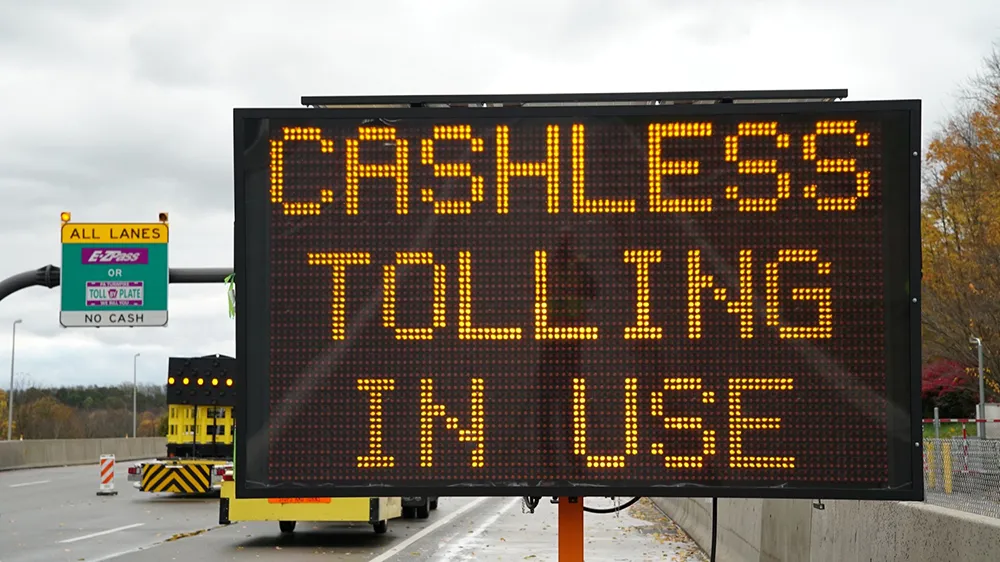
    When coronavirus hit, Pennsylvania Turnpike Commission made its long-planned e-tolling system permanent; this made sense, but it was still a difficult decision, explains the organisation’s Carl DeFebo
  • When weather warnings get hyperlocal
    August 24, 2016
    David Crawford looks at new technologies to cope with the age-old problem of driving in bad weather. On the 10-year average, between 2005 and 2014 bad weather contributed to more than 1.5 million vehicle crashes in the US each year, resulting in more than 800,000 injuries and 7,400 deaths. These were the findings of analysis by Booz Allen Hamilton of NHTSA data which concluded that the loss of life, hospital treatment and damage to assets costs an annual average of $42bn.
  • Vaisala: Weather data is vital for connected vehicles
    August 26, 2016
    Vaisala’s Dr Kevin Petty explains why the weather will continue to play a big part in road safety and traffic management in the smart cities of the future. The world is becoming increasingly connected. Thanks to advances in information and communications technology, the cities we live in are becoming ‘smart’, with everything from education to law enforcement managed by integrated tech solutions in a bid to improve quality of life.
  • Bringing V2I and V2V communications to workzone safety
    January 26, 2012
    Imran Hayee of the University of Minnesota Duluth's Department of Electrical and Computer Engineering talks about efforts to bring V2I and V2V communications into work zones. With USDOT backing and under the auspices of the ITS Joint Program Office Connected Vehicle Research (formerly IntelliDrive) research programme, M. Imran Hayee of the University of Minnesota Duluth's Department of Electrical and Computer Engineering along with team of his students, have been conducting research into the application of




