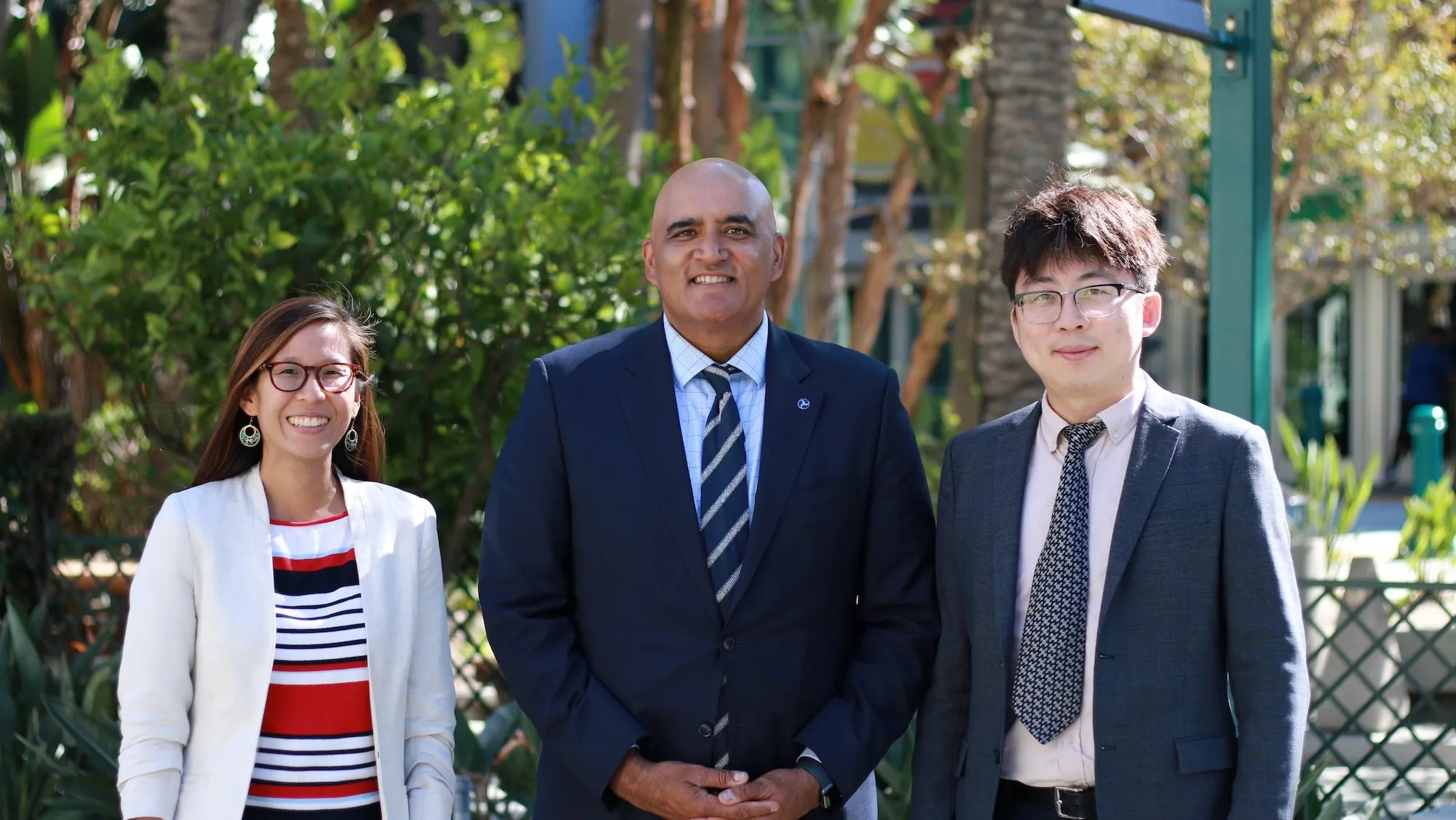
The US Federal Highway Administration (FHWA) has awarded a five-year, $7.5 million grant to establish the Center of Excellence on New Mobility and Automated Vehicles at UCLA.
Set to launch next month, it will be known as the Mobility Center of Excellence and will assess the anticipated long-term impact of increased new mobility technologies and services on transportation systems including resilience, security and reliability, as well as what these new developments will mean for equitable access to mobility and job participation.
The money comes from the 2021 Bipartisan Infrastructure Law (Infrastructure Investment and Job Act) and the centre will publish research "to empower state and local governments, metropolitan planning organisations and commercial operators to make informed decisions that will benefit the public".
“The safety of the nation’s transportation system is our top priority,” said Shailen Bhatt, FHWA administrator. “The Mobility Center of Excellence will seek to understand how new multimodal surface transportation technologies can be used to improve efficiency, mobility and sustainability.”
The announcement came at ITS California’s annual meeting in Anaheim, California.
Alissa Park, the Ronald and Valerie Sugar Dean of the UCLA Samueli School of Engineering, where the centre will be based, says: “We look forward to collaborating with the agency and other partnering organisations to conduct research designed to understand how emerging mobility technologies will affect transportation networks, land use and workforce development.”
“Digital connectivity, automation and electrification have dramatically changed the way we transport, both in terms of how people travel and how goods are delivered,” said the centre's director Jiaqi Ma, associate professor of civil and environmental engineering at UCLA Samueli and associate director of the UCLA Institute of Transportation Studies.
The work will include researchers from UCLA Samueli, UCLA Fielding School of Public Health, UCLA Luskin School of Public Affairs, Carnegie Mellon University in Pittsburgh, University of Alabama and National Renewable Energy Laboratory, as well as nonprofits Shared-Use Mobility Center in Chicago and MetroLab Network in Washington, DC.