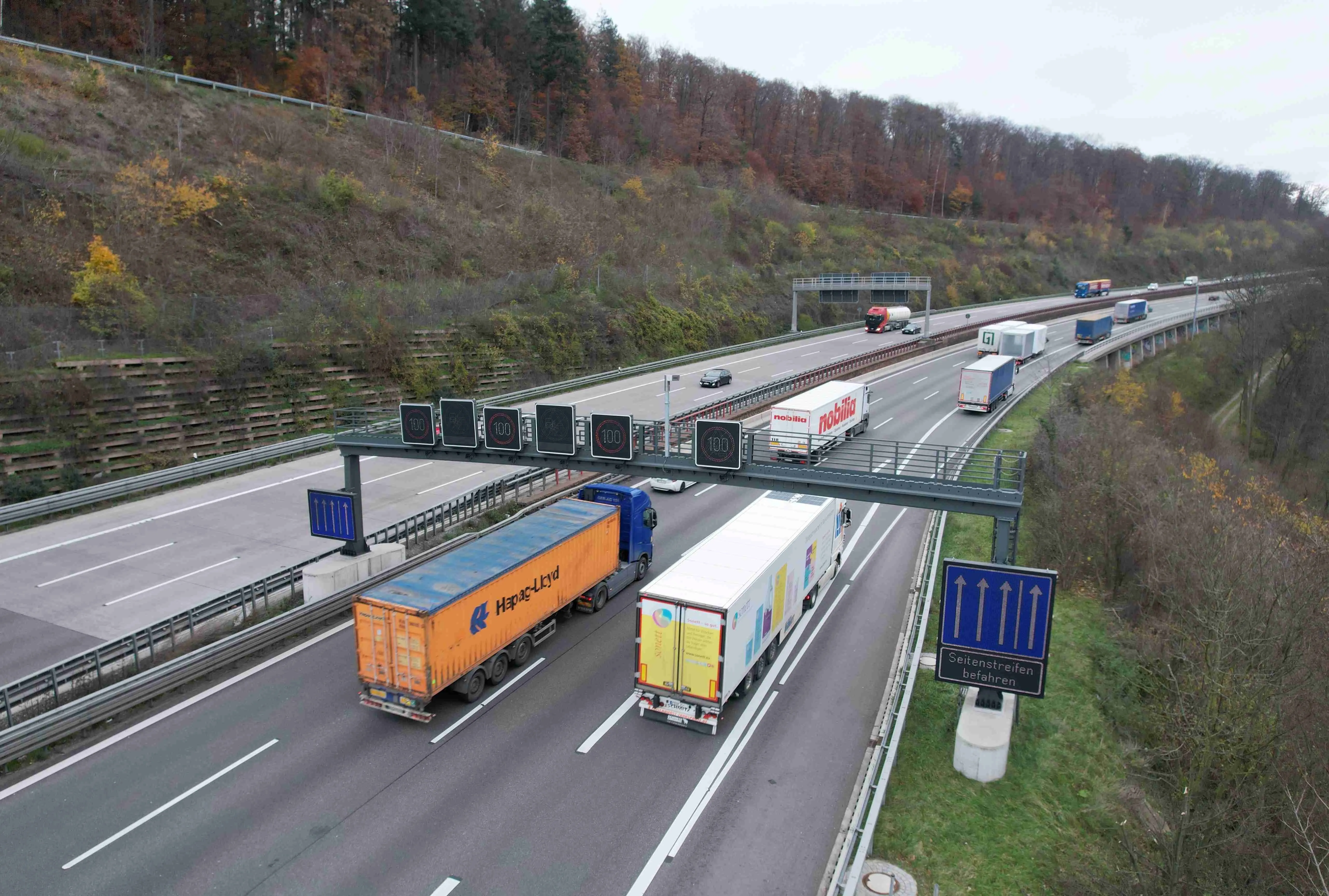
A new consortium, initiated by Ericsson in Germany, aims to create an infrastructure and real application environment on a motorway test track, to carry out tests in vehicle-to-vehicle, vehicle-to-infrastructure, digitisation of the railway infrastructure and other applications using 5G technology.
The 30 kilometre test track consists of several construction sections on the 30 kilometre ‘digital test field motorway’ along the A9 motorway and the high speed rail track between Nuremberg and Greding. The in

A new consortium, initiated by 5650 Ericsson in Germany, aims to create an infrastructure and real application environment on a motorway test track, to carry out tests in vehicle-to-vehicle, vehicle-to-infrastructure, digitisation of the railway infrastructure and other applications using 5G technology.
The 30 kilometre test track consists of several construction sections on the 30 kilometre ‘digital test field motorway’ along the A9 motorway and the high speed rail track between Nuremberg and Greding. The infrastructure is already completed in the first partial sections, meaning that live tests can begin immediately.
The project operates within an independent infrastructure and is not dependent on any commercial network, meaning that 5G prototype applications can be installed and tested regularly, in various network configurations, at any time, without restrictions. The dedicated Ericsson 5G mobile network allows live tests of real time applications, even under extreme network loads, and at very high travel speeds. Test conditions, which are hardly ever found in commercially operated live networks, can be created.
Ericsson has received permission from the German Federal Regulatory Agency to use frequencies from the 700-MHz band and will act as a network operator.
Members of the 5G Connected Mobility consortium include Ericsson, BMW Group, Deutsche Bahn, all three German mobile network operators -Deutsche Telekom, Telefónica Deutschland and Vodafone, the TU Dresden 5G Lab Germany, the Federal Highway Research Institute (BASt) and the Federal Regulatory Agency (BNetzA). The Federal Ministry of Transport and Digital Infrastructure and the Bavarian Road Construction Administration support the project.
The project aims to pool the knowledge, perspectives and recommendations gained from this partnership and further develop them with the focus on integration into international 5G standardisation activities.
Within the scope of 5G-ConnectedMobility, the consortium plans to develop use cases of associated vehicle applications, for vehicle-to-vehicle, vehicle-to-infrastructure communication, new methods of traffic information provision in real time and cross-manufacturer traffic control for automated vehicles.
The 30 kilometre test track consists of several construction sections on the 30 kilometre ‘digital test field motorway’ along the A9 motorway and the high speed rail track between Nuremberg and Greding. The infrastructure is already completed in the first partial sections, meaning that live tests can begin immediately.
The project operates within an independent infrastructure and is not dependent on any commercial network, meaning that 5G prototype applications can be installed and tested regularly, in various network configurations, at any time, without restrictions. The dedicated Ericsson 5G mobile network allows live tests of real time applications, even under extreme network loads, and at very high travel speeds. Test conditions, which are hardly ever found in commercially operated live networks, can be created.
Ericsson has received permission from the German Federal Regulatory Agency to use frequencies from the 700-MHz band and will act as a network operator.
Members of the 5G Connected Mobility consortium include Ericsson, BMW Group, Deutsche Bahn, all three German mobile network operators -Deutsche Telekom, Telefónica Deutschland and Vodafone, the TU Dresden 5G Lab Germany, the Federal Highway Research Institute (BASt) and the Federal Regulatory Agency (BNetzA). The Federal Ministry of Transport and Digital Infrastructure and the Bavarian Road Construction Administration support the project.
The project aims to pool the knowledge, perspectives and recommendations gained from this partnership and further develop them with the focus on integration into international 5G standardisation activities.
Within the scope of 5G-ConnectedMobility, the consortium plans to develop use cases of associated vehicle applications, for vehicle-to-vehicle, vehicle-to-infrastructure communication, new methods of traffic information provision in real time and cross-manufacturer traffic control for automated vehicles.